
Overview
-
Byakko-sha DANCE PERFORMANCE 1980-81
Byakko-sha's university festival tour in the Kansai region, held between 1980 and 1981, shortly after the company’s founding. The video includes footage of performances of "Himei no Mori" [The Forest of Hidden Screams] (1980, Ritsumeikan University), "Geikotsu no Mori" [The Forest of Whale's Bones] (1980, Doshisha University), and "Shonen Shojo no Kusudama" [The Kusudama of Boys and Girls] (1981, Kwansei Gakuin University and Kyoto City University of Arts).
1980/5/10(Sat)~1980/5/10(Sat)Ritsumeikan University's Igakukan Hall 1
1980/10/31(Fri)~1980/10/31(Fri)Doshisha Students' Hall
1981/11/2(Mon)~1981/11/2(Mon)Kwansei Gakuin University Students' Hall
1981/11/22(Sun)~1981/11/22(Sun)Kyoto City University of Arts' Open-air hall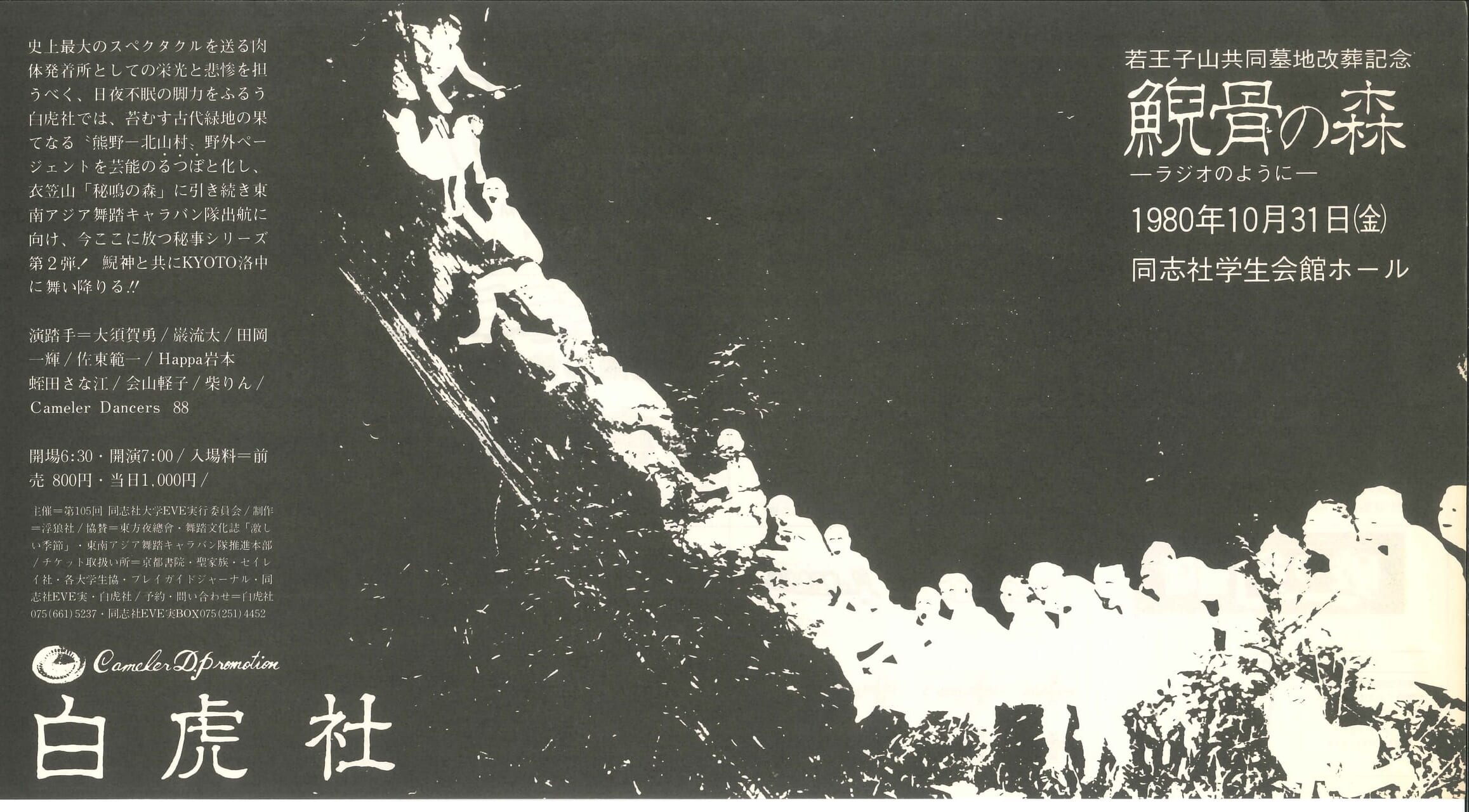
- Performer(s)
- Byakko-sha
- Director/Choreographer
- Isamu Osuka
- Venue
- Ritsumeikan University's Igakukan Hall 1 and other venues
- Year performed
- 1980
-
Byakko-sha: The Secret Behind Their International Success
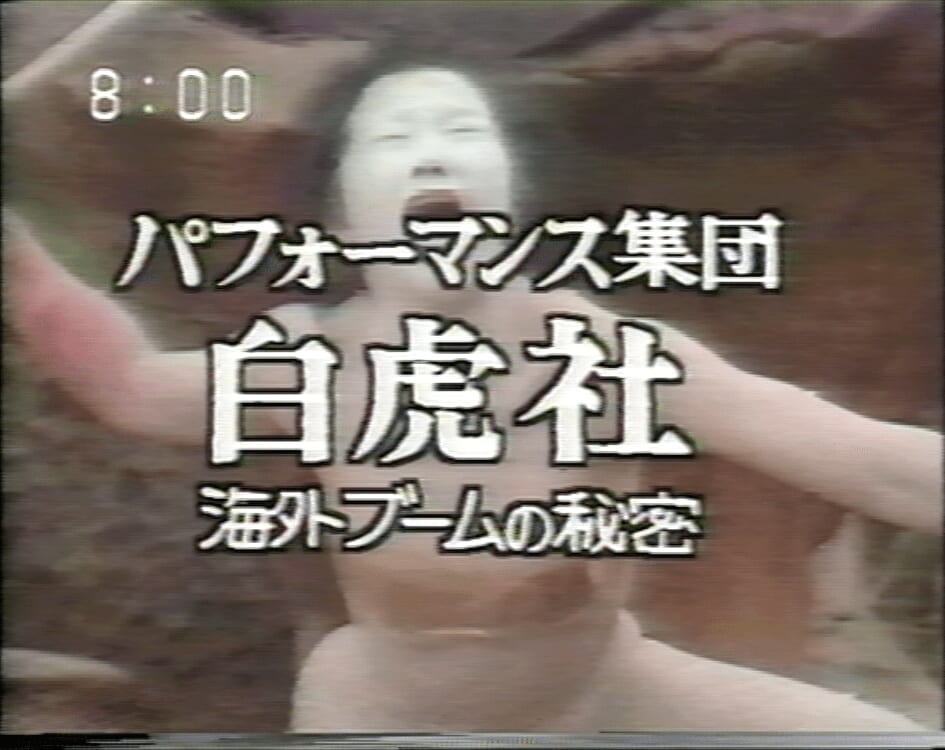
An episode of NHK’s "ETV8 Culture Journal" featuring Byakko-sha, with its founder Isamu Osuka as a guest, exploring the secret behind the group’s popularity. The programme highlights Osuka’s wide-ranging activities, including "PARCO Super School: The Byakko-sha World", "Byakko-sha Tokyo Performance: The Skylark and the Lying Buddha" (Korakuen Ice Palace), "Miracle Report" video, tour of Indonesia, and summer gassyuku [intensive training camp] in Kumano. Impressions of the Tokyo performance are shared by Nagisa Oshima, Shinbo Minami, Françoise Moréchand and others who attended, along with general audience feedback.
- Performer(s)
- Byakko-sha
- Year performed
- 1986
-
Byakko-sha on the Yomiuri TV programme “11PM”
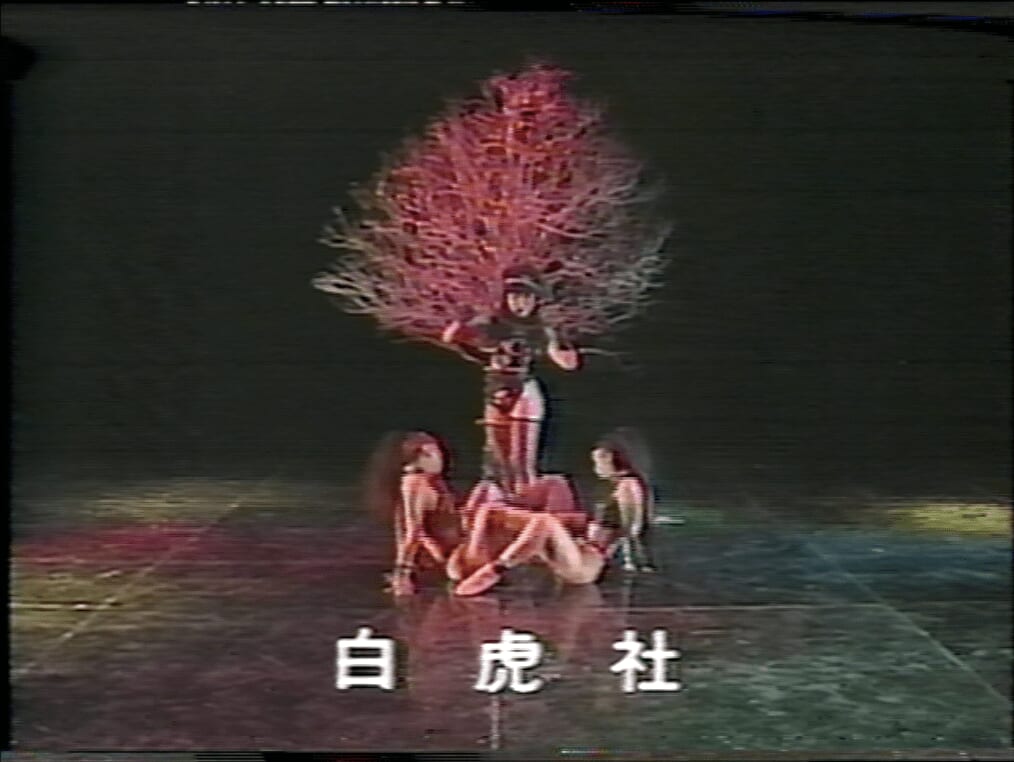
"11PM" was a legendary late-night programme on Nippon TV, covering a wide range of topics from eroticism to social issues. The video is a compilation of Byakko-sha’s guest appearances on the show in 1985 (when the programme began at 11:20 PM and was called "11PM+20"), 1986, and 1988. The 1985 episode was titled "The Body is Art!? Let’s Take Off [our clothes] and Think!! Naked Philosophy Variety Show", while the 1986 episode was called "Hadaka no Geijutsu Daishugo!" [Naked Art Gathering!]. It includes an interview with Isamu Osuka, performances by Byakko-sha, footage from their overseas tours, and announcements for their upcoming performances.
- Performer(s)
- Byakko-sha
- Director/Choreographer
- Isamu Osuka
- Year performed
- 1985
-
Byakko-sha in Israel and Europe
In June and July of 1985, Byakko-sha embarked on a two-month tour of Israel and Europe as the first leg of a World Butoh Caravan tour that was planned to span five continents, carrying two tonnes of luggage. They toured Israel, West Germany, Switzerland, Italy, Belgium, and France, performing "Hibari to Nejaka" (The Skylark and the Lying Buddha) 27 times, attracting a total audience of about 20,000. The video documents this tour, featuring some performance footage as well as backstage and rehearsal scenes, along with footage of street demonstrations across various cities, at a total of 36 locations.
Tour route:
Jerusalem, Israel (5-18 Jun)
Berlin, West Germany (19-30 Jun)
Zurich, Switzerland (1-7 Jul)
Spoleto, Italy (8-13 Jul)
Rome, Italy (14 Jul)
Antwerp, Belgium (15-20 Jul)
Toulon, France (21-28 Jul)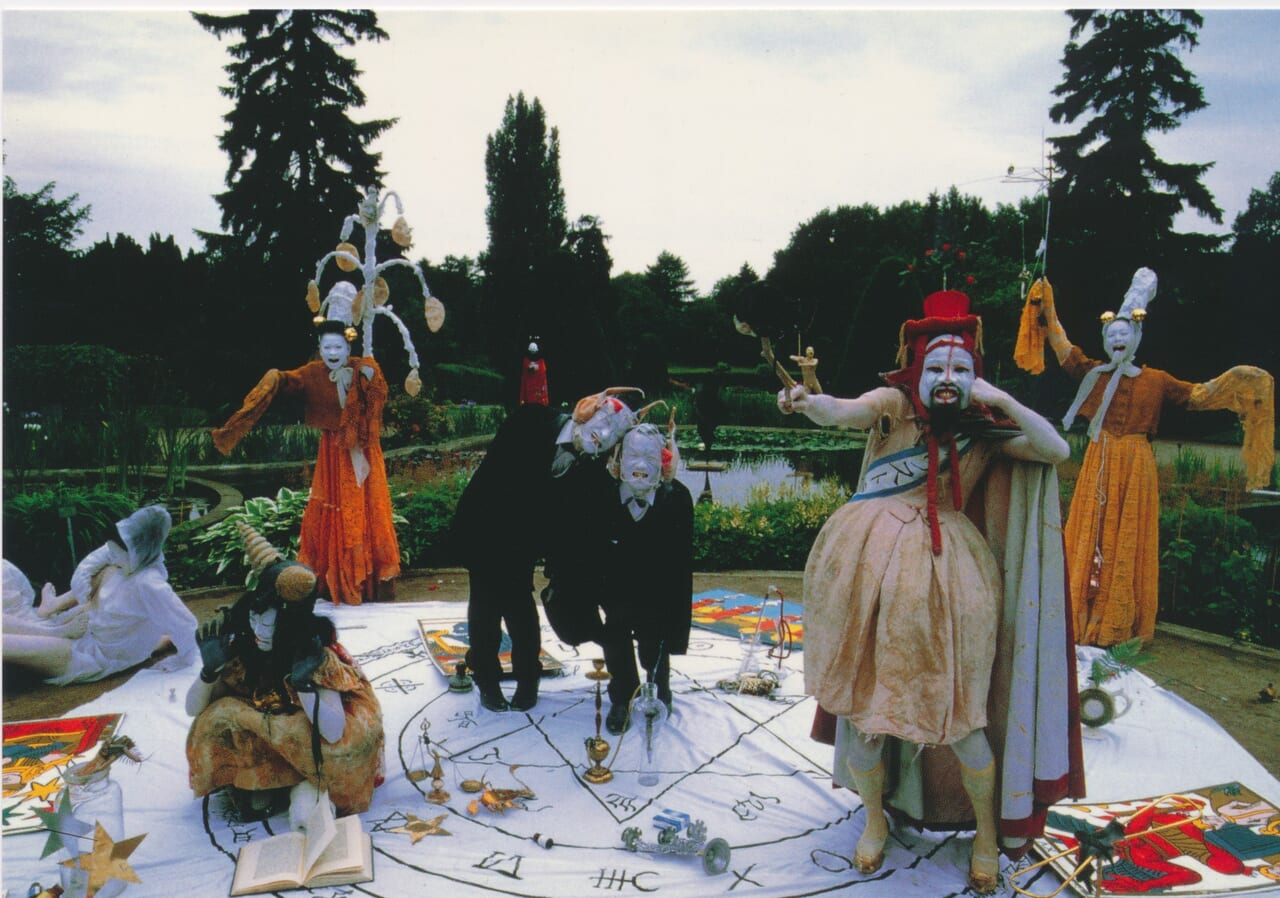
- Performer(s)
- Byakko-sha
- Director/Choreographer
- Isamu Osuka
- Venue
- National Theater, Jerusalem (The Israel Festival) / Theater Manufaktur, Berlin (Berlin Festival Horizont) / Zürcher Theater Spektakel, Zurich / Teatro Nuovo Gian Carlo Menotti, Spoleto (Spoleto Festival) / Teatro Argentina, Rome / De Singel, Antwerp) / Châteauvallon Indoor Theatre, near Toulon (Châteauvallon Festival)
- Year performed
- 1985
-
The Butterfly Dream
New solo work by Pechika Satoh, an artist admired by many for her introspective performances. After going down the stairs of the Former Hakubutsukan Dobutsuen Station carrying a fish tank, she plays with water in the underground space, and eventually transforms from a larva into a butterfly wearing a giant sunflower, and heads up to the surface. A quiet, thrilling video performance that transforms the relationship between ground and underground, life and death, and inside and outside.
-Takao Kawaguchi Selection: Un Certain Regard
-Tokyo Real Underground (Tokyo Tokyo FESTIVAL Special 13): 1 April - 15 August 2021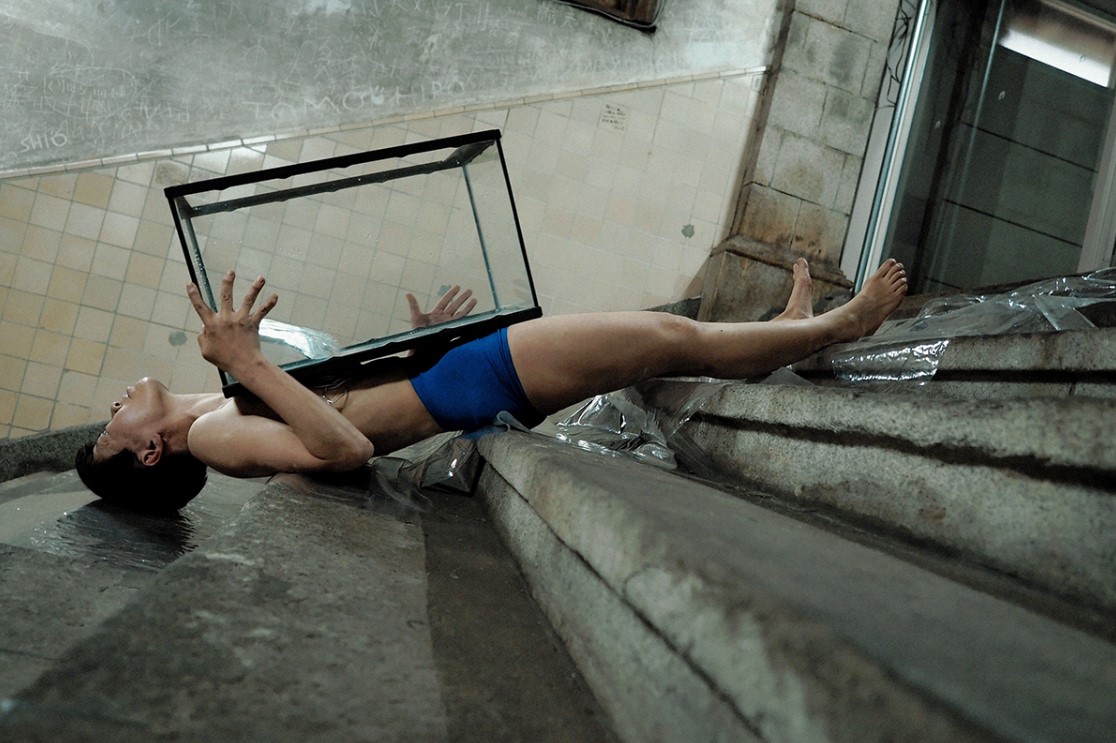
- Performer(s)
- NPO Dance Archive Network
- Director/Choreographer
- Pechika Satoh
- Venue
- Filmed at the former Hakubutsukan Dobutsuen Station [Museum Zoo Station]
- Year performed
- 2021
-
Butoh-ichi – The Blind Thief
Performed at the Mitsutaka Ishii Dance Experience. It begins with the words 'Niku-ichi' emblazoned in the darkness. Ishii drags a blind old woman out from the audience, makes her play a shamisen and dances spectacularly. Then, held by four stage hands, he performs a bizarre strip dance. A large monster, similar to the lion in a lion dance draped in a large cloth, circles the stage. A crazed Ishii wielding a scythe reveals the true nature of a harvester. As a man in an iron helmet is polished with an electric grinder, sparks and bright yellow demonic flames colour the world of darkness. In the finale, Ishii lines up all the performers on stage and performs a dance of thanks.
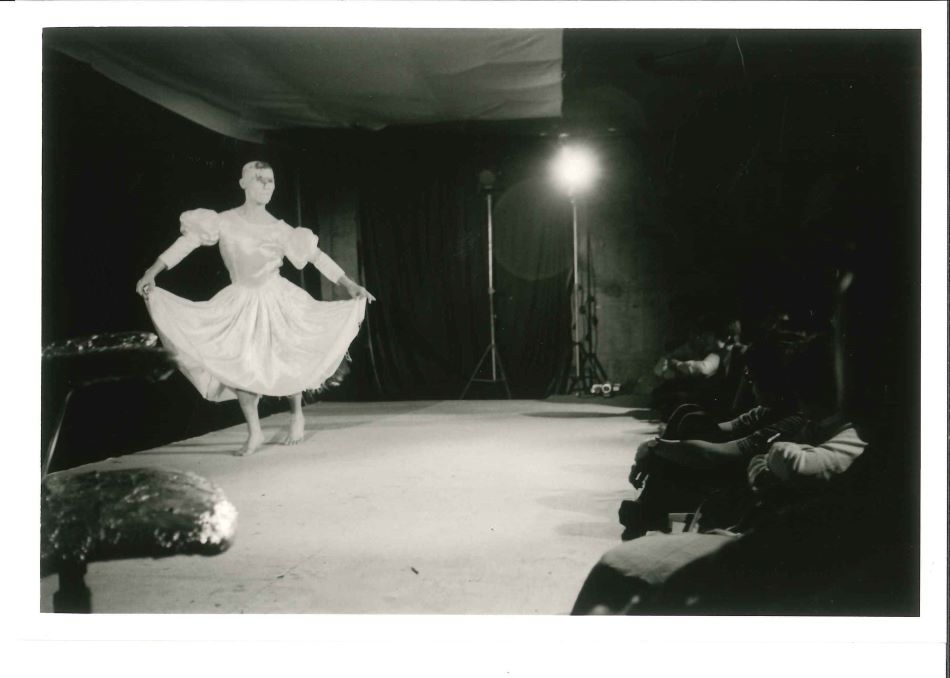
- Performer(s)
- Mitsutaka Ishii
- Director/Choreographer
- Mitsutaka Ishii
- Venue
- Ikebukuro Sphere Theater
- Year performed
- 1969
-
Butoh Yori no Shokan: Theory of Origins, 1993
""This work was quite something! I included an entirely nude scene... It was created in the heat of the moment, and I was relieved that it didn't cause any trouble with Sogetsu Hall... Or perhaps I didn't even think about that! Now it's a good story to tell."" (Takeuchi)
A recital commemorating the 22nd anniversary of Takeuchi Yasuhiko's solo dance career. At the 40th anniversary another recital was held under the same title 'Butoh Yori no Shokan' [The Summons of Butoh].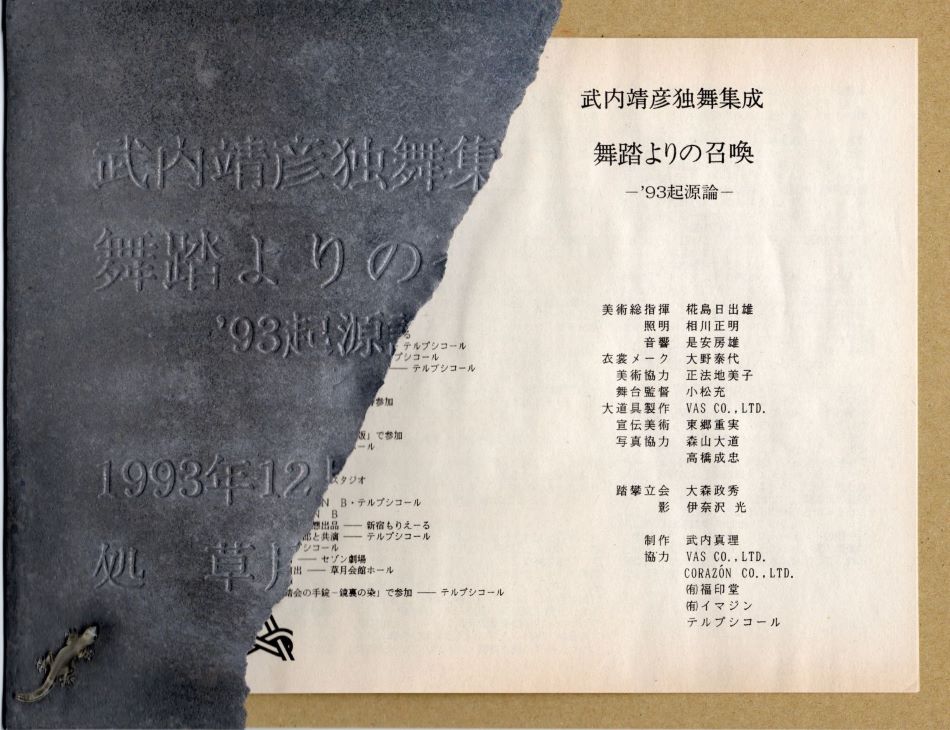
- Performer(s)
- Yasuhiko Takeuchi
- Director/Choreographer
- Yasuhiko Takeuchi
- Venue
- Sogetsu Hall
- Year performed
- 1993
-
Butoh Yori no Shokan: Twentieth Century, Peony
- If "butoh" were to appear, manifest, or descend upon the stage, applause would be in order.
I’ve never seen such a god of butoh smile upon the stage, but I cannot afford to sit and do nothing. If the god is hesitant, we must drag him out, smoke him out, and force him to smile: even if it’s a twisted one. That is our way of returning to butoh. - (From the programme)
At the same venue where he performed his first solo butoh in 1971 (then: Koenji Hall), 64-year-old Yasuhiko Takeuchi returns to his roots, 40 years later.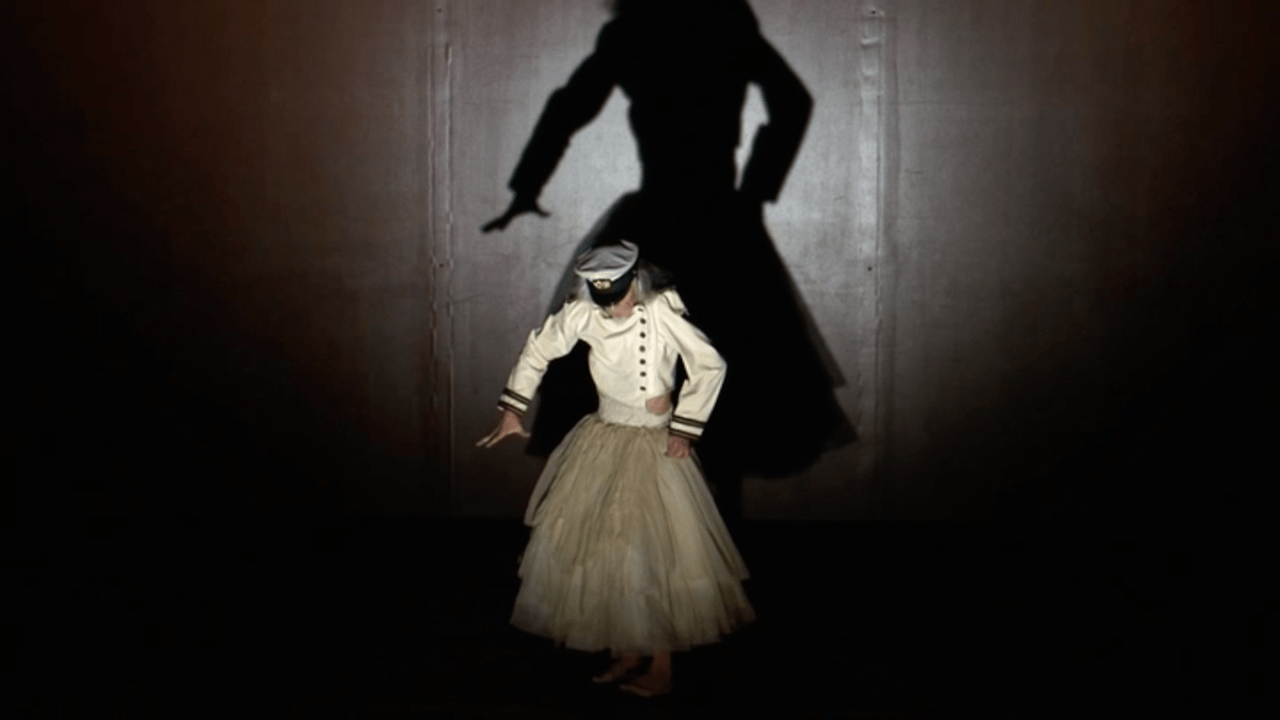
- Performer(s)
- Yasuhiko Takeuchi
- Director/Choreographer
- Yasuhiko Takeuchi
- Venue
- ZA-KOENJI Public Theatre 1
- Year performed
- 2011
-
Butoh of 21,000 Nautical Miles
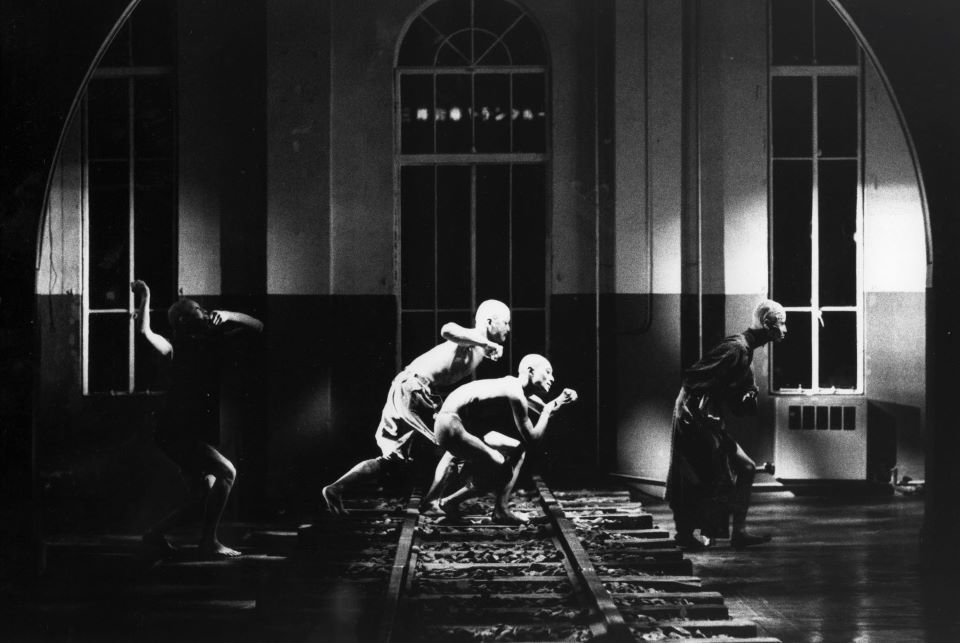
A 30m long railway track replicating the Manchuria Railway was built with sleepers and stones, and a boat designed for audience seating was towed over it. This was a work of remembrance, and included themes such as ghosts of former Japanese soldiers, brides wandering the tracks, a group dance of deranged young Indians from which emerges a golden Buddha, and other extraordinary and everyday representations, interwoven with images more related to Buddhist philosophy, as appears more in later work.
-This work was performed from 5-16 September. with 4 subtitles:
First Easterly Wind (5-7 September)
Westerly Wind of the day of the Buddha's death (8-10 September)
Southerly Wind of the Rainy Season (11-13 September)
Early Autumn Typhoon (14-16 September)"
- Performer(s)
- UNO-MAN
- Director/Choreographer
- Man Uno
- Venue
- Sagacho Exhibit Space
- Year performed
- 1984
-
Butoh is a Corpse Striving to Stand
The title is an aphorism that Tatsumi Hijikata himself used to express his own butoh. The piece was directed by Akiko Motofuji as part of 'Japanese Summer 1960-64' at Art Tower Mito, and presented as a tribute to Hijikata in a retrospective exhibition that looked back on avant-garde artists from the first half of the 1960s. It was performed in the entrance hall by Akiko Motofuji, Kazuo Ohno and Yoshito Ohno among others, in front of a large photograph taken from the finale scene of [Hijikata's] 'Rebellion of the Body'.
- Performer(s)
- Asbestos-kan
- Director/Choreographer
- Akiko Motofuji
- Venue
- Art Tower Mito Contemporary Art Gallery
- Year performed
- 1997
-
Butoh “BOKUGEI” – Tatsumi Hijikata Memorial Concert
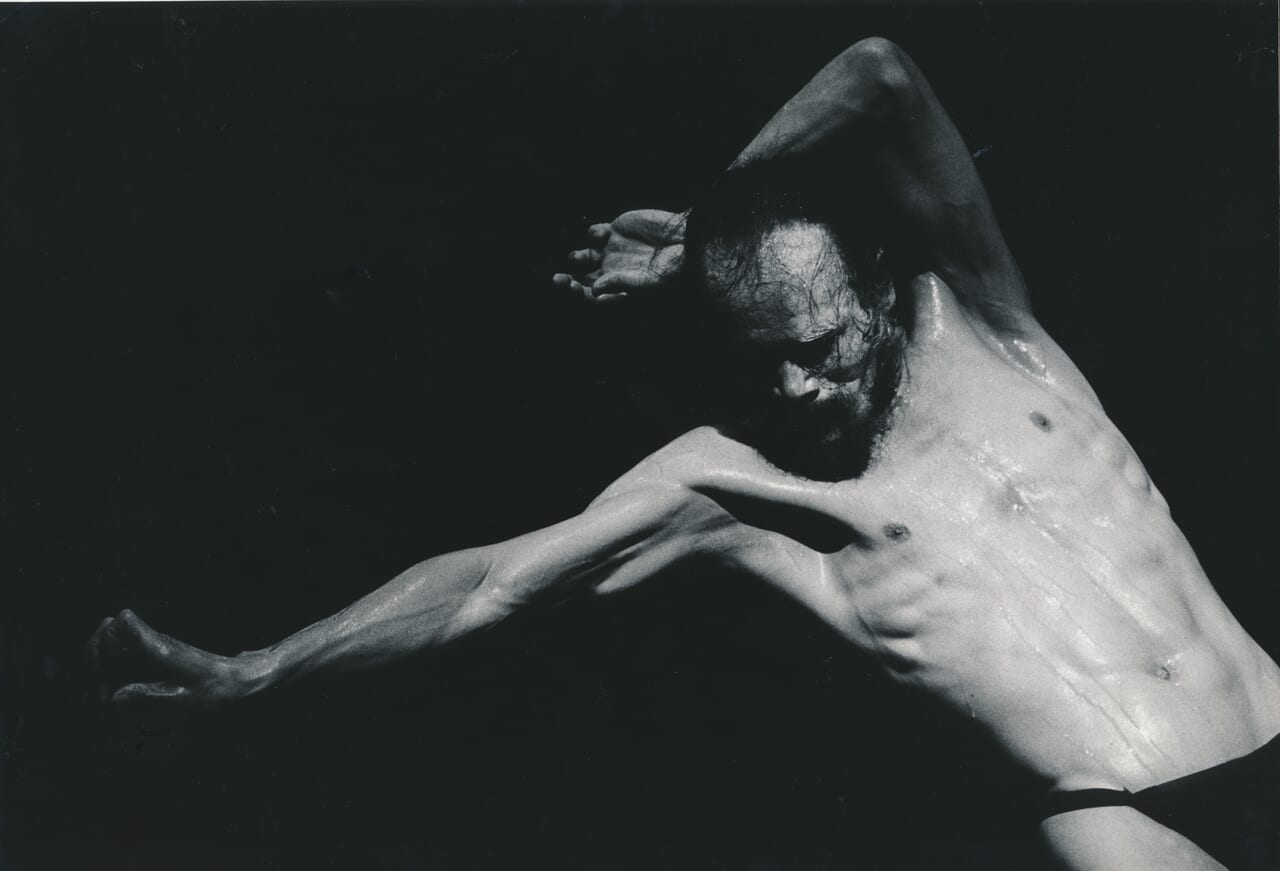
Performance by Teru Goi in memory of Tatsumi Hijikata, who passed away in January 1986. Sounds, music and costume - including a red skirt - evoke Hijikata throughout the performance. Goi dances with total abandon, smearing lipstick on his lips, exposing the tattoos of the gods of wind and thunder on his back, and stabbing his body with two kenzan [small base with sharp spikes used in flower arranging]. His extreme focus and vulnerability are palpable. A review in The Japan Times Weekly described it "as if the spirit of Hijikata had descended on him" (Yuri Kageyama, 19 September 1987).
- Performer(s)
- Teru Goi
- Director/Choreographer
- Teru Goi
- Venue
- Sogetsu Hall
- Year performed
- 1987
-
Buried TeaBowl – OKUNI
New work by Australia's leading Japanese artist and dancer Yumi Umiumare, "Buried TeaBowl - OKUNI" was presented at BLACKCAT GALLERY in 2022. This intimate yet grand solo performance installation combines dance, butoh, theatre, song and tea ceremony, with a stunning video (produced by Takeshi Kondo) that was filmed during the COVID-19 lockdown. The piece explores the life of Izumo no Okuni, a historical Japanese dancer and shrine maiden from the early 1600s, who is credited with founding kabuki theatre but remains an enigmatic figure. Umiumare's contemporary interpretation of Okuni appears in various forms, moving between the real and the surreal, drawing the audience into a world of dreams and fantasy.
While evoking the "myths" and power of invaluable women buried in history, Umiumare's unique narrative and humour in "Buried TeaBowl - OKUNI" bring forth a punkish, feminine, and liberated Okuni - one that speaks to the needs of the present day.
- OzAsia Festival 2023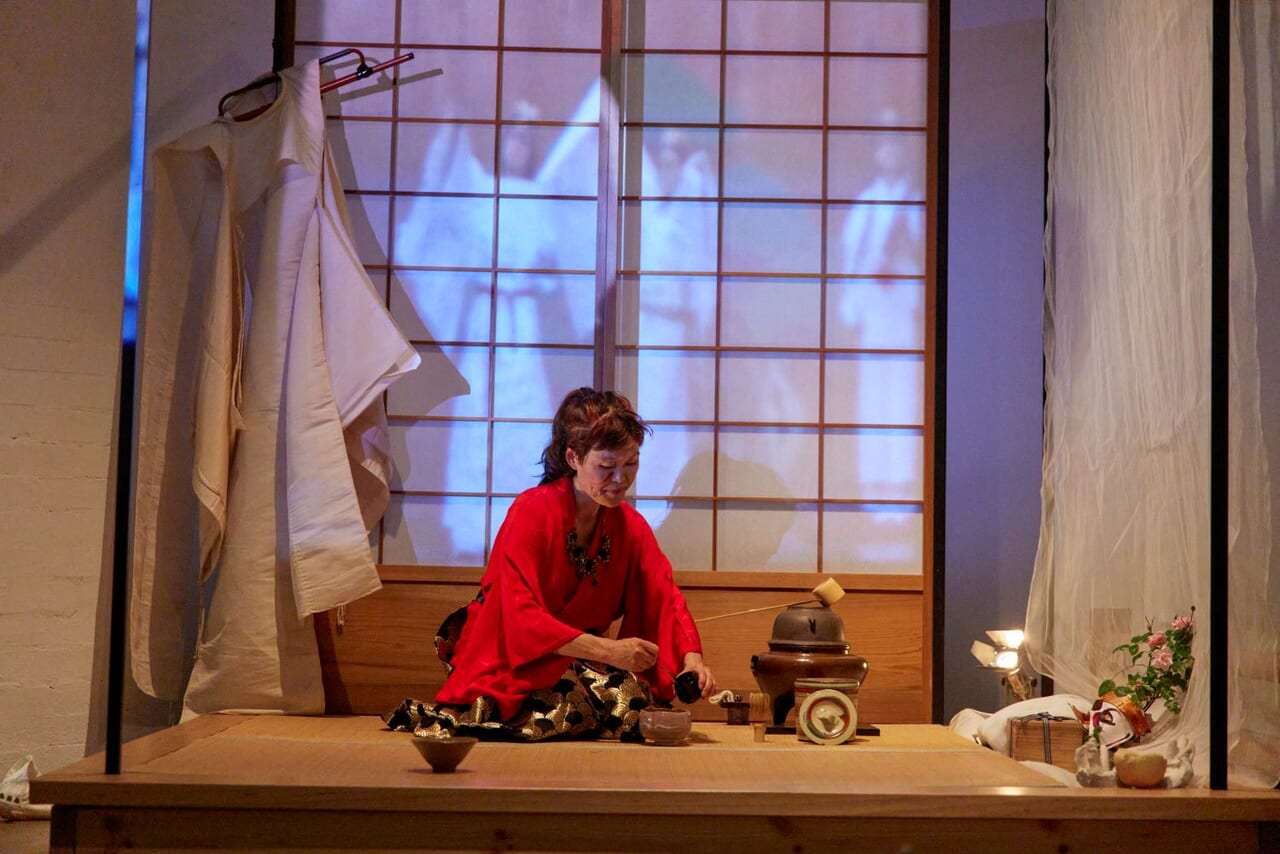
- Performer(s)
- Yumi Umiumare
- Director/Choreographer
- Yumi Umiumare
- Venue
- BLACKCAT Gallery (Sol Gallery)
- Year performed
- 2022
-
Bravos Pioneiros; Cançao da Alegria [Songs of Joy]
"Bravos Pioneiros": Struck by the sight of the Issei pioneers' tanned, muscular bodies, intense gazes, and white beards - a human presence unlike anything she had encountered before - Akiko Ohara felt as though she were witnessing a living masterpiece. This work was created in response to the striking beauty of these workers at their labour.
"Canção de Alegria" [Songs of Joy]: Akiko Ohara recalls her excitement upon arriving at Yuba Farm, followed Yuba theme songs sung in a chorus (lyrics and music by Masakatsu Yazaki), including "Porque o sol é quente" [Because the Sun is Hot], "Os companheiros do yuba" [Friends of Yuba], and "Canção de Alegria" [Song of Joy]. As with "Bravos Pioneiros", this piece captures life on Yuba Farm and has been performed numerous times.
"Bravos Pioneiros" premiered in 1963, and "Cançao de Alegria" [Songs of Joy] premiered in 1978. Both works were performed at Yuba Farm, in Japan and throughout Brazil. Commemorating the 70th anniversary of Japanese immigration to Brazil, the programme for Ballet Yuba's first tour of Japan in 1978 across 13 venues began with "Bravos Pioneiros" and ended with "Cançao de Alegria" [Songs of Joy], which was created specially for the tour. "Cançao de Alegria" [Songs of Joy] was edited in 2021.![Bravos Pioneiros; Cançao da Alegria [Songs of Joy]](https://video.dance-archive.net/en/wp-content/uploads/2025/01/P005246_14498.jpg)
- Performer(s)
- Ballet Yuba
- Director/Choreographer
- Akiko Ohara
- Venue
- Teatro Yuba
- Year performed
- 2021
-
Brandenburg Concerto and 5 short pieces
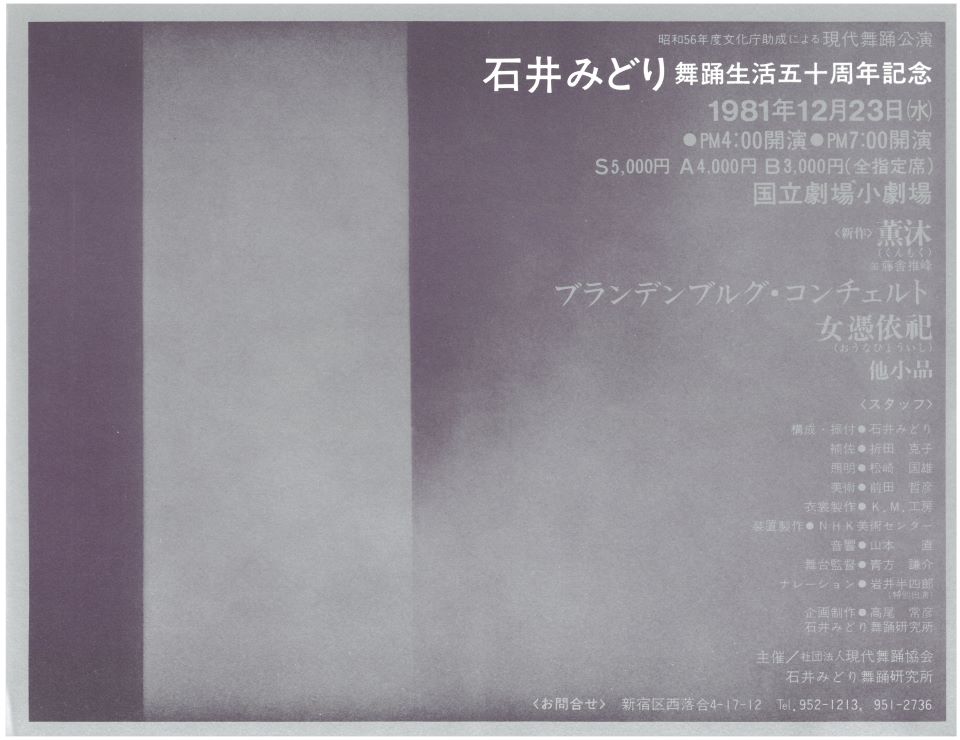
British choreographer Anton Dolin said he had never seen anything like it, claiming that the music by Bach must have written for this piece; that was the effect of Midori Ishii's Brandenburg Concerto. Ishii's particular way of finding rhythm - moving from 'hold' (off-beat), having 'stolen sounds' and being 'still in the midst of movement' - these are also traditionally Japanese ways of finding rhythm. This is one of Ishii's signature pieces, which exemplifies these ideas.
-The first section of Midori Ishii's 50 Years of Dance anniversary performance, including Brandenburg Concerto, and five short pieces: 'Southern Moon' (6'22"") / 'Golliwog's Cakewalk' (2'22"") / 'Udaru' (5'32"") / 'Three Themes' (0'32"") / 'Four Walls' (7'35"") / 'Brandenburg Concerto' (18'33"")
- Performer(s)
- Midori Ishii and Katsuko Orita Dance Studio
- Director/Choreographer
- Midori Ishii
- Venue
- National Theatre of Japan : Small Theatre
- Year performed
- 1981
-
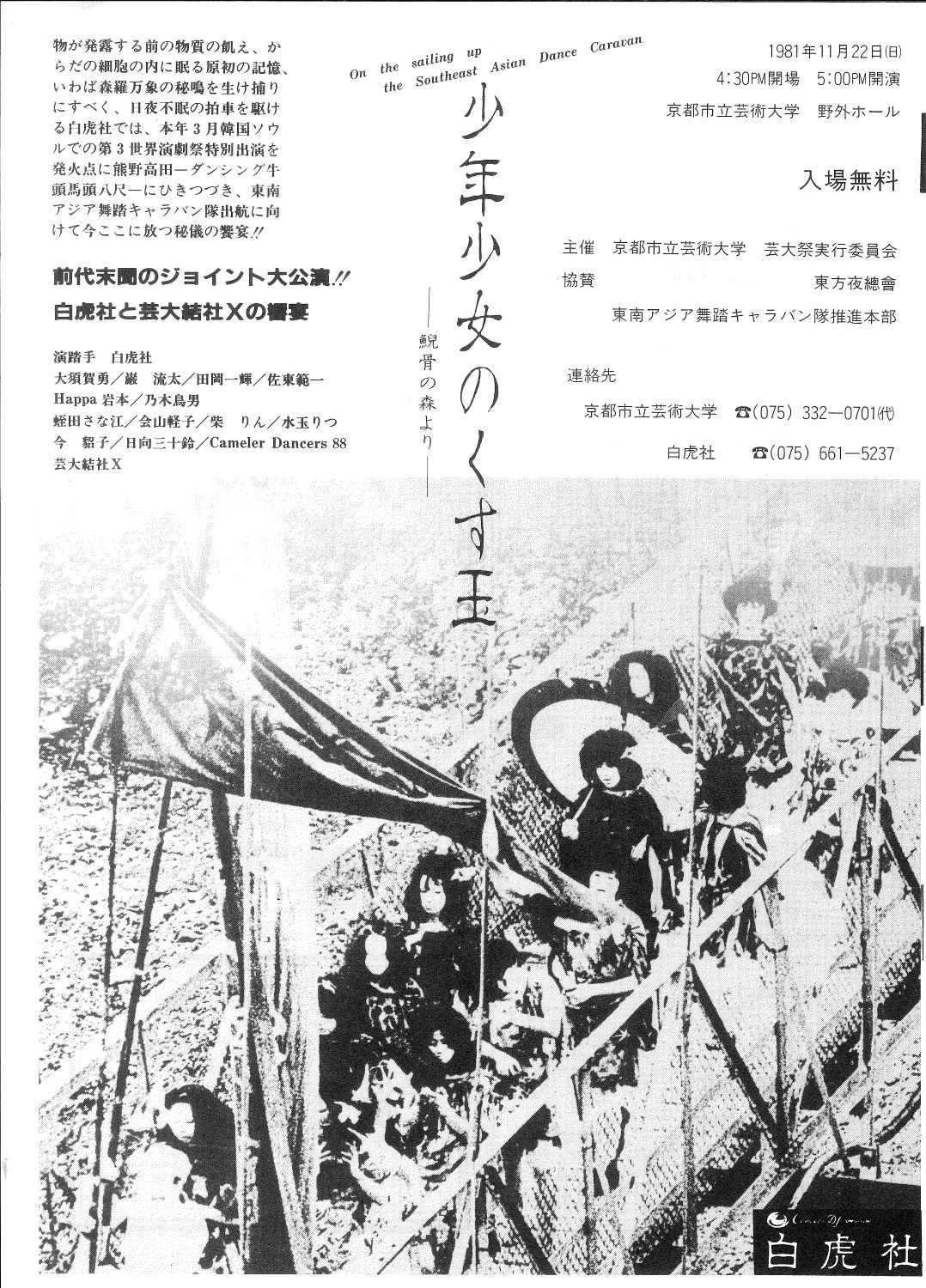
Boys and Girls’ Kusudama (from Geikotsu no Mori)
Byakko-sha began their Kansai-wide University Festival Tour in 1980, performing "Boys and Girls’ Kusudama" in 1981. This video includes part of the rehearsal at Kyoto City University of Arts as well as the first half of the performance. Many elements overlap with "Geikotsu no Mori," which was performed at Doshisha University in 1980, but the number of dancers has increased. The bare-chested palanquin bearers are students, and some were even tied by Byakko-sha to a “human clock” as its hands. The performance took place in bitterly cold conditions, with snow falling.
- Performer(s)
- Byakko-sha
- Director/Choreographer
- Isamu Osuka
- Venue
- Kyoto City University of Arts' Open-air Hall
- Year performed
- 1981
-
A Body with Fukushima
Since 2014, Eiko Otake has visited Fukushima several times with historian and photographer William Johnston, performing without an audience and recording them on camera. This is a 25 minute edit of a performance that Otake did while projecting a one hour video compilation of photographs taken over five trips to Fukushima onto the walls of a theatre. The present, past and landscape of post-earthquake Fukushima are presented through her body.
Projection: 'A Body in Fukushima' (Photography: William Johnston / Editing: Eiko Otake / Music: David Harrington Kronos Quartet)
-Eiko Otake Project - A Body in Places
-Tokyo Real Underground (Tokyo Tokyo FESTIVAL Special 13): 1 April - 15 August 2021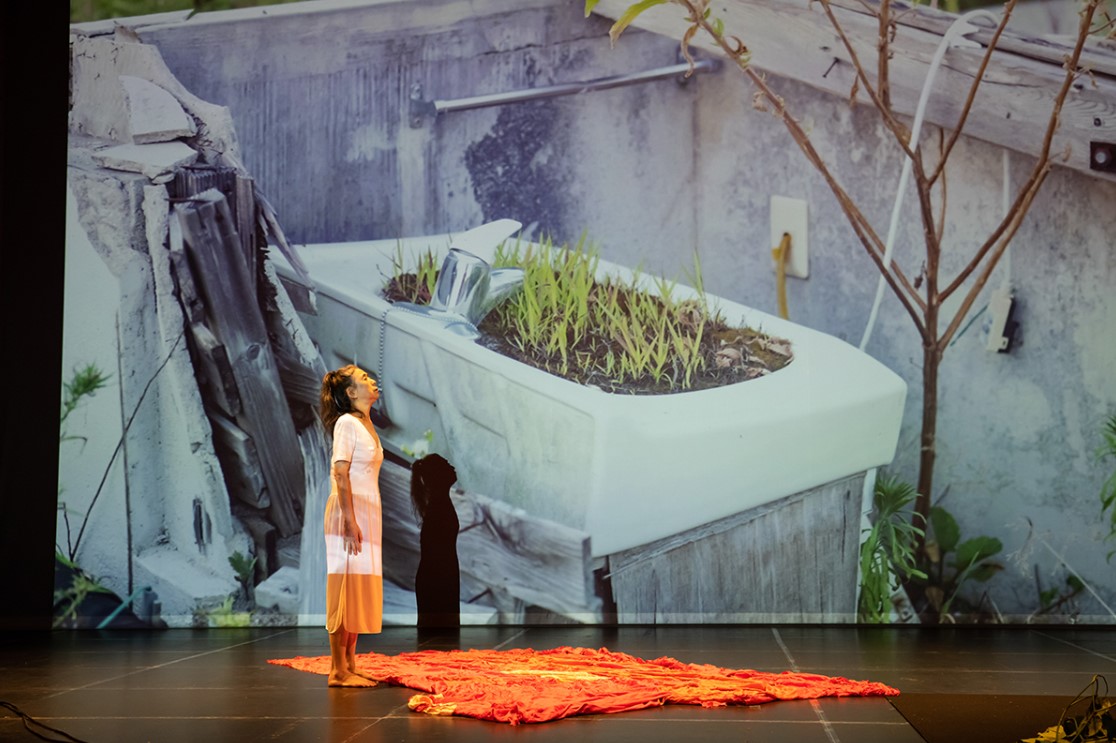
- Performer(s)
- NPO Dance Archive Network
- Director/Choreographer
- Eiko Otake
- Venue
- Filmed at the Tokyo Metropolitan Theatre : Theatre East
- Year performed
- 2021
-
Tai [Body]
Midori Ishii's choreography to Stravinsky's 'The Rite of Spring' is not the usual story of sacrifice, but rather uses themes that the famed piece inspired in Ishii: nature and vitality. The dancers' interplay of curves and straight lines, feet shifted by the centre of gravity and stillness in motion are excellent, and the expression captured by their bodies in the final chapter is a beautiful hymn to humanity.
-Presented at the Midori Ishii Dance Recital as Ishii Midori Dance Works Vol. 2.
-Premiered in 1961, this version was performed in 1983. Awarded the Art Encouragement Prize in April 1962. Katsuko Orita, was awarded the first Art Festival Individual Performance Award for Modern Dance with this piece. It was performed again in 2015 and 2018 at the Dance Archive Performances organised by the Contemporary Dance Association of Japan, and hailed as a powerful and dynamic work.![Tai [Body]](https://video.dance-archive.net/en/wp-content/uploads/2024/01/V00024_ishiiorita1s_fl.jpg)
- Performer(s)
- Midori Ishii and Katsuko Orita Dance Studio
- Director/Choreographer
- Midori Ishii
- Venue
- Tokyo Post Saving Hall
- Year performed
- 1983
-
Kim Ito’s ‘Body Story’ and Takeshi Yazaki’s ‘Meat Excuses’
'Body Story' - The fascinating changes, the many different textures that can appear and disappear from a single body; mechanical and rigid, movements smooth as water, drifting like air... A strong solo improvisation piece that fully incorporates the sharp, flowing movements unique to Ito Kim.
'Meat Excuses' - Reason and instinct, laughter and anger, tension and relaxation, seriousness and frivolity, the self and non-self, artistry and entertainment. A tragicomic story of a piece of meat in various repeated battles.
- Participated in the 4th OSAKA DANCE EXPERIENCE Dance Battle - Before Dance / After Dance - Kim Ito x Takeshi Yazaki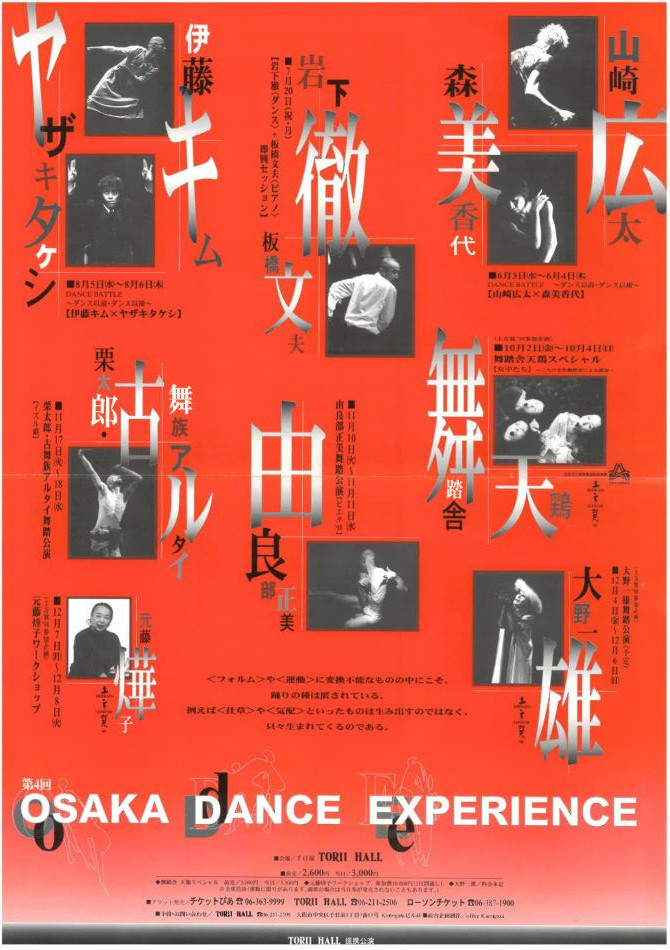
- Performer(s)
- TORII HALL
- Director/Choreographer
- Kim Ito, Takeshi Yazaki
- Venue
- TORII HALL
- Year performed
- 1998
-
A Body in Tokyo
Eiko Otake, based in the United States since 1976, is a highly regarded artist who has performed in many countries as part of the performance duo Eiko & Koma. Her solo project "A Body in Places", which has attracted much attention since beginning in 2014, is performed for the first time in Japan. Ten years since the Great East Japan Earthquake, Otake places herself in different spaces around the Ueno area in Tokyo (Ueno Station, Tokyo Bunka Kaikan, Nakacho Shopping Street, etc.), and in underground spaces of the Former Hakubutsukan Dobutsuen Station and Shibuya River culvert, layering projected images of Fukushima onto the surrounding buildings and herself.
Created as a video piece. The work was available for online viewing from its release date until the conclusion of the Tokyo Real Underground festival (1 April - 15 August 2021).
Film locations: Ueno area / Former Hakubutsukan Dobutsuen Station / Shibuya River culvert
Projection: 'A Body in Fukushima' (Photography: William Johnston / Editing: Eiko Otake / Music: David Harrington Kronos Quartet)
-Eiko Otake Project - A Body in Places
-Tokyo Real Underground (Tokyo Tokyo FESTIVAL Special 13)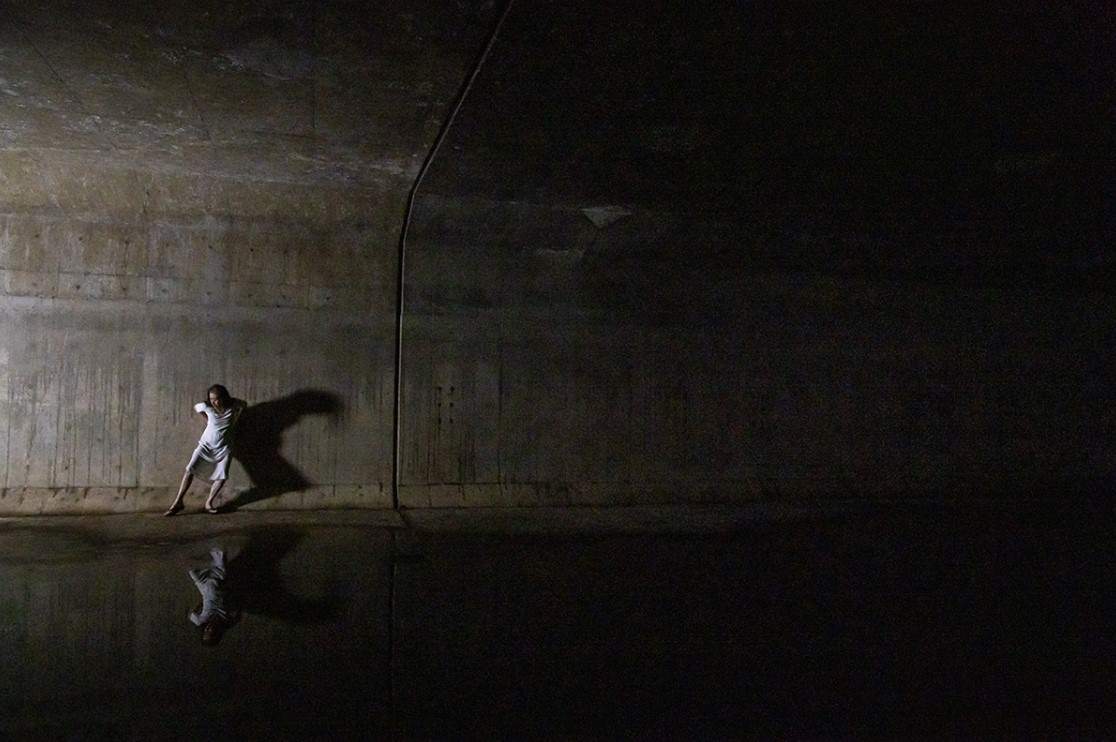
- Performer(s)
- NPO Dance Archive Network
- Director/Choreographer
- Eiko Otake
- Year performed
- 2021
-
Blue Sky Dancer: Gilyak Amagasaki
Street performer Gilyak Amagasaki danced all over the world in what he called 'Blue Sky Dance Performances'. These began with performances that were held almost every autumn from 1978 in an outdoor square of the Mitsui Building, in the skyscraper district of Shinjuku, Tokyo. This video shows the entire performance of 13 October 2002. In it, Gilyak indicates a cloth on which the title is written and explains to the audience what is to be performed, then proceeds to dance. There was no charge for the performance, but the audience was encouraged to pay donations. The video shows the audience helping Gilyak collect money thrown on the ground after the performance.
- Performer(s)
- Gilyak Amagasaki
- Director/Choreographer
- Gilyak Amagasaki
- Venue
- Shinjuku Mitsui Building Hiroba
- Year performed
- 2002

