
Overview
-
BLOOM
Premiered at the Edinburgh Fringe Festival in August 1996.
Received a number of rave reviews including: 'a totally electrifying experience' (The Stage), 'makes you think about the beauty and meaningfulness of movement' (The Scotsman).
It has been since been developed and refined, and performed in many places across Japan, and become one of Gekidan Taihen's key works."
- Tobita Theatre Performance Award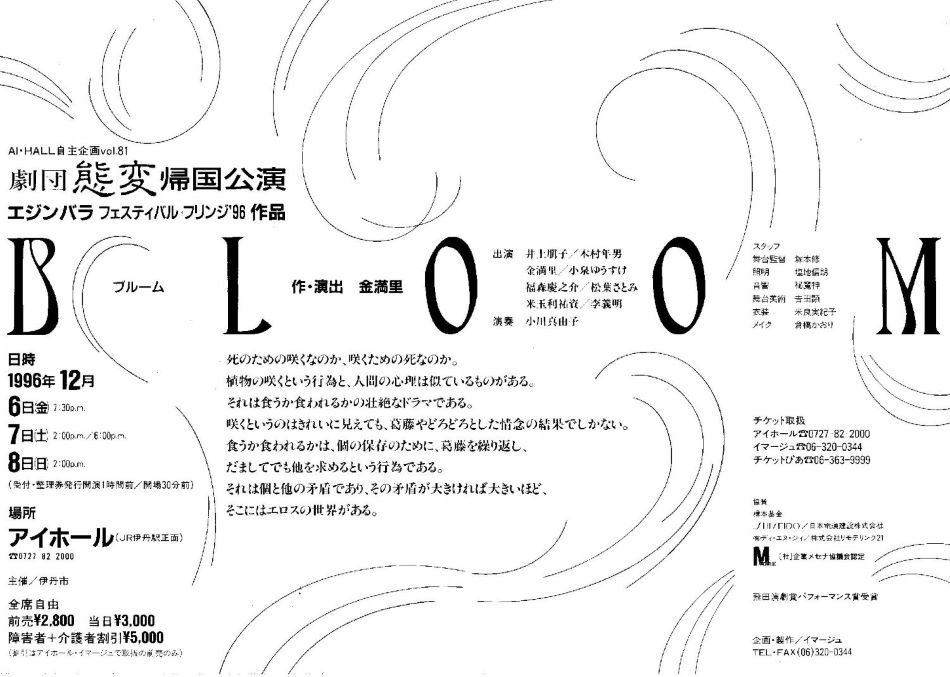
- Performer(s)
- Performance Troupe TAIHEN
- Director/Choreographer
- Manri Kim
- Venue
- AI Hall (Itami City Theater Hall)
- Year performed
- 1996
-
Blanc Whispering muttering
White paper folded into human figures, by artist Claudine Drai, are grouped together and displayed around the stage as though it were a museum. Some are covered in a smoke-coloured powder.
They resemble people caught in the midst of war.
Suddenly, three dancers dressed in white emerge as though they've leapt out of the display. They walk, leap, roll, and at times dance in unusual forms. A woman dressed in black wanders around, seemingly cast out of the world, lost and abandoned.
They cross paths, meet, and drift apart. Where is the world heading?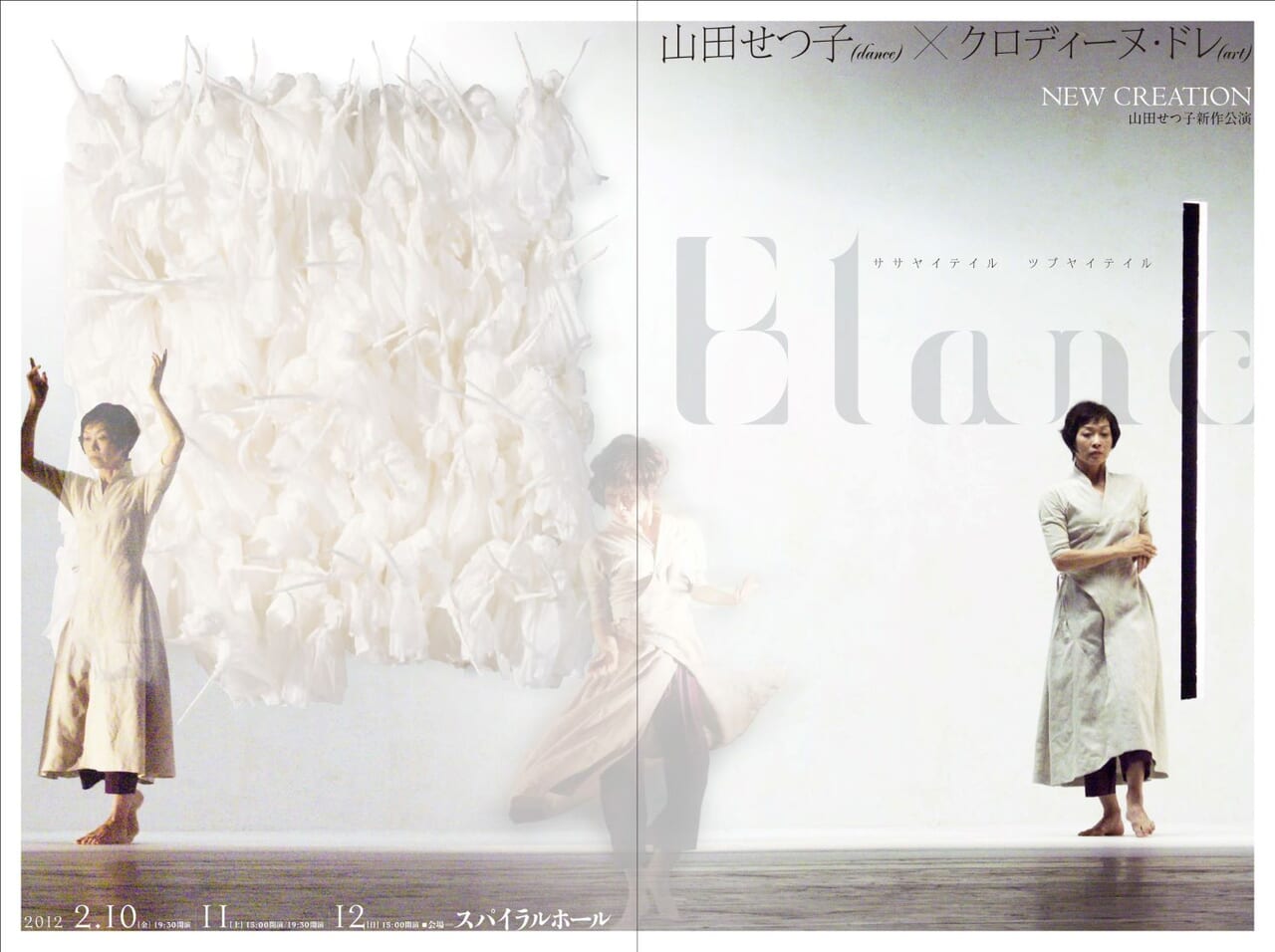
- Performer(s)
- Setsuko Yamada
- Director/Choreographer
- Setsuko Yamada
- Venue
- Spiral Hall
- Year performed
- 2012
-
Bite
"Atsugi Bonjin's first performance on returning to Japan after studying in New York. The work had four chapters, and the following words were included in the programme:
By a luxurious and desolate display window, as Life is swept away / The frozen glass of the display window
Life's conscious mind / As limescale breaks free and / Escapes
To Bite is / to Kill / to Bite / to Chew and / as Chewing continues Wear clothes, sit on a chair and / Wipe the mouth with a napkin"
-First Dance Critics Society Award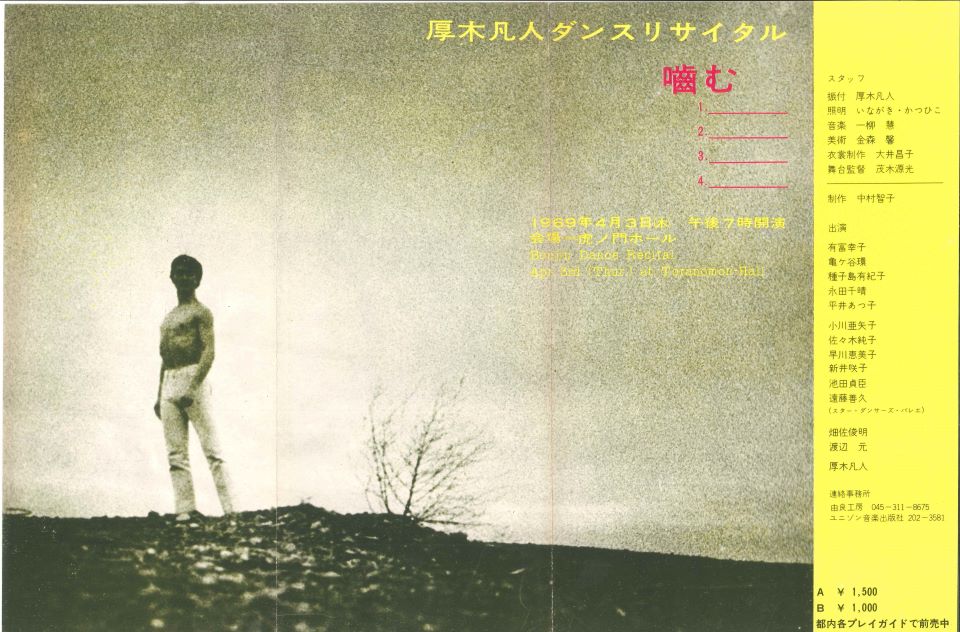
- Performer(s)
- Bonjin Atsugi
- Director/Choreographer
- Bonjin Atsugi
- Venue
- Toranomon Hall
- Year performed
- 1969
-
Bird Woman’s Head (reproduction)
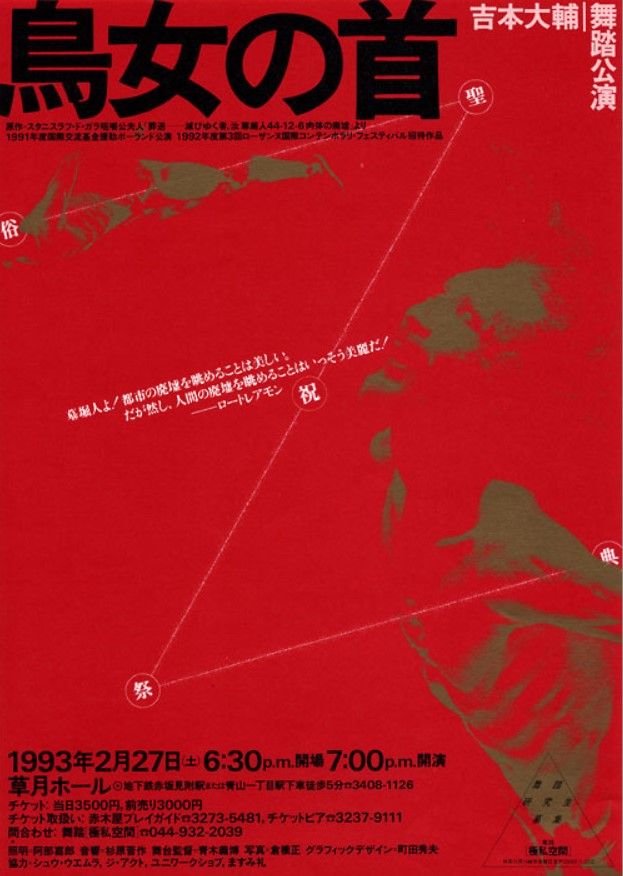
One of the four part 'Funeral Series' performed by Yoshitmoto Daisuke in the 1980s. This 'Bird Burial' was the final part of the series, following 'Wind Burial - Fern in the Wind', 'Cremation - Egg in the Fire' and 'Water Burial - Stone at the Bottom of the Water'. After performances in Poland and Switzerland, it was performed again later in Tokyo. Original concept: 'Stanislav de Gala Soshaku Kōfujin' [Madame de Stanislav de Gala Mastication].
On the flyer are word by Comte de Lautréamont: Gravedigger, it is beautiful to contemplate the ruins of the cities; but it is more beautiful to contemplate the ruins of humans!
- Daisuke Yoshimoto Butoh Dance
- Invited to the 3rd International Contemporary Festival in Lausanne, 1992
- Performer(s)
- Daisuke Yoshimoto
- Director/Choreographer
- Daisuke Yoshimoto
- Venue
- Sogetsu Hall
- Year performed
- 1993
-
Bird: Fantastical Thoughts – Garden of Eve II
The work, in which 'for much the performance the dancer moves from right to left along the two black walls intersecting at a right angle', evokes for the viewer a 'movement in stillness' and 'exudes a forceful energy, reminiscent of a bird attempting to stretch its wings and fly to the heavens, but unable to do so' (Denzaburo Yoshizawa, Modern Thought). This work was inspired by the words of Roger Caillois, 'illusion first and foremost means anxiety and destruction'.
-Uesugi Mitsuyo Butoh Performance
-The above quotations are taken from the January 1983 issue of Modern Thought magazine.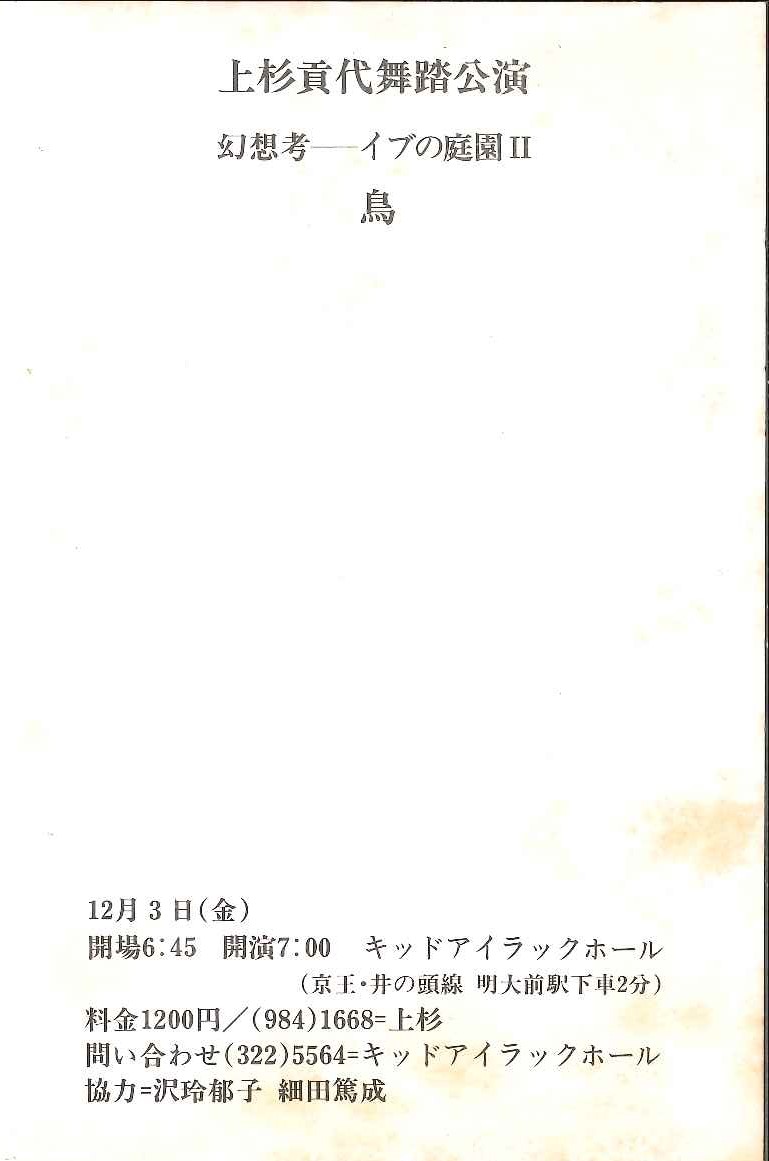
- Performer(s)
- Mitsuyo Uesugi
- Director/Choreographer
- Mitsuyo Uesugi
- Venue
- KID AILACK HALL<br />
- Year performed
- 1982
-
The Bird – A Man who was called Bird
Premiere of "The Bird", the third piece in Furukawa's 'Anzu'ology' series.
The flyer features a quote by Leonardo da Vinci:
"The earth is moved from its position by the weight of a tiny bird resting upon it."
Act 1: Superman
Act 2: Jasmine / Kismine
Act 3: The Rabbit in the Moon
There were two performances, at 3pm and 7pm, on 31st March and 1st April.
The video includes up to the second act.
-Anzu’ology: Anzu's Altas of Animals III
- Performer(s)
- Anzu Furukawa
- Director/Choreographer
- Anzu Furukawa
- Venue
- Jean-Jean
- Year performed
- 1990
-
Bird – Mariko Sanjo dances on the Noh Mariko
This performance was presented by Rokurobyoue Fujita, the 11th Grand Master of the FUJITA school of flute player of Noh, and was held on November 2, 1987 at the Atsuta Shrine Noh Theater. A modern dancer, Mariko Sanjo was invited to perform in the classical space of the Noh Theater created by the Japanese. "Bird" was the last piece in the program. I first performed “Bird” at Barnard College in New York City in September 1975.
Once I performed it, I got one request after another to perform it at other venues. “Bird” was performed under various conditions, from small 100-seat theaters to *Central Park’s Delacorte Theater, an open-air theater that can accommodate 2,000 people.
It was reborn each time as a new piece. In each moment, my body fought against something like an undulation that disperses and breaks. I strongly desired many times to experience that mysterious space on stage, which was indeed a different dimension, again and again. I danced the piece until the autumn of 1994. Among them, "Bird" performed at the Atsuta Shrine Noh Theater on November 2, 1987 was an unforgettable performance that "mixed tradition and deviation."
Pablo Casals who passed away at the age of 96 is said to have always played “Song of the Birds” for encore. The melody is from a folk song from his native Catalonia. It is a short simple number that is pure and transparent with a touch of bitter sweetness. As I listened to it repeatedly, I came across movements that occurred from my inner self. The will to fly regardless of whether you can…
The theme spiraled up amid repetition. Inevitable movements flowed out. A critic said "Not a single move was superfluous ... and every move was beautiful, exquisitely so."
"Bird" became Mariko Sanjo's signature piece.
(* The "Bird" danced in the Central Park's Delacorte Theater is preserved in the New York Public Library for the Performing Arts.)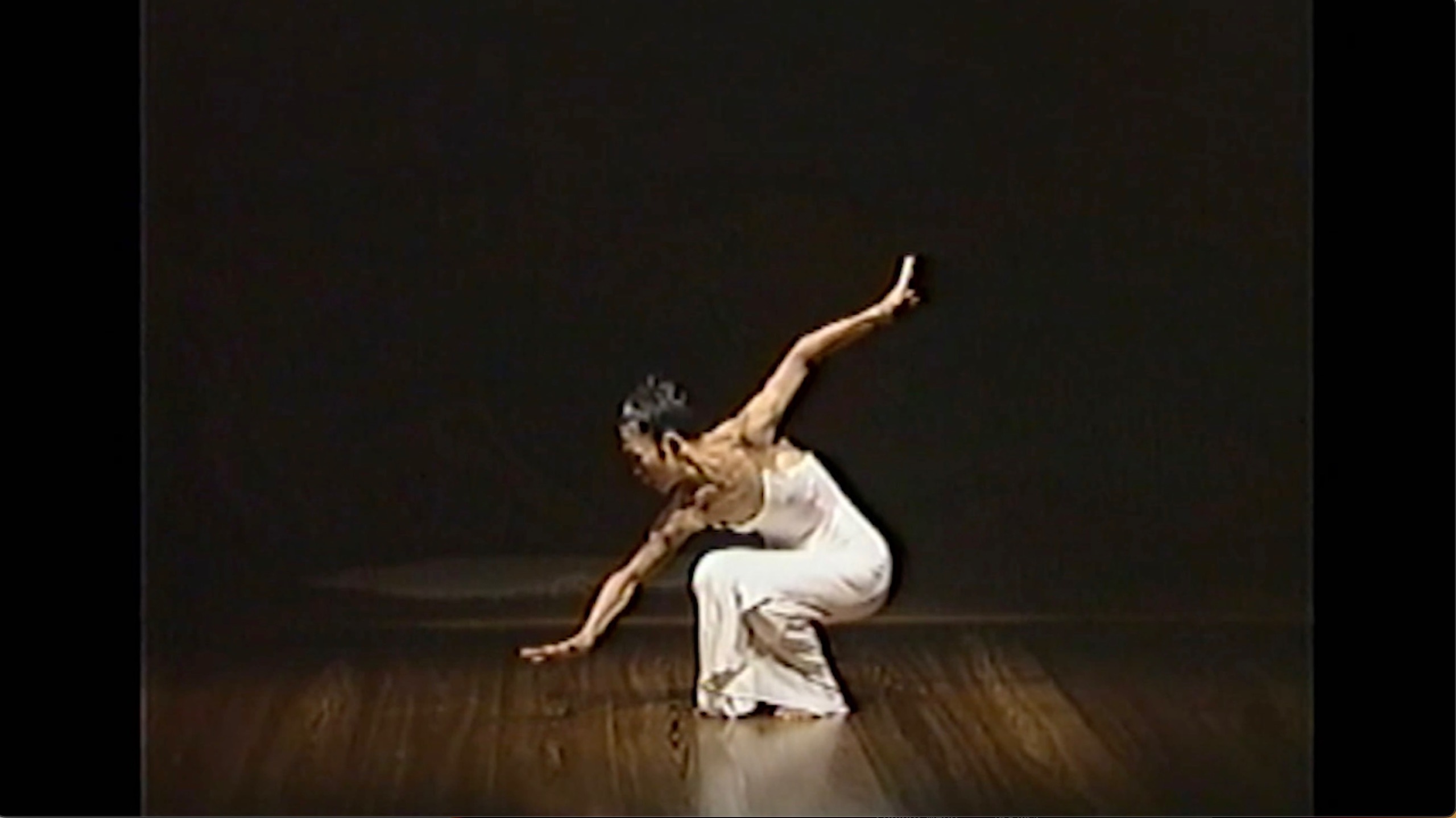
- Performer(s)
- Mariko Sanjo
- Director/Choreographer
- Mariko Sanjo
- Venue
- Atsuta Shrine Noh Theater
- Year performed
- 1987
-
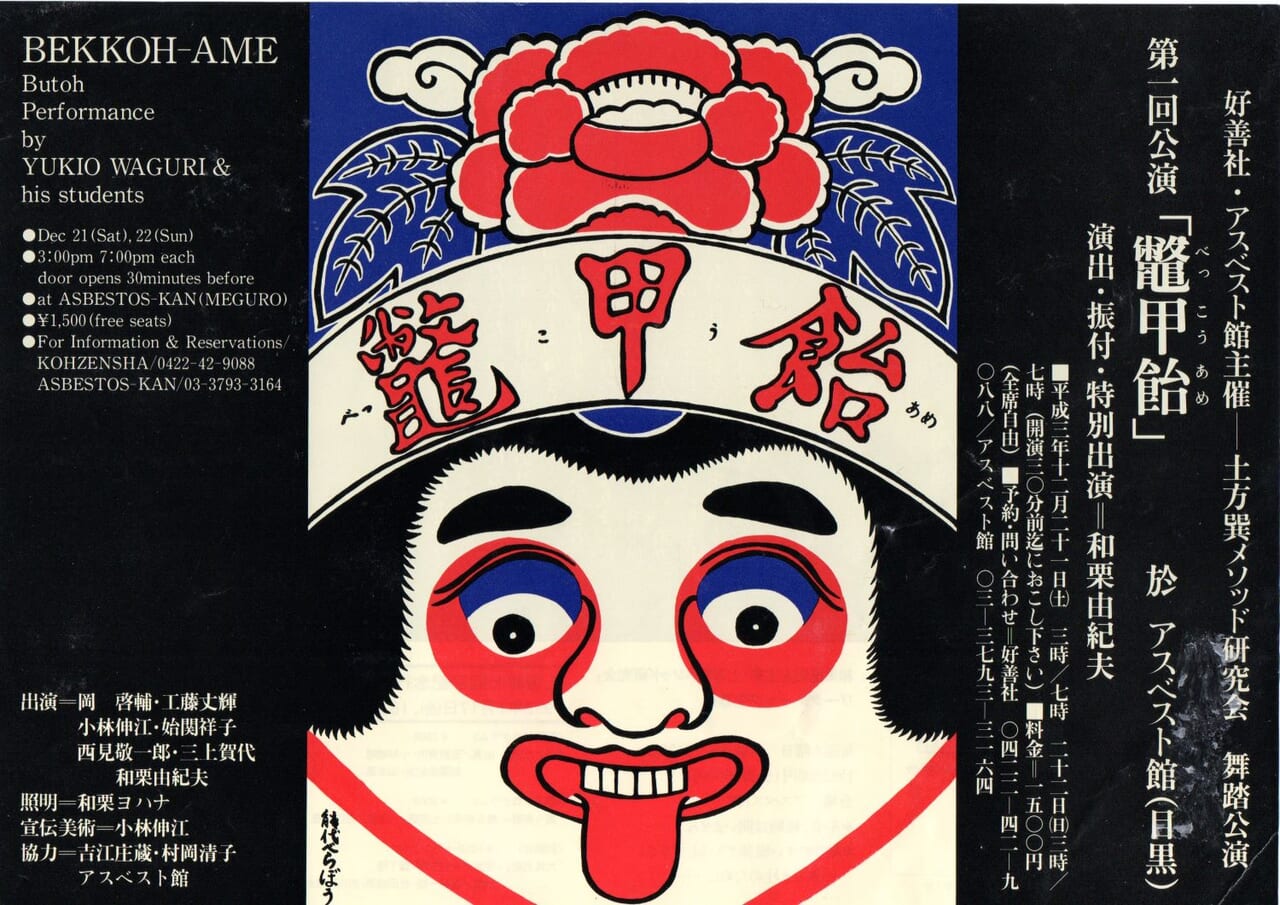
Bekkō Candy
The first performance by the Hijikata Method Research Group established by Waguri Yukio, a former pupil of Hijikata Tatsumi, through weekly workshops held at Asbestos-kan at the invitation of Motofuji Akiko. Bekkō candy, known to come in many shapes, refers to the form. Waguri named the performance thus with the hope that each person would find their own form.
- Performer(s)
- Kozensha
- Director/Choreographer
- Yukio Waguri
- Venue
- Asbestos-kan
- Year performed
- 1991
-
Before the Dawn
"Before the Dawn", a dance of metamorphosis, where darkness melts into brightness.
Through her own transformation, Yumiko Yoshioka illuminates secrets in our bodies.
Creatures hidden in our forgotten memories joyfully start to revive.
Something grotesque yet strangely beautiful grabs our attention.
We can't help but be captivated by this strange force, a source of darkness and light.
-Premiered in Espace Culturel Bertin Poirée in Paris in April 2002. It has since been performed all over the world, including in Germany, Spain, Poland, Italy, Belarus, Portugal, the UK, the US, Canada, Mexico, Peru, Brazil, Argentina, Chile, Australia, New Zealand and South Korea.
-The video was filmed at a butoh festival in London in May 2005.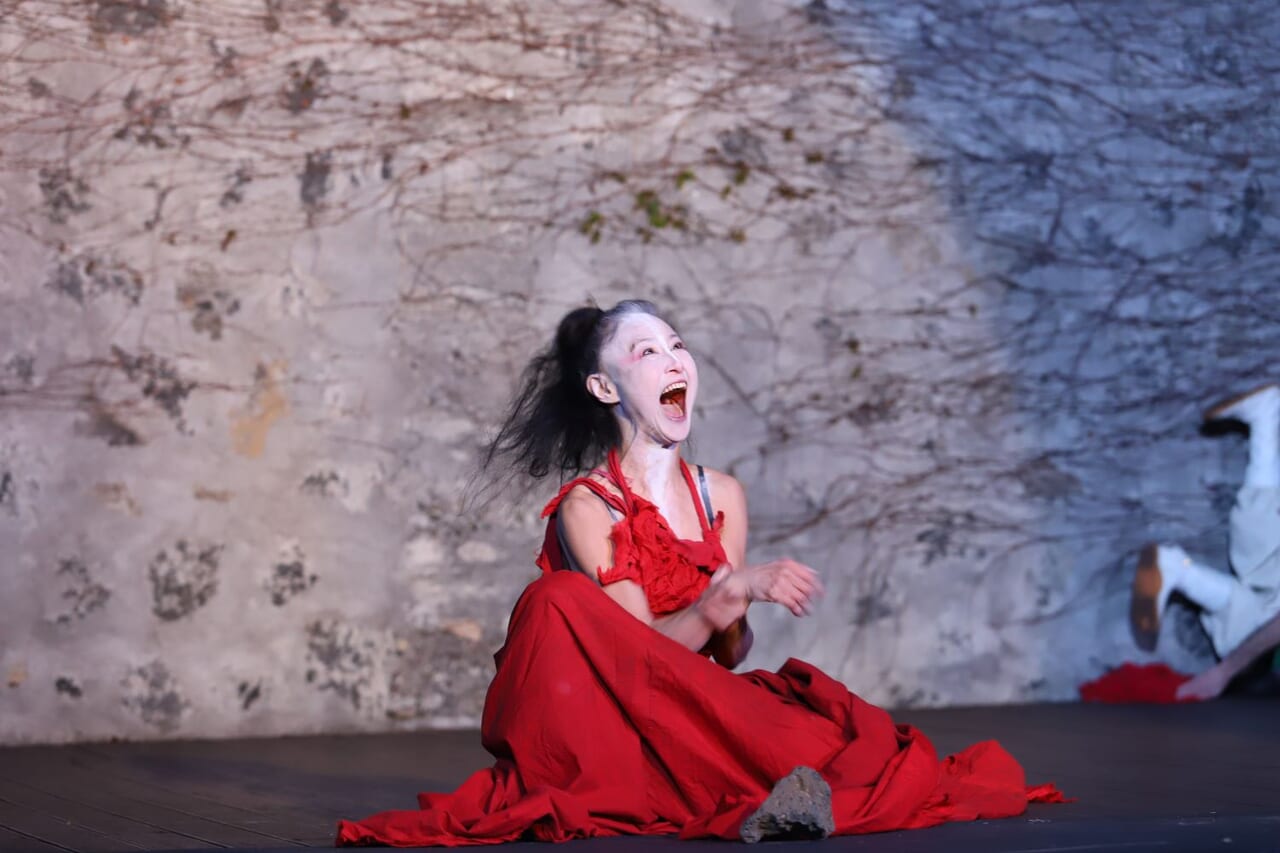
- Performer(s)
- Yumiko Yoshioka
- Director/Choreographer
- Yumiko Yoshioka
- Venue
- London
- Year performed
- 2005
-
Baroquekikizu
Footage from dance therapy sessions held at Seinan Hospital, a psychiatric hospital in Hachinohe, Aomori. From around 1980, butoh dancer Mitsutaka Ishii began holding workshops there on the invitation of photographer Mitsutoshi Hanaga. Being based in Tokyo, Ishii could not visit often, and so he taught the patients by sending practice examples by video. Due to its setting as a psychiatric hospital, this performance was held only for those involved, and all props, costumes and makeup were done by Ishii along with hospital staff.
'Baroquekikizu' was credited as dance therapy event. Later however, the film 'Mettarohozu' was credited as a butoh therapy event.
- Performer(s)
- Mitsutaka Ishii
- Director/Choreographer
- Hajime Chiba
- Venue
- Seinan Hospital (Aomori)
- Year performed
- 1981
-
Barefoot Canon
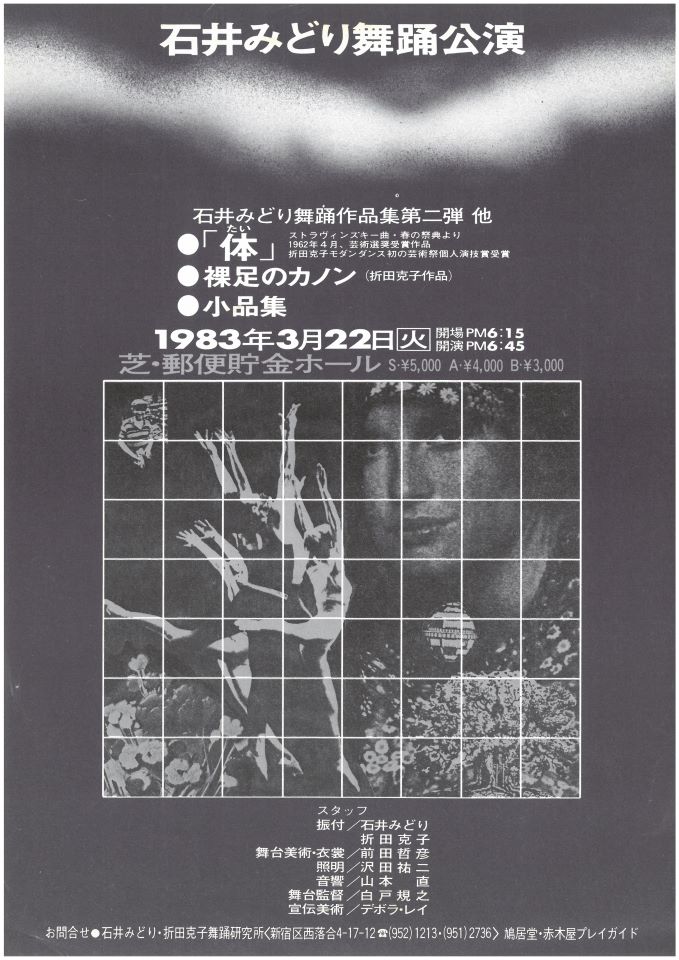
Katsuko Orita’s dance piece presented at the Midori Ishii Dance Recital. It is a group piece choreographed to Pachelbel's Canon. The choreography makes expansive use of the space and impressive gestures, with a playfulness brought in by the barefooted girls'. There is a sense of unity, moving with the music without it being an accompaniment.
- Performer(s)
- Midori Ishii and Katsuko Orita Dance Studio
- Director/Choreographer
- Katsuko Orita
- Venue
- Tokyo Post Saving Hall
- Year performed
- 1983
-
Bar do thos grol
Tibet is full of wonders. 'Bar do thos grol' is the Tibetan name for an esoteric Buddhist scripture commonly known as the 'Tibetan Book of the Dead'. This mysterious book teaches the path for reincarnating spirits how to find their way from death to birth. Inspired by this scripture and a pilgrimage to the holy Mt. Kailash in Western Tibet in 1995, Mushimaru creates a unique, vivid mandala world of physical poetry. I must dance and travel, drink and fall in love.
- Participated in the 2nd OSAKA DANCE EXPERIENCE
- Mushimaru JAPAN TOUR '96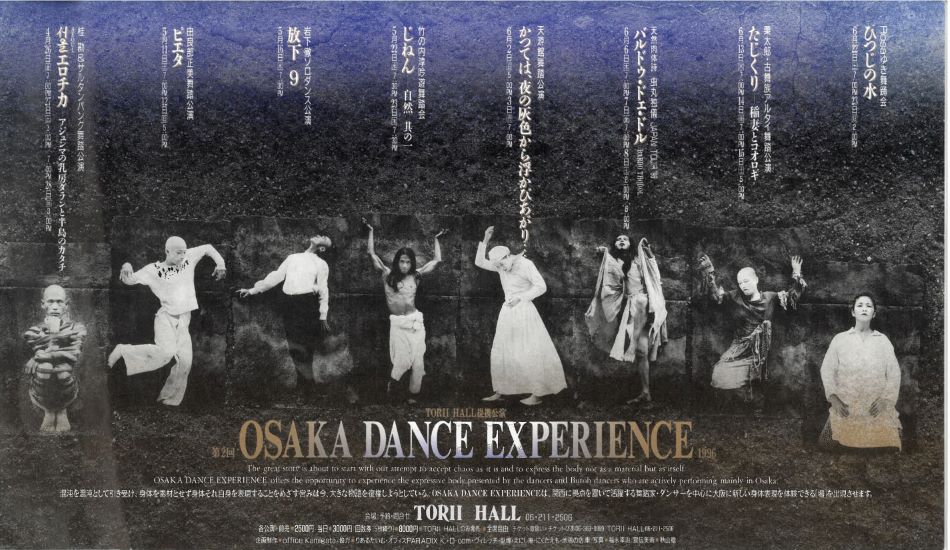
- Performer(s)
- TORII HALL
- Director/Choreographer
- Mushimaru Fujieda
- Venue
- TORII HALL
- Year performed
- 1996
-
Azami [Thistle]
Inspired by the sight of gracefully energetic, powerful young girls returning home from the fields in horse-drawn carriages at sunset.
This was the first piece that Akiko Ohara created at Yuba Farm, after settling there in 1961. Since its premiere at Yuba Farm, this piece has been performed in Japan and throughout Brazil.
The video was recorded in 1990.
![Azami [Thistle]](https://video.dance-archive.net/en/wp-content/uploads/2025/01/P005247_14492.jpg)
- Performer(s)
- Ballet Yuba
- Director/Choreographer
- Akiko Ohara
- Venue
- Teatro Yuba
- Year performed
- 1990
-
AWAI [Bi-duality]
Premiered at Waseda Hoshien, Tokyo, in 1988 and also later performed in Paris and Edinburgh. Part of the 'Shozoku wa Mizu' [Costume is Water] dance series.
The performance used mirrors and fluorescent light tubes. In the programme for the premiere performance were the words 'I would like to hunt for blue fish of (sexual) self-love that has sprouted little by little in my dance as a play of affection between the ankle joint and lip, or as an ileus (intestinal obstruction) of the sense of touch and being touched, in the lake of my body'.
- Masaki Iwana Solo Butoh Dance- Performer(s)
- Studio 200
- Director/Choreographer
- Masaki Iwana
- Venue
- Studio 200
- Year performed
- 1989
-
Autumn Poem
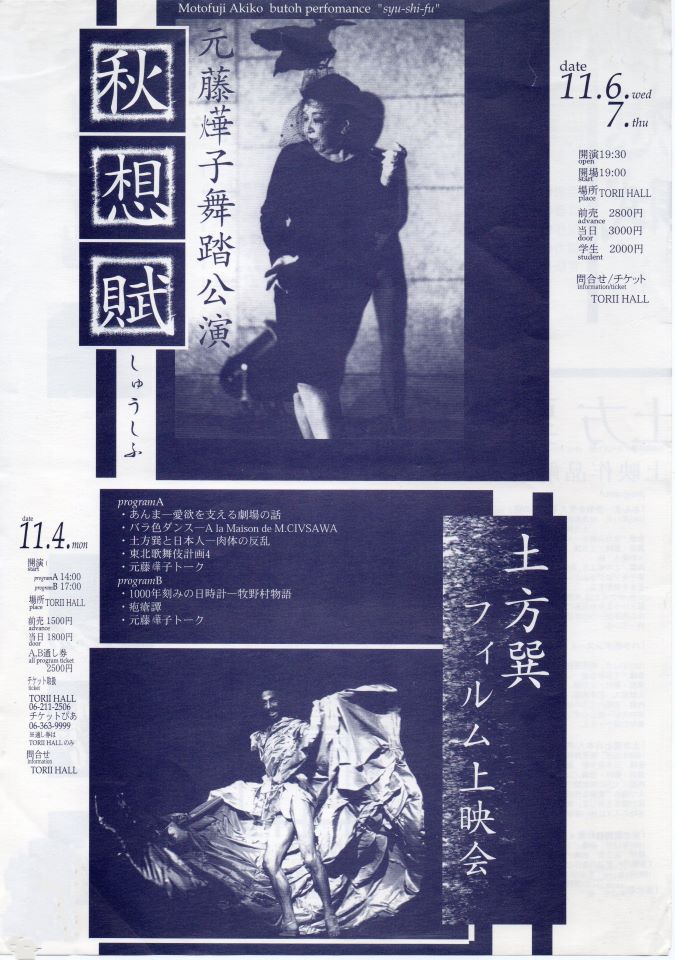
Akiko Motofuji generally only created one new performance each year, but for 1996 she presented a new work on the invitation of the Torii Hall in Osaka. For the small and intimate hall, Motofuji created a poetic piece in which she quietly recollected life, as though pondering on an autumn evening. Her performance appeared to narrate a deep monologue, making use of the ballet and modern dance techniques she developed over the years.
- Performer(s)
- Asbestos-kan
- Director/Choreographer
- Akiko Motofuji
- Venue
- TORII HALL
- Year performed
- 1996
-
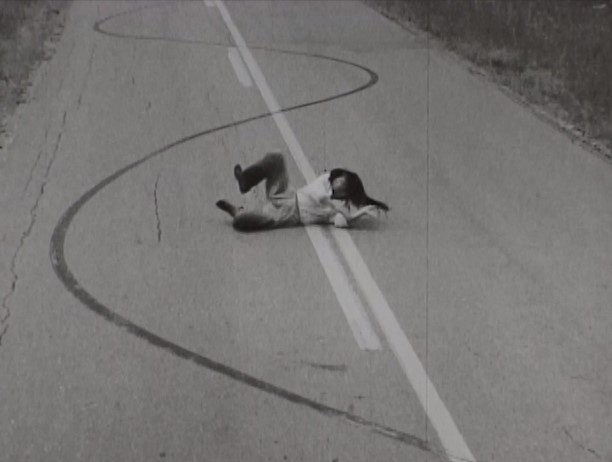
August 27, 1979 – The Girl Can’t Help It
The first film of Yoshiko Chuma shows simple motion and action in front of the landscape in Maine, USA.
- Performer(s)
- Yoshiko Chuma
- Director/Choreographer
- Yoshiko Chuma
- Venue
- Maine, USA
- Year performed
- 1979
-
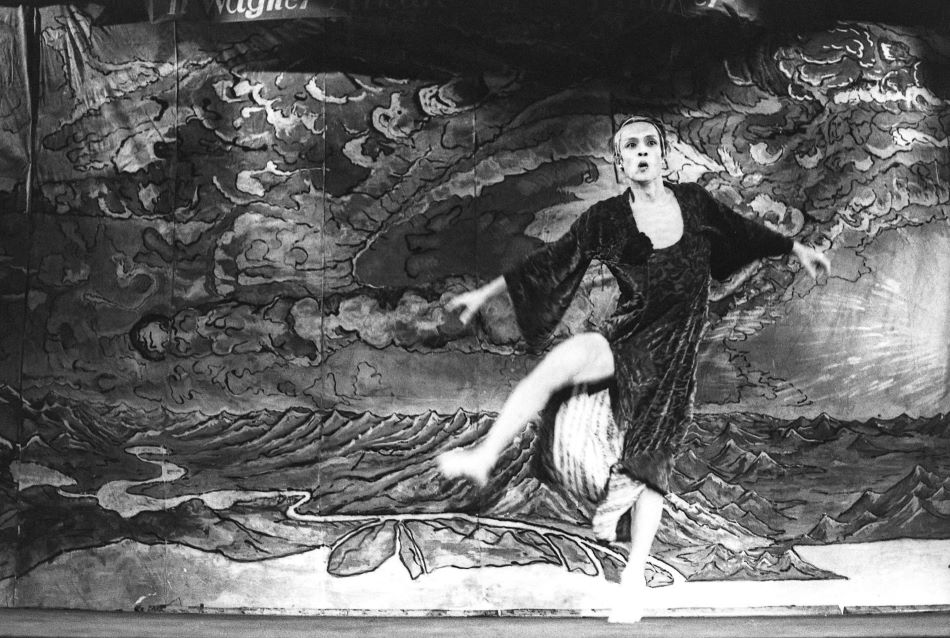
At the Foot of a Hill
A duo performed by Akira Kasai and Kazuo Ohno at 'Modern Dance: Transcendence and Disclosure of the Body' produced by dance critic Miyabi Ichikawa. Based on 'The Story of Venus and Tannhauser' by Aubrey Beardsley, with Kazuo Ohno performing the role of Venus. The performance was recreated in March 2020 along with 2 other Ohno/Kasai duos, with Ohno's role performed by Takao Kawaguchi, and Kasai's role performed by Mitsutake Kasai.
- Performer(s)
- Tenshi-Kan
- Director/Choreographer
- Akira Kasai
- Venue
- Seinenza Theatre (Tokyo)
- Year performed
- 1971
-
Asian Theater Festival Documentary – Manila, Philippines
The second Asian Theater Festival, which was first held in Seoul in 1982, took place in Manila. The video includes the opening ceremony and parade, as well as performances by Sanjukta Panigrahi, an odissi dancer from India, Theatre SAE DKI from Indonesia, Lan-Ling Theatre Workshop from Taiwan, and the Dae Ha Dramatic Troupe from Korea, along with various groups from the Philippines. From Japan, the Yokohama Performance Group and Byakko-sha participated, presenting their 2-3 hour performance, "Geikotsu no Mori" [The Forest of Whale's Bones]. The footage also includes a performance by Byakko-sha at the New Bilibid Prison on the outskirts of Manila.
-Asian Theater Festival and Conference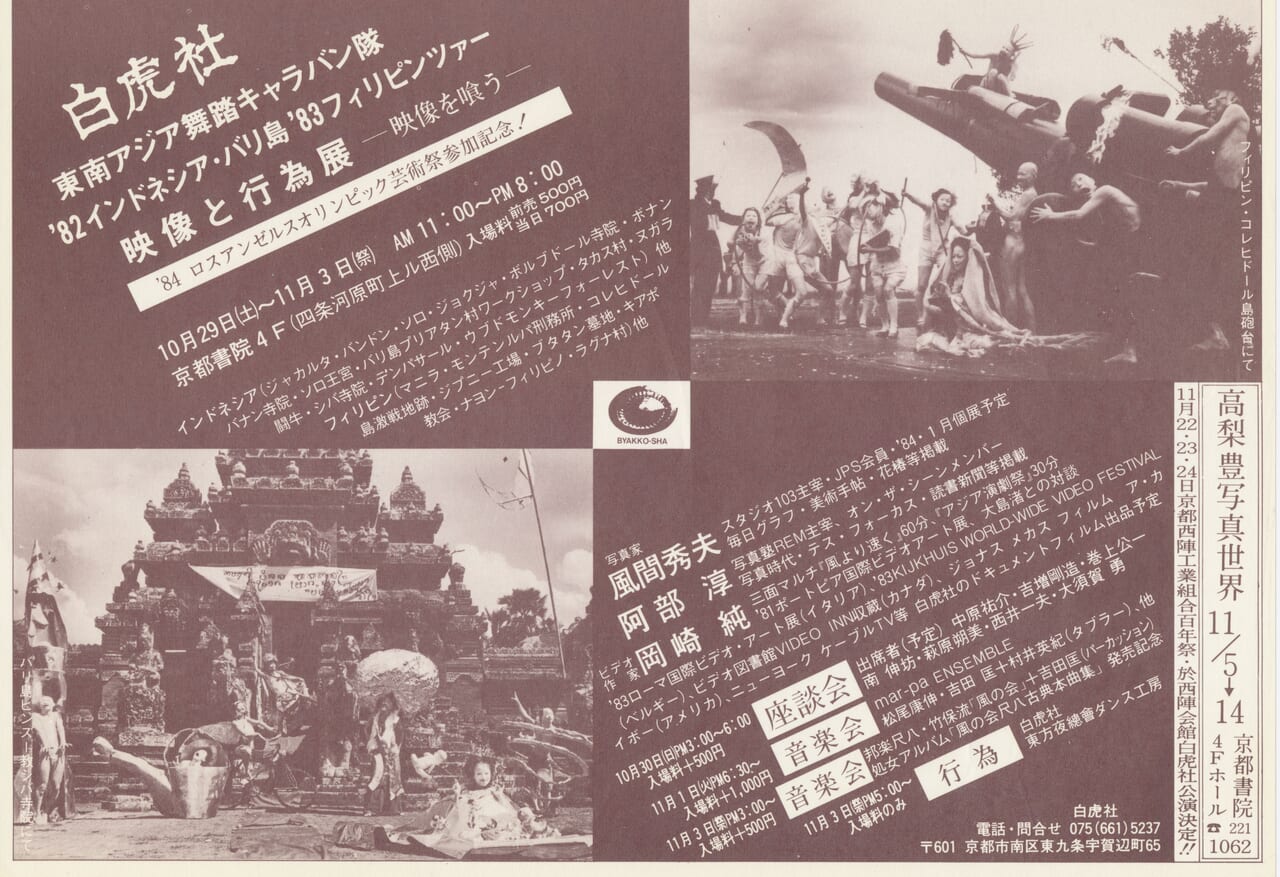
- Performer(s)
- Byakko-sha
- Director/Choreographer
- Isamu Osuka
- Venue
- Cultural Center of the Philippines, New Bilibid Prison (outskirts of Manila)
- Year performed
- 1983
-
ART BODIC performance at Kakegawa-za
A record of "New Twilight Hour - In Tribute to the Sealing of Kakegawa-za," performed by the Byakko-sha’s "takeout" butoh group ART BODIC at the closing event “Farewell, Our Beloved Kakegawa-za” held for the Kakegawa-za theater, formerly located in Kakegawa City, Shizuoka Prefecture.
Kakegawa-za was a full-scale theater built in 1909, equipped with a revolving stage, and after the war it also screened films. Following a varied program that included a lecture by Tomomi Muramatsu and a poetry reading by Tomohiro Tsuchiya (author of "Kakegawa-za: My Cinema Paradise,") Byakko-sha appeared as the finale. Female dancers performed with fireworks and male dancers wielded torches, adding a vivid and celebratory touch to the theater’s farewell.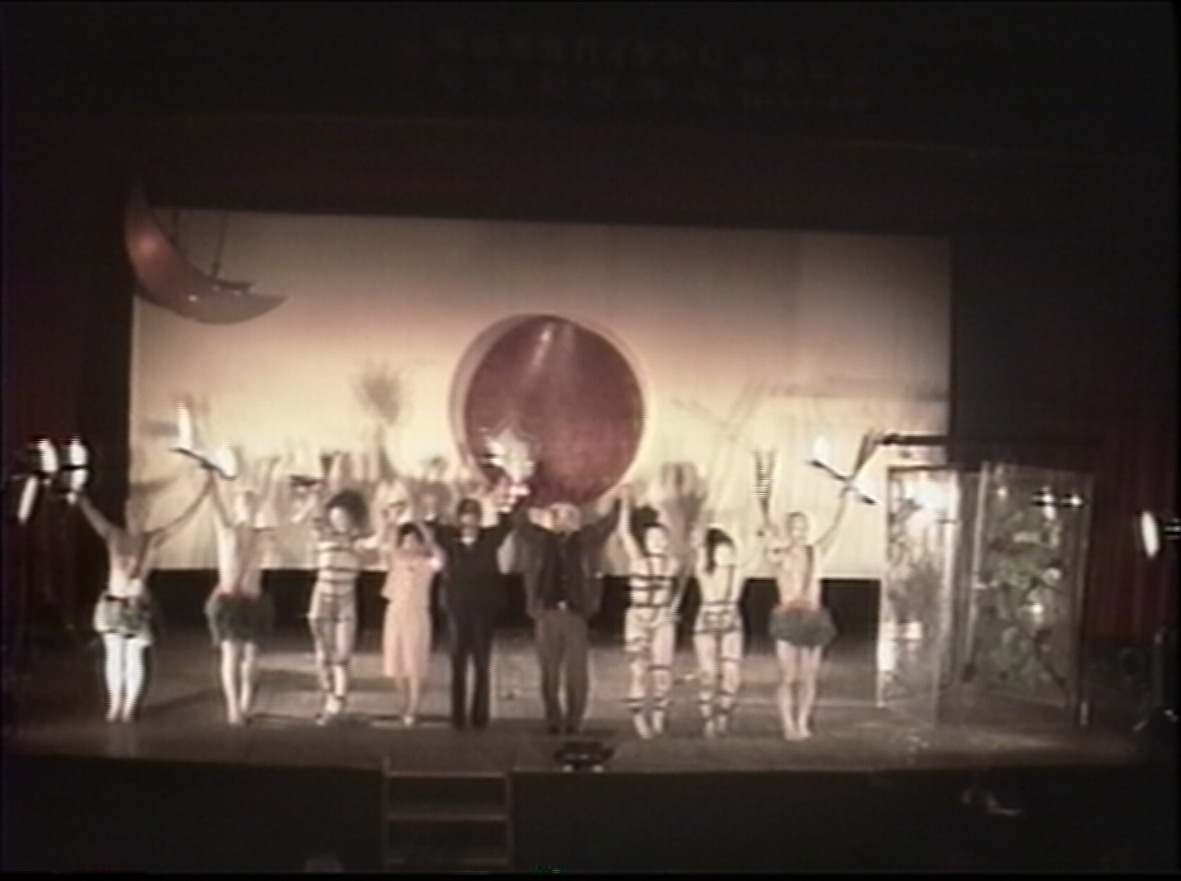
- Performer(s)
- Byakko-sha
- Director/Choreographer
- Isamu Osuka
- Venue
- Kakegawa-za
- Year performed
- 1991
-
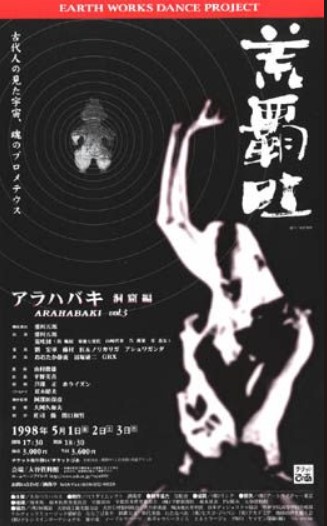
ARAHABAKI: Cave version
Although originally based in Tokyo, Namerikawa Goro, who performed 'Aboriginal' at the Oya Subterreanean Cave in 1986, moved to Oya in 1996 to focus on his own stage productions. Seeking to create a form of movement which is guided by the space, and stage where the body can be entrusted to the space, he once again created a performance at the Oya Museum, where he felt the breath of ancient times. The flyer read: "The Universe as seen by the Ancients, the Prometheus of the Soul". 'Arahabaki' refers to a mysterious deity, mainly workshipped in the Tōhoku and Kantō regions.
- Performer(s)
- Goro Namerikawa/Austro Arts Association Co.,Ltd.
- Director/Choreographer
- Goro Namerikawa
- Venue
- Oya Stone Underground Quarries
- Year performed
- 1998

