
Overview
-
Frankenstein’s Fable
The story of an imperfect life form born from a doctor's obsession with life.
Unable to accept the death of a loved one. People who wish for a happy future with their loved ones.
A man is removed from the circle of reincarnation, from life to death, and from death to life, and is broken.
The doctor was exposed to the mystery of life, and wanted to know everything.
A horribly tragic fable.
- Participated in the ACA National Arts Festival 1980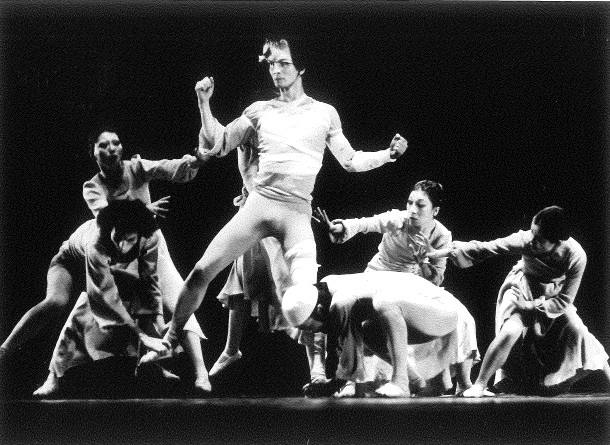
- Performer(s)
- Wakamatsu Miki & Tsuda Ikuko Free Dance Performance
- Director/Choreographer
- Miki Wakamatsu, Ikuko Tsuda
- Venue
- Yomiuri Hall
- Year performed
- 1980
-
The Forest of Whale’s Bones
Founded in Kyoto in 1980, Byakko-sha toured university festivals throughout the Kansai region from May of that year, beginning with its inaugural performance, "Himei no Mori" ("The Forest of Hidden Screams"), at Ritsumeikan University, and continuing through 1981. This footage documents "Geikotsu no Mori" ("The Forest of Whale's Bones"), performed at Doshisha University in October 1980. The roles of carrying the palanquin bare-chested were performed by students from the university festival executive committee and festival staff. Many elements can be seen here that would later be incorporated into multiple works, including the men’s group dance "Dance of Backs," in which dancers place pillows on their heads and perform facing away from the audience, and the women’s group dance "Broom Dance."
Recorded on 8mm film. There is some sound degredation from the middle to the end of the video. Sanae Hiruta's solo section makes use of throat singing.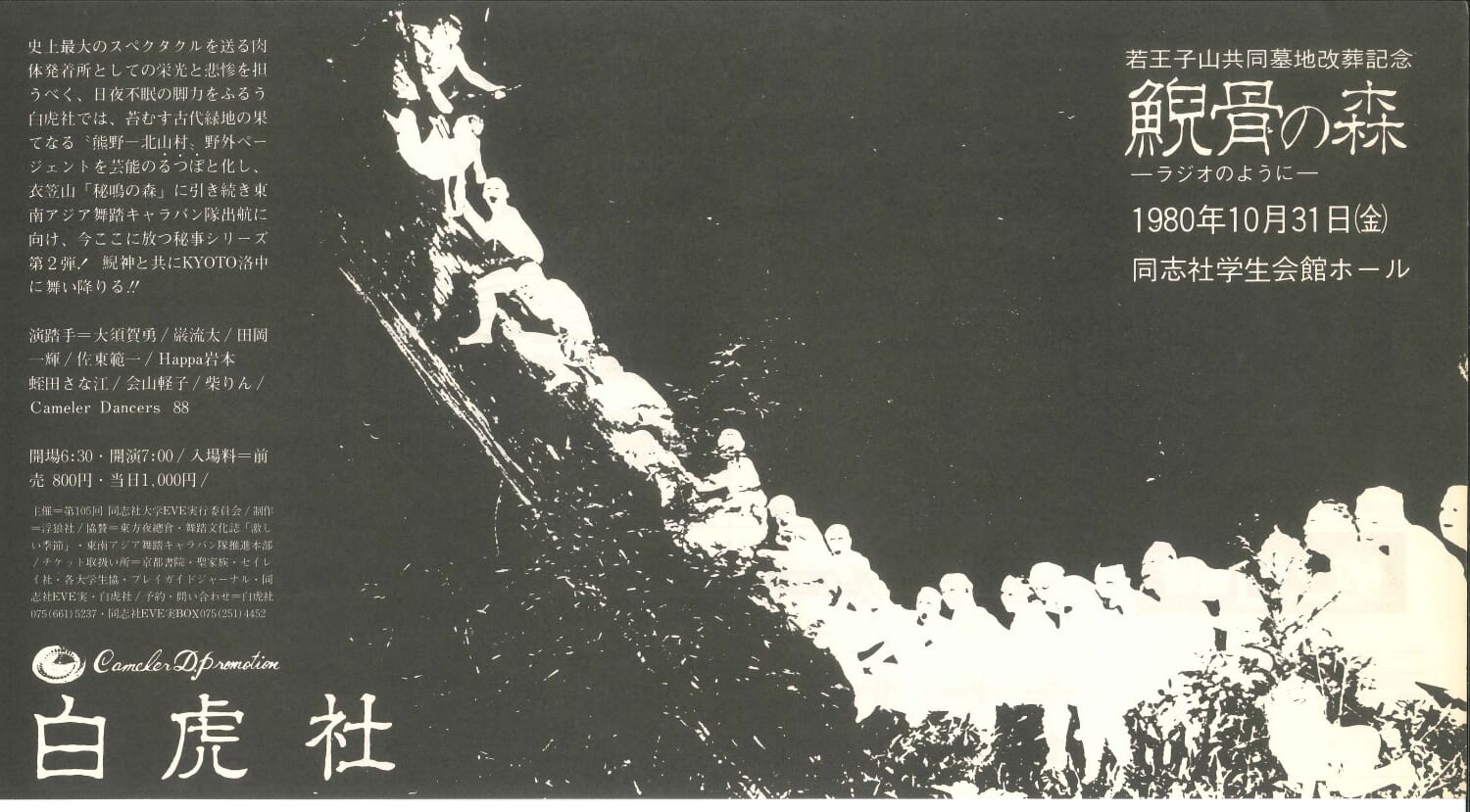
- Performer(s)
- Byakko-sha
- Director/Choreographer
- Isamu Osuka
- Venue
- Doshisha Students' Hall
- Year performed
- 1980
-
Floating Garden
"It is said that the medieval dream of building a floating garden is half realised through extravagance.
In the five rooms of the Floating Garden are five dreams, and Izumi opens each door one by one, inviting the audience into rooms of fantasy."
- Katsushi Izumi Dance Opera.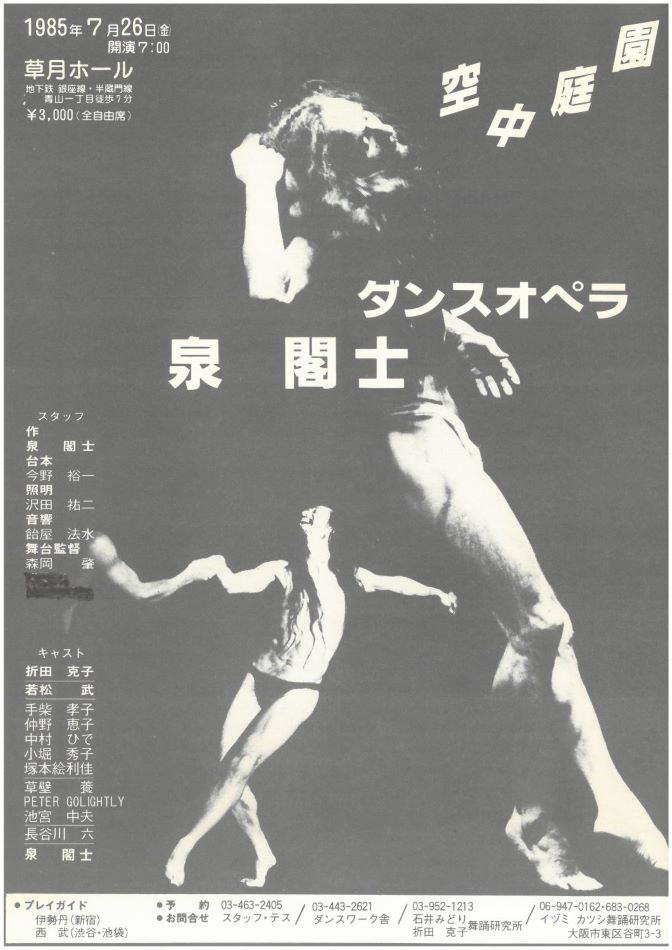
- Performer(s)
- Midori Ishii and Katsuko Orita Dance Studio
- Director/Choreographer
- Katsushi Izumi
- Venue
- Sogetsu Hall
- Year performed
- 1985
-
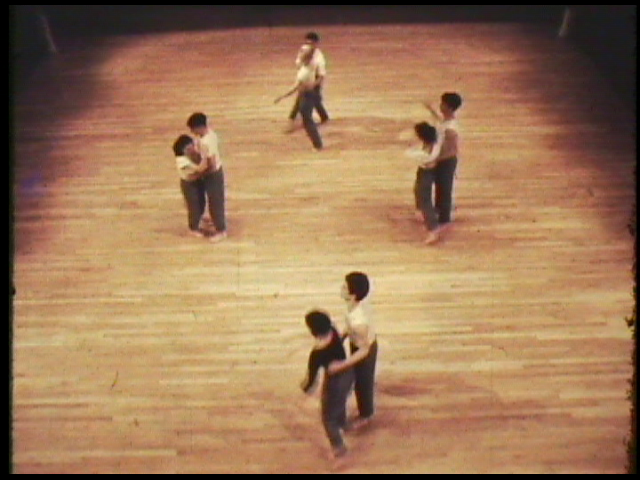
Five Car Pile-Up
Based on a work performed by 100 performers at St. Marks Church in New York City in 1983, the performance was condensed and various angles, slow motion, montage, and soundscapes were used to encompass a space far beyond what we can see. A new visual choreography was created.
- Performer(s)
- Yoshiko Chuma
- Director/Choreographer
- Yoshiko Chuma
- Year performed
- 1983
-
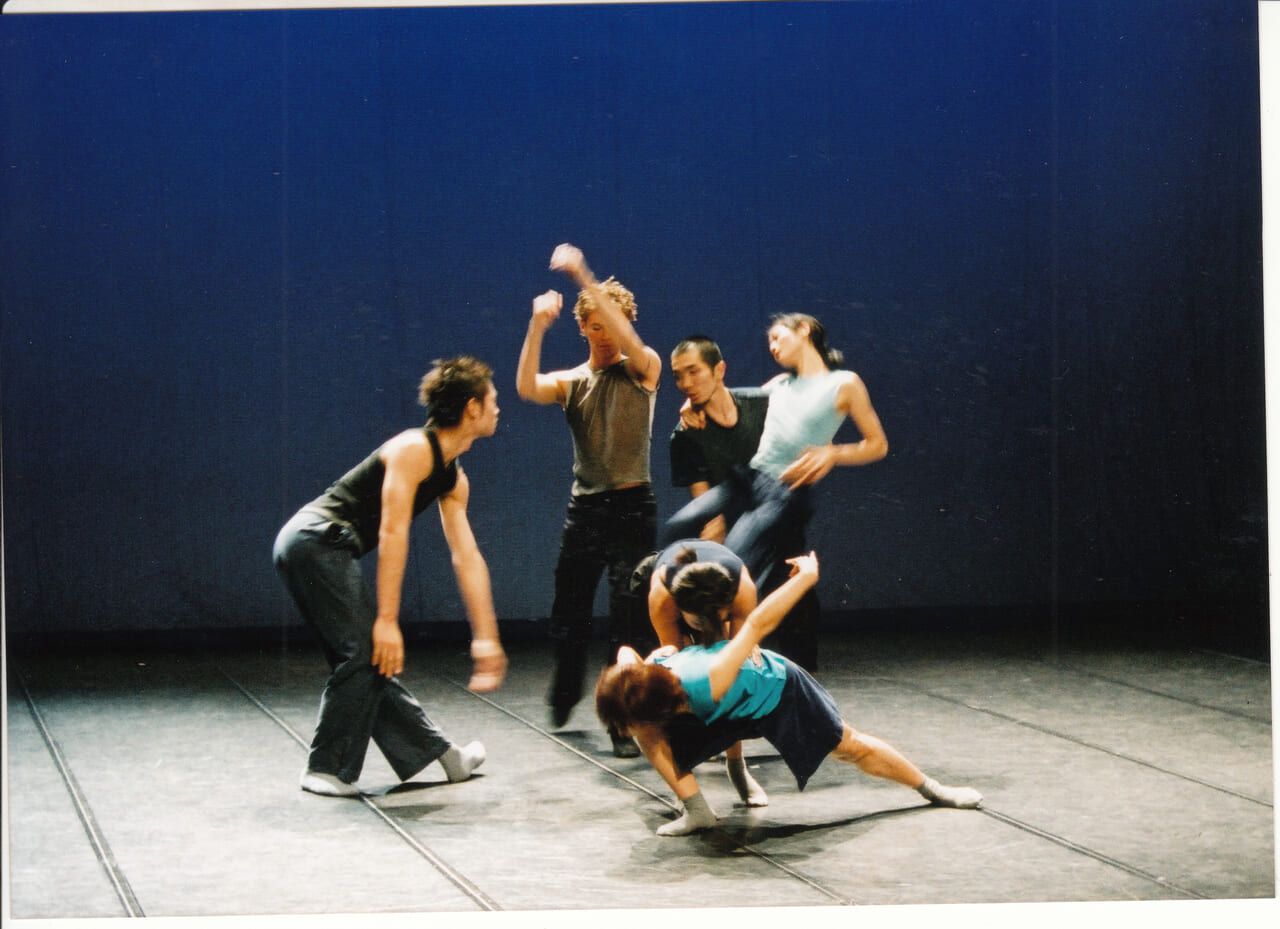
Fish for Ellen; Night on the grass; What’s wrong
Inaugural performance by Fluid hug-hug Co. led by Kota Yamazaki, featuring three works choreographed, directed and composed by Yamazaki from 1996-2002, all performed by new dancers.
- Performer(s)
- Kaibunsha
- Director/Choreographer
- Kota Yamazaki
- Venue
- Spheremex
- Year performed
- 2002
-
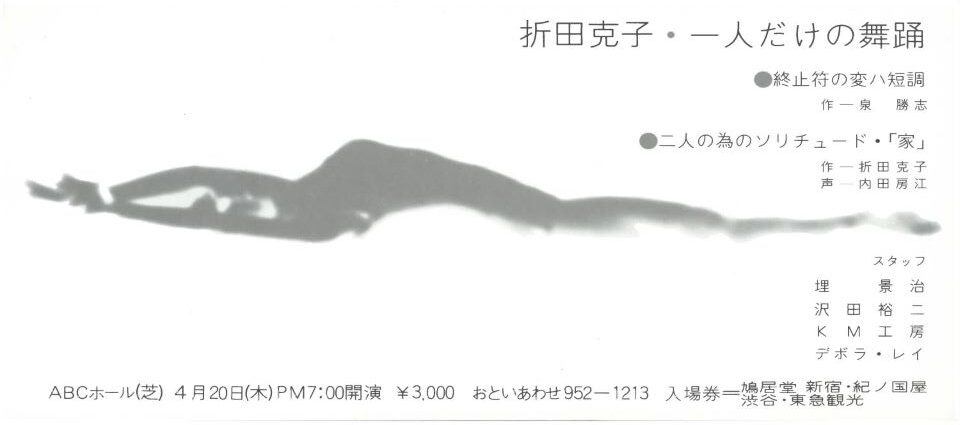
Katsuko Orita – Dance Alone “Final Note in C Minor”
A solo piece choreographed by Katsushi Izumi for Katsuko Orita. The work beautifully draws out Orita's ability to express deep emotions lyrically and subjectively.
- Performer(s)
- Midori Ishii and Katsuko Orita Dance Studio
- Director/Choreographer
- Katsushi Izumi
- Venue
- ABC Hall
- Year performed
- 1978
-
f/F Parasite
Masterpiece by the Hachinohe-based theatre company Molecular Theatre. The avant-garde approach shocked the Japanese theatre world in the 1980s when it won rave reviews at theatre festivals in Germany, Belgium and other countries. Based on a collection of letters exchanged between Franz Kafka with his fiancée Felice, it depicts Kafka's psychograms - the madness of his writing and its endless proliferation, the parasitic voice and thought in words, courtship and isolation - in a dense, anxiety-filled space, dramatising them with overwhelming tension and physical expression.
- Participated in the Münster Theater Festival
- Short version
- From 'Letters to Felice' by Franz Kafka, translated by Shiroyama Yoshihiko (published by Shinchosha)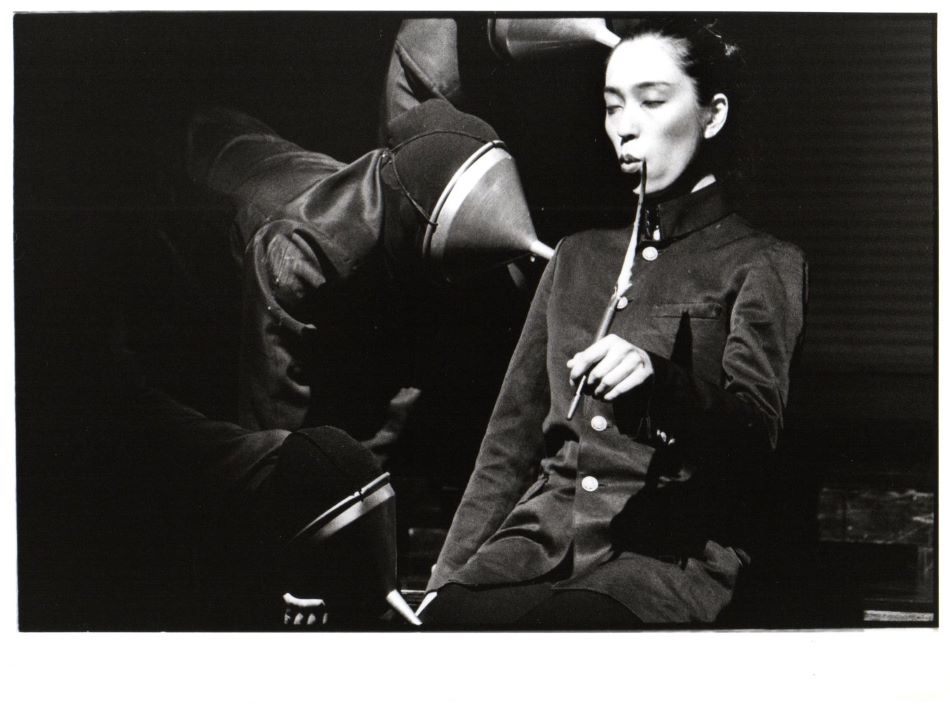
- Performer(s)
- Molecular Theatre
- Director/Choreographer
- Shigeyuki Toshima
- Venue
- Theater im Pumpenhaus
- Year performed
- 1987
-
Feverish Days
As though going round and round
Forever round inside a hole
A great circle hither and thither.
From which a white bird flies away.
Rather than try to fill the hole
Just leave it as it is.
But beware the hole's gentle darkness
Lest in it we drown.
Pour poison on that fever.
-28th Terpsichore Project Newcomer Series
-35th Dance Critics Society of Japan: Newcomer Award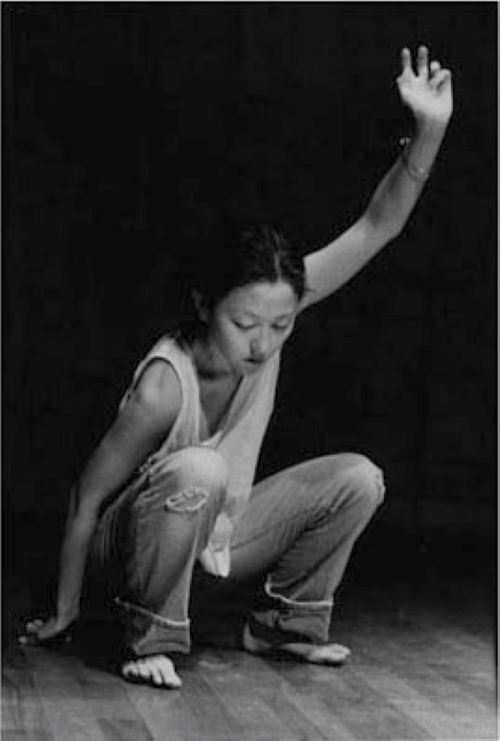
- Performer(s)
- Terpsichore
- Director/Choreographer
- Mayako Okura
- Venue
- Terpsichore
- Year performed
- 2003
-
Festa do Interior
Inspired by traditional harvest festivals that take place throughout Brazil in June. The performance brings together people of all ages, from young individuals to older participants who do not typically engage in dance lessons. It is cherished by Brazilians wherever it is performed.
Premiered in 1991 for Ballet Yuba's second tour of Japan. The work has also been performed at Yuba Farm and throughout Brazil.
The video was filmed in 2011.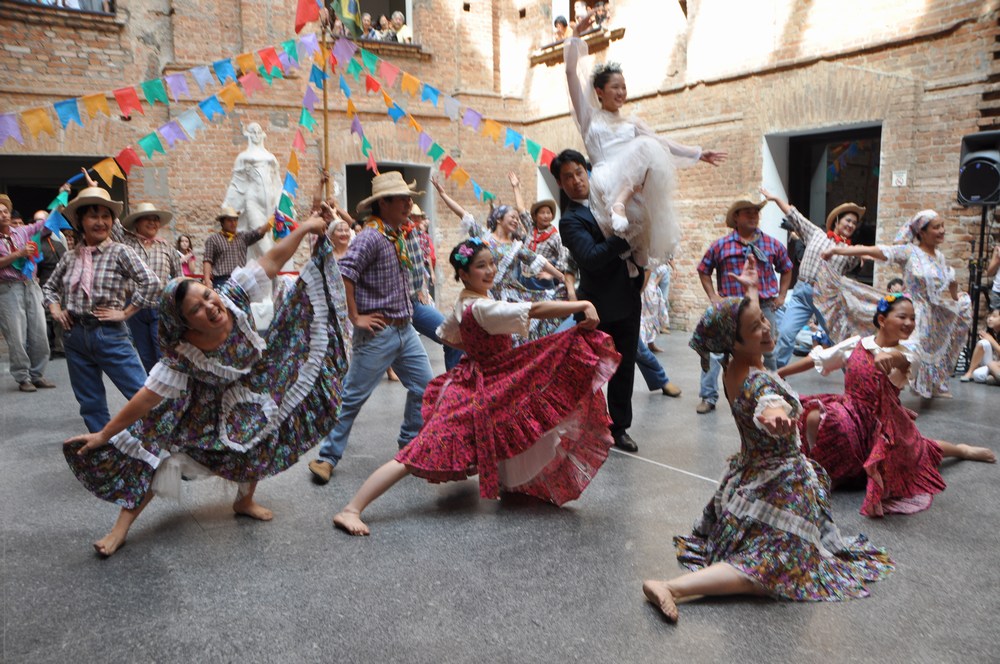
- Performer(s)
- Ballet Yuba
- Director/Choreographer
- Akiko Ohara
- Venue
- Teatro Yuba
- Year performed
- 2011
-
Datenshi’ [Fallen Angel]
The first work by Katsushi Izumi on his return to Japan after travelling to Europe on the invitation of Maurice Béjart. In this piece he established his style of performing in suspenders and pointe shoes. Izumi left many paintings of dreams he had, and this work is an overflowing collage of images.
-Tess Dance Series No. 10. The World of Katsushi Izumi.![Datenshi’ [Fallen Angel]](https://video.dance-archive.net/en/wp-content/uploads/2024/01/V00037_ishiiorita1s_fl.jpg)
- Performer(s)
- Midori Ishii and Katsuko Orita Dance Studio
- Director/Choreographer
- Katsushi Izumi
- Venue
- Sanbyakunin Theatre
- Year performed
- 1979
-
The Fable of Dr Jekyll and Mr Hyde
No one is perfectly good. Everyone has good and evil within.
Jekyll and Hyde succumb to the sweet temptation of evil and commit a sin. Small sins at first, then on to bigger sins.
Jekyll and Hyde's final act is suicide by hanging. The body shaking like a swaying ball is like the hearts of two people wavering between good and evil.
- Participated in the ACA National Arts Festival 1981
- Awarded the ACA National Arts Festival 1981 Excellence Award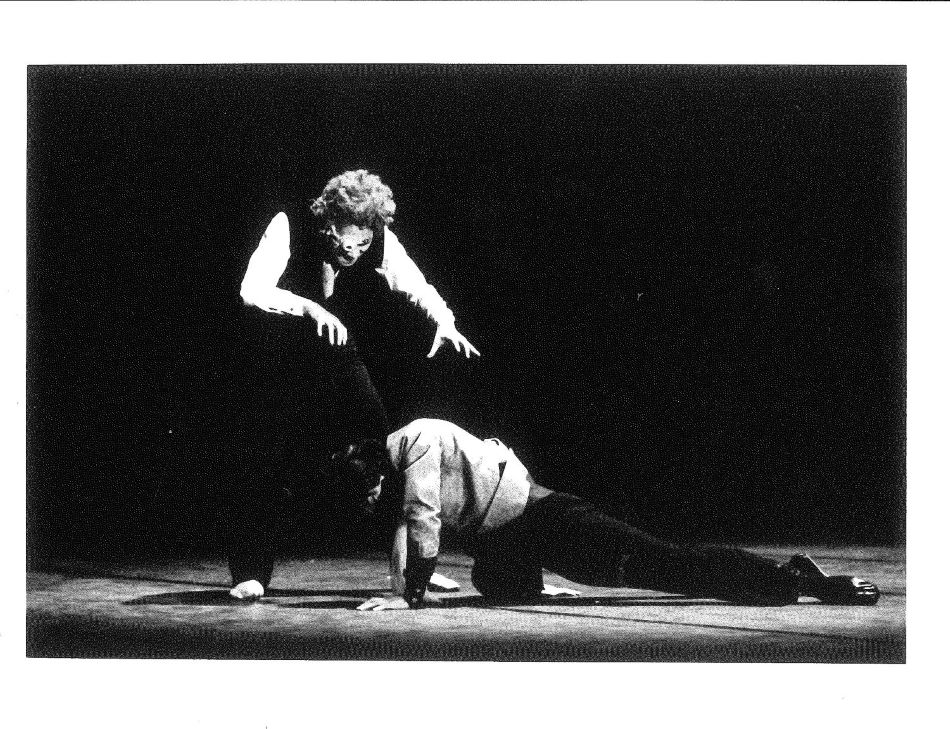
- Performer(s)
- Wakamatsu Miki & Tsuda Ikuko Free Dance Performance
- Director/Choreographer
- Miki Wakamatsu, Ikuko Tsuda
- Venue
- Yomiuri Hall
- Year performed
- 1981
-
eX…it! ’19: 7th International dance eXchange and performance festival on butoh and contemporary dance
Video documentation of eX...it! in 2019. The event had 8 instructors and 67 participants, who were divided into four groups for the first week-long workshop. For the second week, participants chose one of five teams with which to work. For the final two days, the participants were invited to give presentations to the general public.
About the festival:
At the beginning there was one question: Butoh - what is that?
Yoshioka Yumiko and delta RA'i have constantly been asking this question since co-founding tatoeba-THÉÂTRE DANSE GROTESQUE, the first German-Japanese Butoh company, in 1987.
This led to the idea of a European Butoh meeting, which was held first in 1995.
It was called eX...it!, and as a result of the huge popularity among choreographers, participants, audience and media, a regular festival has emerged, which has since been a highlight at Schloss Broellin every 4 years.
What was formerly a pure Butoh dance festival has today become an eXchange project for Butoh and contemporary dance. Nevertheless, the festival is still firmly anchored in Butoh, the Japanese expression dance.
Our eXchange dance festival is specifically designed for professionally oriented dancers of all disciplines who wish to work intensively with Butoh dance.
We try strictly to distinguish from therapeutic Butoh styles.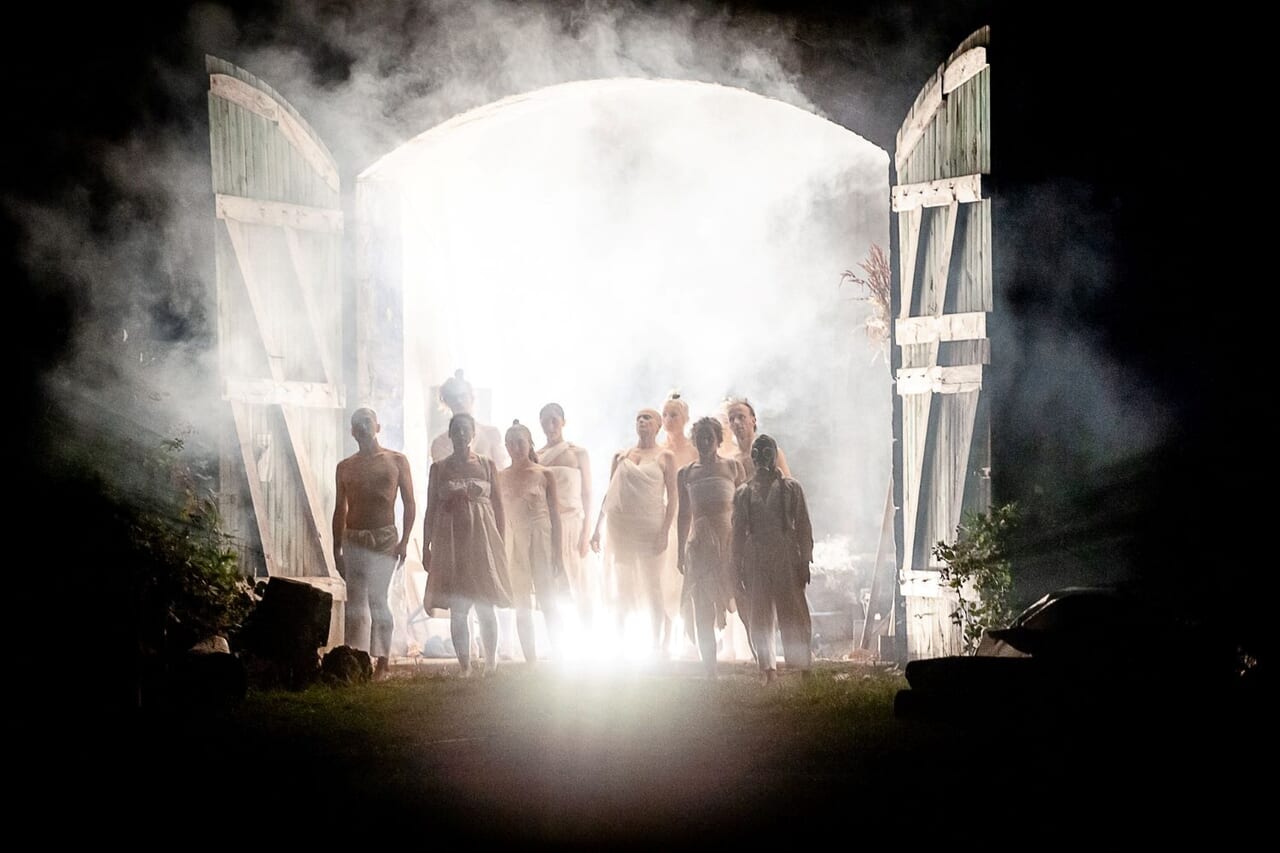
- Performer(s)
- Yumiko Yoshioka
- Director/Choreographer
- delta RA'i, Yumiko Yoshioka
- Venue
- Schloss Bröllin
- Year performed
- 2019
-
Event Fission
Outdoor performance on the Hudson River Landfill, produced by Creative Time. Eiko & Koma danced with a huge white flag billowing on top of a sand dune as the audience watched from below. The white flag was used to symbolically attack the newly developed downtown buildings. On a lower level of the landfill, to which Eiko & Koma tumbled down, there were fires on four corners of the performing area. At the end of the performance of 50 minutes, Eiko & Koma were swallowed into a deep hole they had dug and hid, disappearing with a blast of sand.
-Participated in the 'Art in the Beach'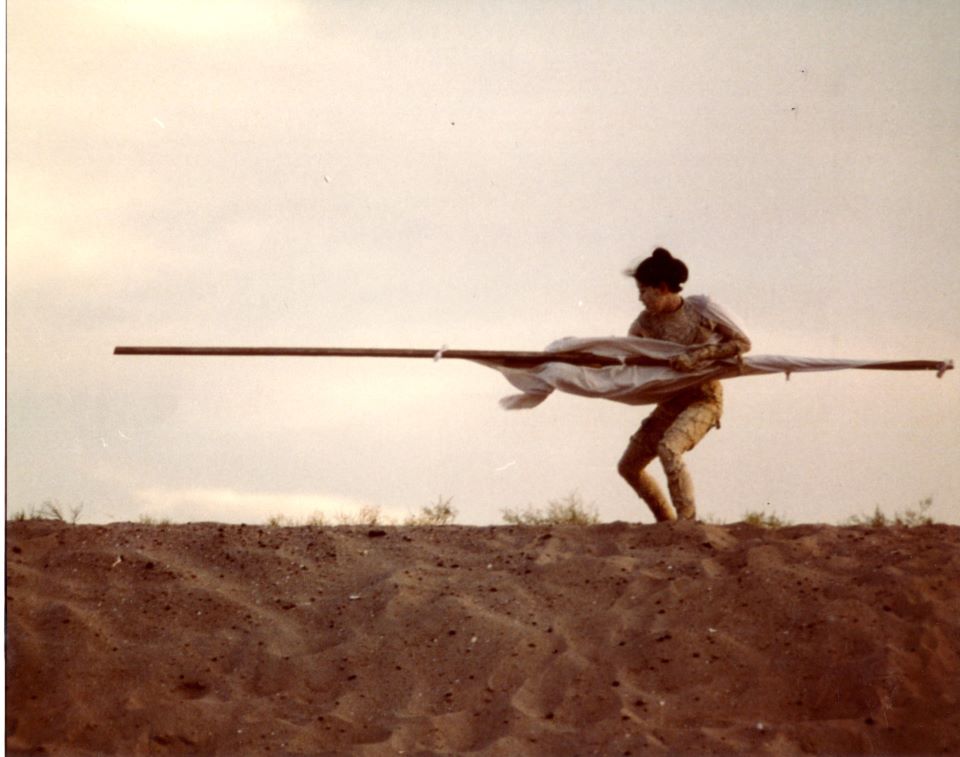
- Performer(s)
- Eiko & Koma
- Director/Choreographer
- Eiko & Koma
- Venue
- Hudson River Landfil
- Year performed
- 1980
-
Eternal Smile
Six-part solo butoh performance by Minoru Hideshima. The "Mr. O" in the sixth scene refers to the butoh dancer Kazuo Ohno, with whom Hideshima appeared in Ohno's 1976 film "Mr. O's Book of the Dead".
I. Towards my Father
II. I Thought to Make You Happy
III. Candy Candy Candy
IV. Penguins of the Antarctic
V. Thoughts on Eiko Takada: Eternal Smile
VI. "Mr. O and I"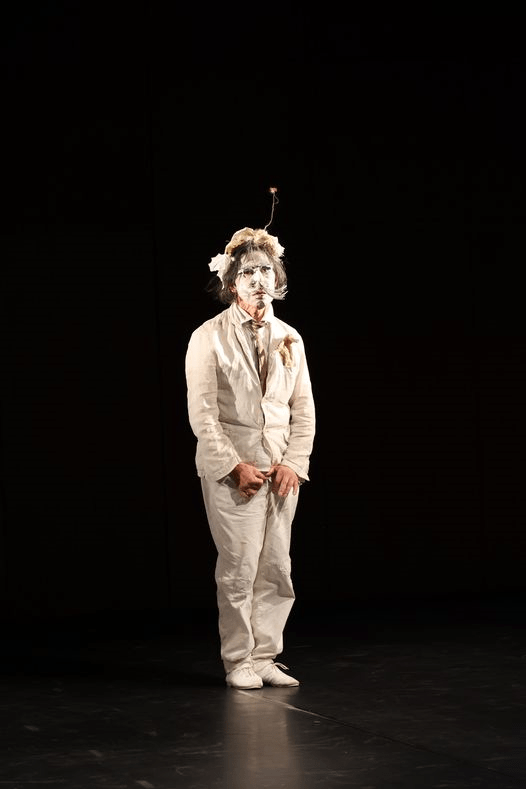
- Performer(s)
- Minoru Hideshima
- Director/Choreographer
- Minoru Hideshima
- Venue
- THEATER X
- Year performed
- 2023
-
EROLA – Dream of Stone
Hijikata Tatsumi said "all soft things will soon come under the control of hard things". What is the 'hard thing'? Is it iron, the bark of a log that withstands the wind, or the hardness of the spirit itself? "European dance is a crystal, a diamond. Butoh is a morning glory." What is butoh and what is the Japanese body? With themes of flowers, eros and crystals, the dancers paint an image of a sharp and hard butoh that depict the romanticism and eroticism of the body.
- Waguri Yukio + Kozensha Butoh Performance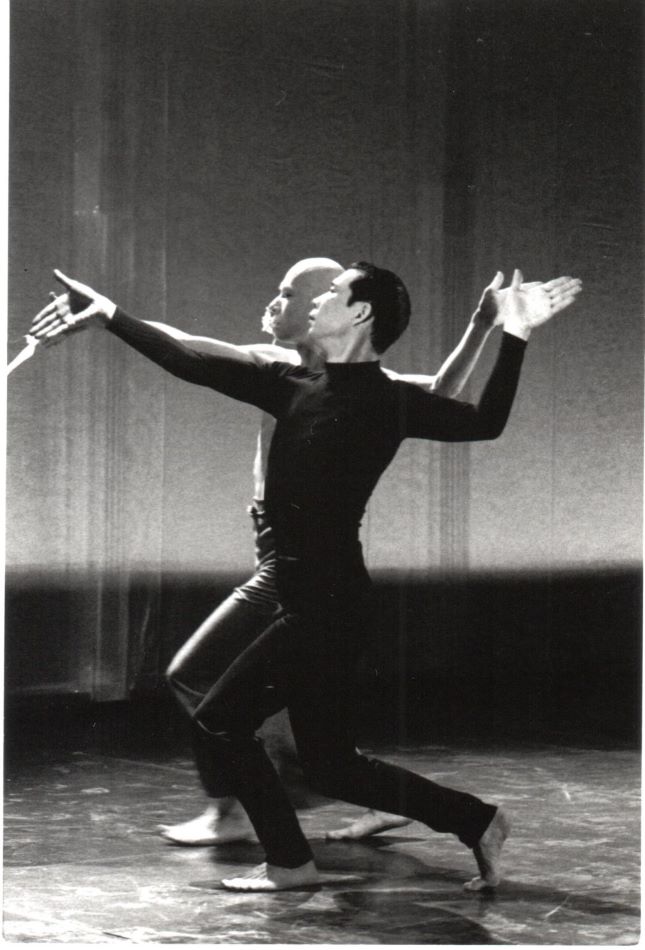
- Performer(s)
- Yukio Waguri + Kozensha
- Director/Choreographer
- Yukio Waguri
- Venue
- Park Tower Hall
- Year performed
- 1997
-
Egg in the Fire (reproduction)
Cremation', part of a four-part butoh series named 'Funeral Series'. Original concept: 'Stanislav de Gala Soshaku Kōfujin' [Madame de Stanislav de Gala Mastication]. The flyer included an extract from 'The Tunnel' by Ernesto Sabato. "... Imagine a captain, ruthless and stern / keeping course towards his destination. / But / he doesn't know / why he's headed there."
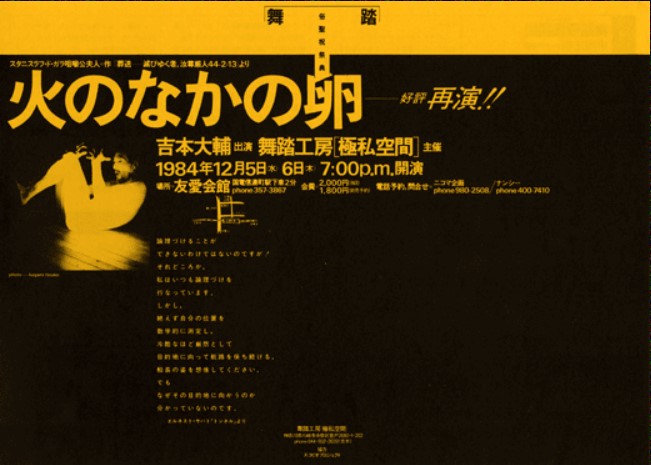
- Performer(s)
- Daisuke Yoshimoto
- Director/Choreographer
- Daisuke Yoshimoto
- Venue
- Yuai-kaikan
- Year performed
- 1984
-
Edo Mandala
For this piece, Akiko Motofuji created a work which resonated with Tatsumi Hijikata's butoh as a mandala, with the use of stage art, lighting and music. She also endeavoured to incorporate the cultural sophistication of the Edo period (1603-1868) into her dance. Motofuji made use of the small space in Asbestos-kan to perform a piece of outstanding skill, and also showed the technical mastery of the other butoh dancers.
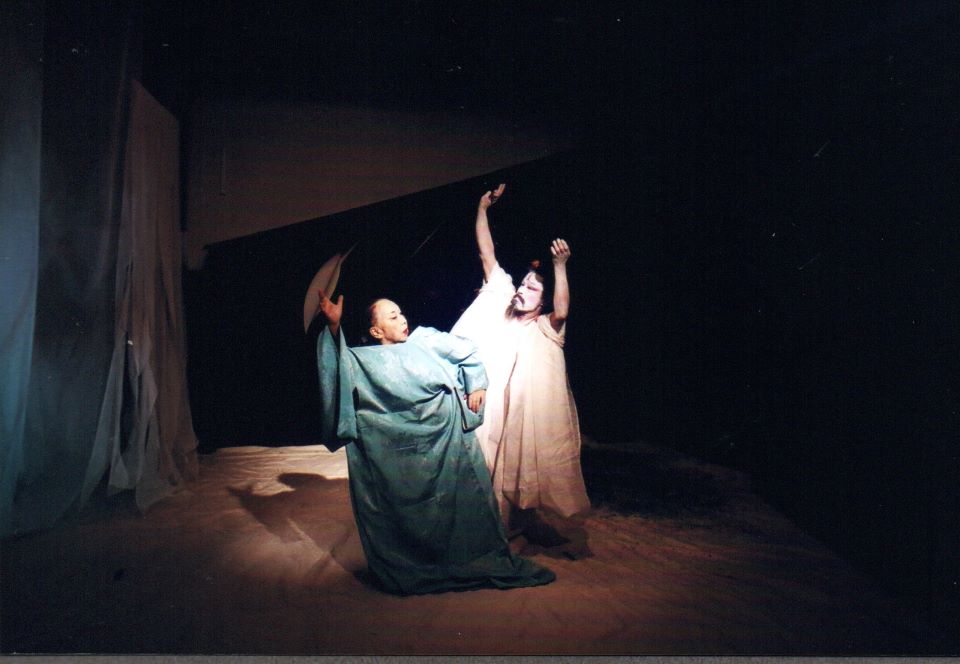
- Performer(s)
- Asbestos-kan
- Director/Choreographer
- Hironobu Oikawa
- Venue
- Asbestos-kan
- Year performed
- 2003
-
Dreamtime: Where Do I Come From and Where Am I Going?
'Dreamtime' is a mythical concept in Indigenous Australian culture, where the past, present, and future exist simultaneously. Starting with the question, "Where do I come from, and where am I going?" this performance was presented as an experimental live experience, featuring a collection of works that explore the layered flow of ancient, modern, and futuristic time. It delves into the various boundaries between Space/Earth, Human/Doll, and Life/Death.
- 1993 Byakko-sha Live: A Collection of Works by Isamu Osuka / Commemoration of the Departure of the 2nd Five Continents World Butoh Caravan (1993: USA - South America, 1994: Taiwan) / In Memory of Michiko Aoyagi.
- The video includes rehearsal footage.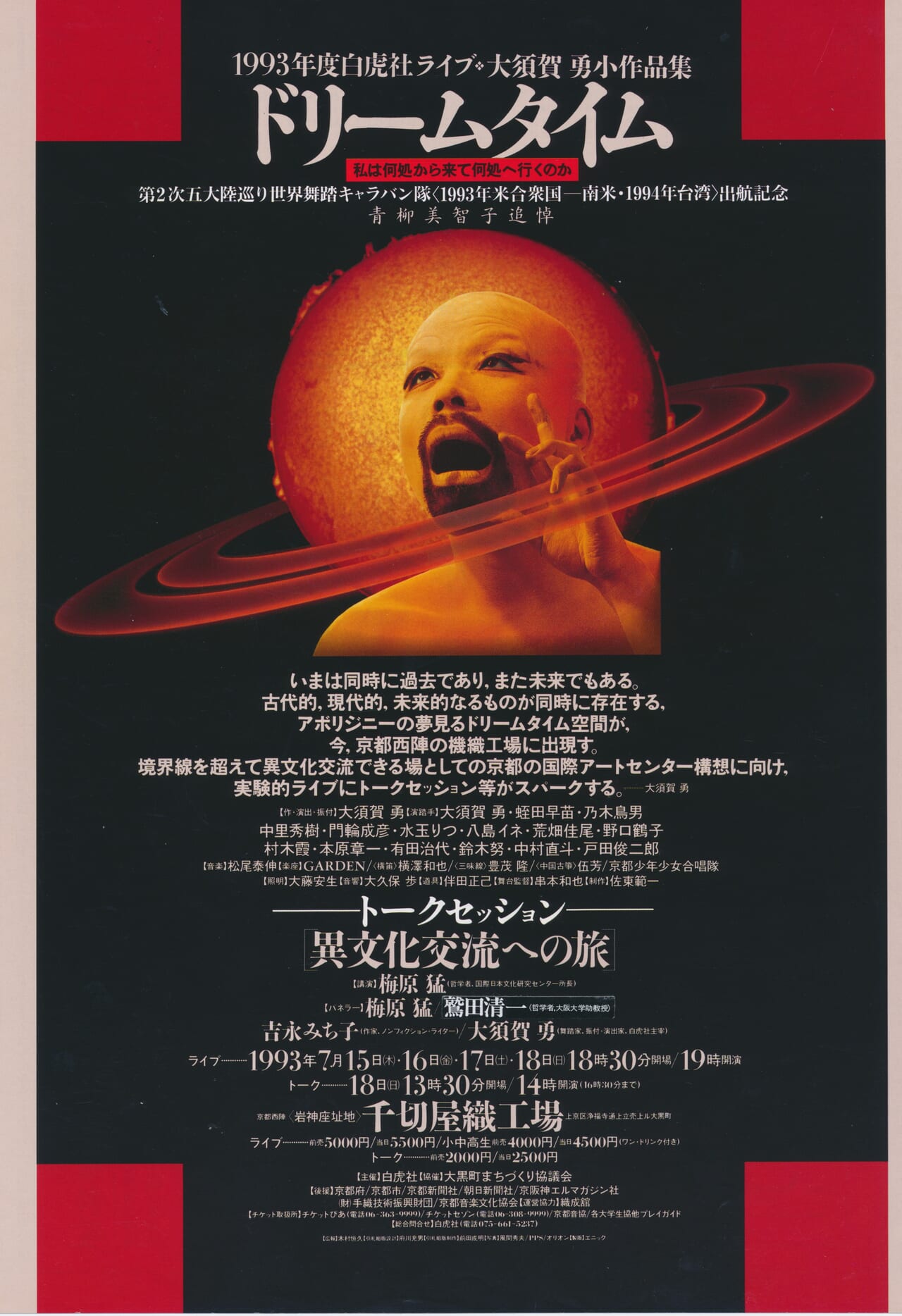
- Performer(s)
- Byakko-sha
- Director/Choreographer
- Isamu Osuka
- Venue
- Chikiriya weaving factory <the site of Iwagamiza Theatre>
- Year performed
- 1993
-
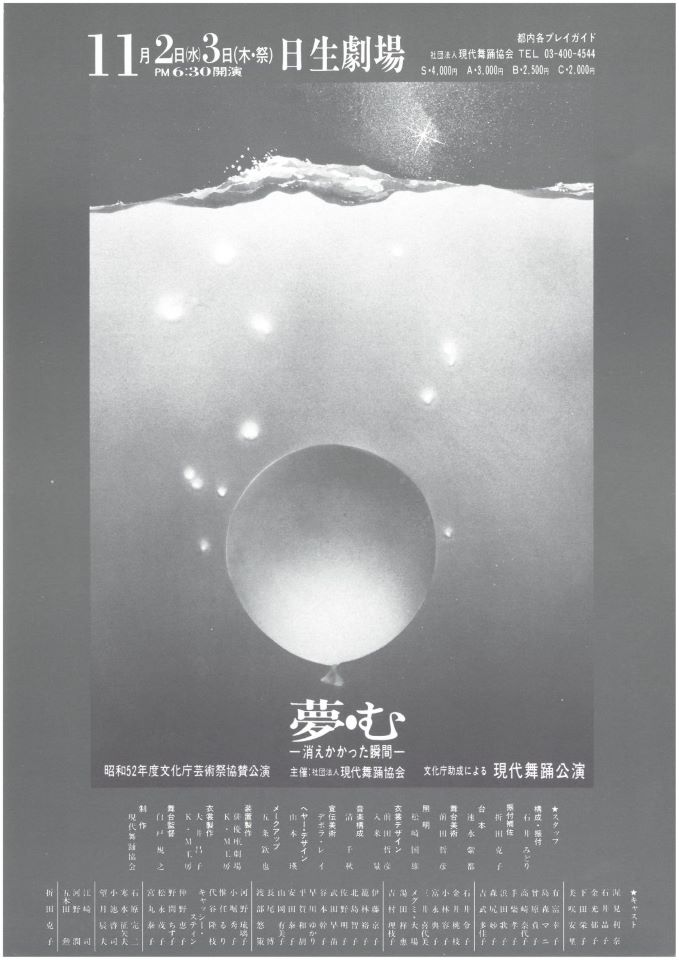
Dream: At the Moment it Starts to Disappear
This work is a collage of fragments of various dreams, including scenes of China where Ishii Midori visited before the war. "At times the dream invites us to a dreamscape with smells, colours, light and heat intermingling, and at other times it becomes an imaginative journey in the blink of an eye."
-This was the first work by Midori Ishii in many years after she lost her husband, the musician Izumi Orita, in 1972. He had been a great support for her and her dance company.
- Performer(s)
- Midori Ishii and Katsuko Orita Dance Studio
- Director/Choreographer
- Midori Ishii
- Venue
- Nissei Theatre
- Year performed
- 1977
-
Dream, After a Treat
The last days of a king as a metaphor.
A tyrannical emperor is on the road to downfall. Generals disobey, mistresses flee, the king is captured and sentenced to execution.
Whoever captures the king becomes the next king. Until yesterday it was the king's clown.
A king on his deathbed. The irony of life, it's 'a one-time dream'.
A metaphor for the end of youth, retirement, the decline of the body, the rise and fall of prosperity, and the changing seasons of nature.
If the next king was a clown yesterday, then previous kings were once clowns too.
- Participated in the ACA National Arts Festival 1987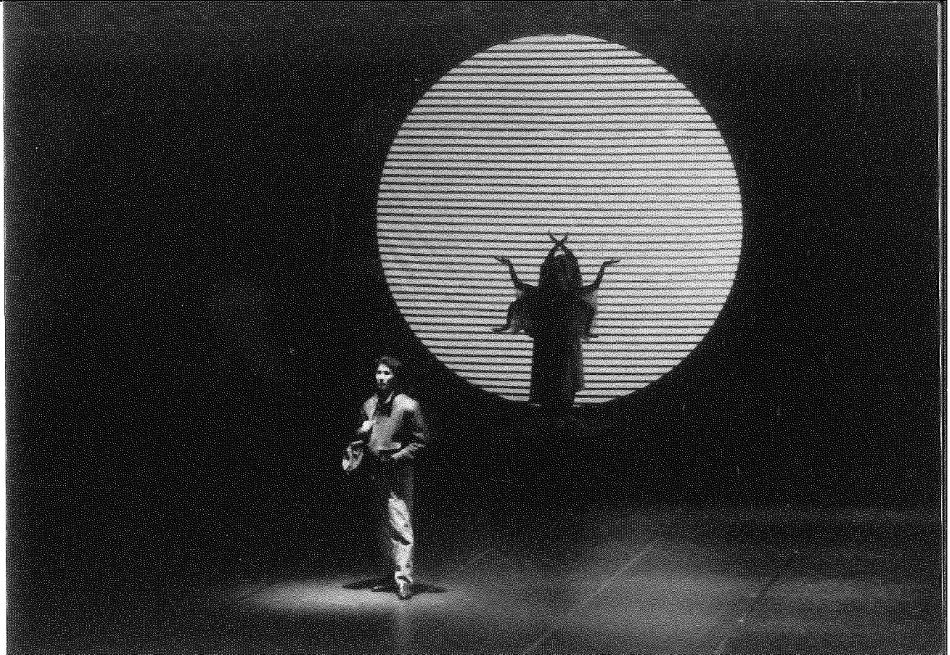
- Performer(s)
- Wakamatsu Miki & Tsuda Ikuko Free Dance Performance
- Director/Choreographer
- Miki Wakamatsu,Ikuko Tsuda
- Venue
- Yomiuri Hall
- Year performed
- 1987

