
Overview
-
Contemporary Dance Kyōgen: Chimatakaruru Yaorozuno – Kitsune no Maki
Contemporary dance kyōgen [traditional comedy], with original script, songs and live music. A combination of theatre, ballet and puppetry, the dancers take the roles of both performers and stagehands, while also speaking lines and singing songs. With a clownish fox as the facilitator, it is a comical and fantastical portrayal of modern Japan. The first half, titled 'Hitomebore Issei Ichidai Junjohen' is a retelling of a love story between a fox and a rabbit, which premiered in 1995 to great acclaim. The second half, titled 'Fuyugare Bōkyōhen' tells the tragicomic story of a rich tanuki [racoon] and a pauper kitsune [fox].
-29th Newcomer's Award - Dance Critics Association of Japan (1997)
-Arts Foundation Grant Programme: Ueda Haruka Dance Recital 2.
Volume 1 (First half): Hitomebore Issei Ichidai Junjohen [Love at first sight]
Volume 2 (Second half): Fuyugare Bōkyōhen [Nostalgia]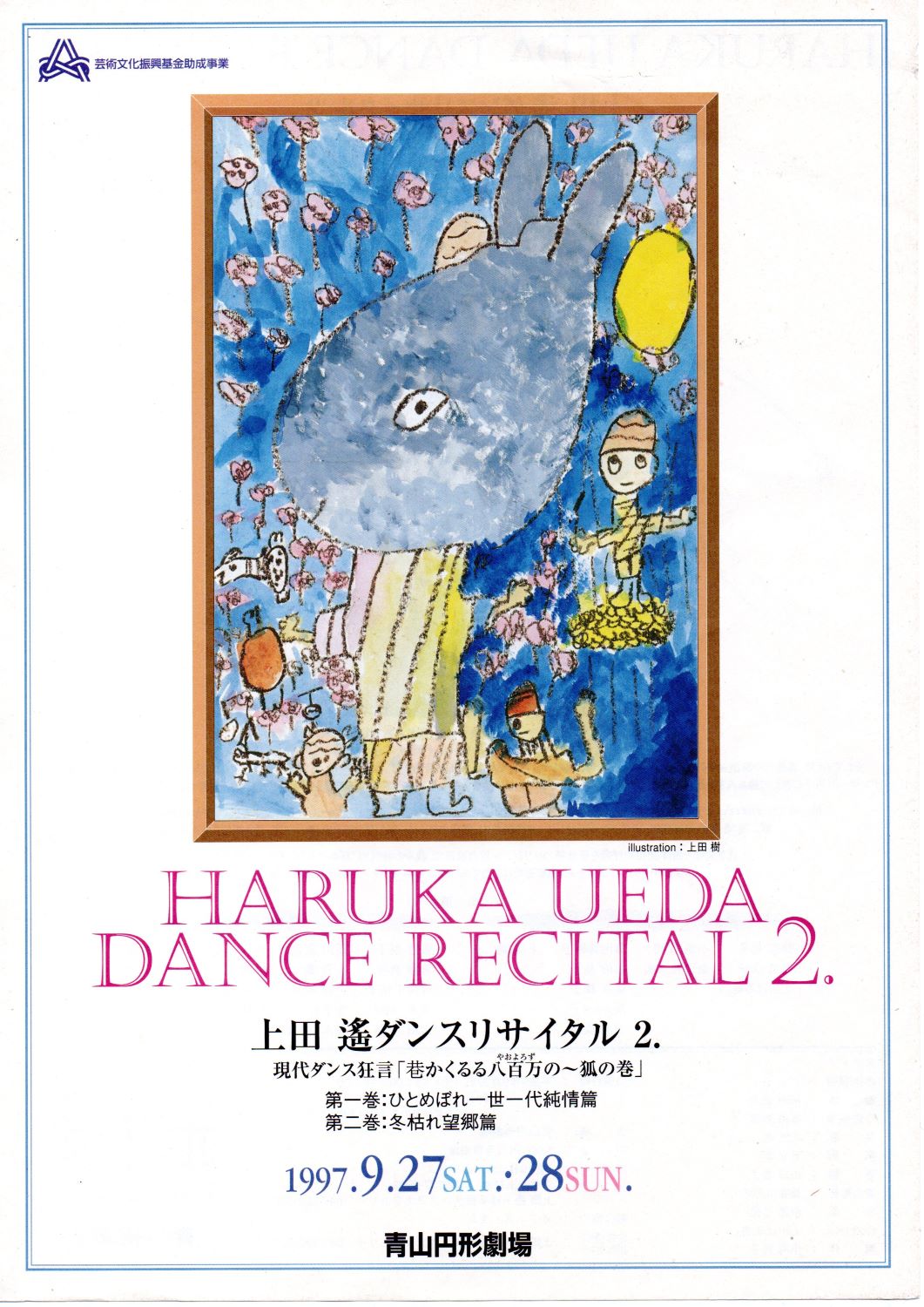
- Performer(s)
- Haruka Ueda
- Director/Choreographer
- Haruka Ueda
- Venue
- Aoyama Round Theatre
- Year performed
- 1997
-
‘Consecration of Flowers’ in Prague
This work was first performed in 1992 as part of Torifune Butoh-sha's inaugural performance, and has been performed in Japan and abroad, including at the Avignon Theatre Festival, New York and at Kamigamo Shrine in Kyoto. The work was choreographed and composed using the Hijikata notations in Mikami Kayo's master's thesis 'Study of Tatsumi Hijikata: Butoh Techniques', modelled on her friend and writer Suzuki Izumi, who committed suicide and left a child. In the first half, 'As a Ghost Passes, Embracing a Child', the following butoh notations are used: 'As a Ghost Passes, Embracing a Child', 'Flowing Neck', 'Embracing the Child', 'Moonlight', 'Sheets', 'Threads on the Ceiling' and 'Hallo'. The second half 'Days of Love' include notations such as 'Lady in Relief' and 'Three peacocks'.
- This work was specially invited to perform for the opening ceremony of the World Music Respect Festival in Prague, July 1999.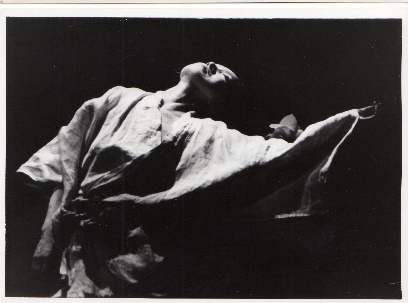
- Performer(s)
- Torifune Butoh Sha
- Director/Choreographer
- Yukio Mikami
- Venue
- The Spanish Hall, Prague Castle
- Year performed
- 1999
-
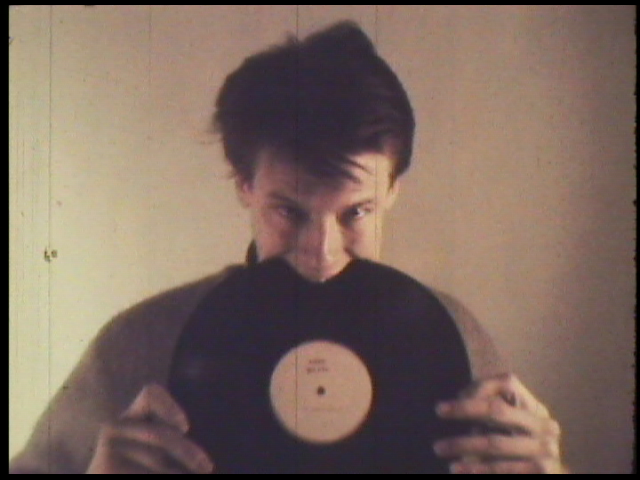
Commercial Eruption
Yoshiko Chuma acts on Andy Warhol's idea of "15 minutes of fame" and translates and exaggerates them into a 1980s logic: the quarter of an hour turns into only 10 seconds that frame the numerous different protagonists’ options to present and merchandise themselves and their role models. The reference to advertising strategies of a culminating capitalism are both critical and ironic.
- Performer(s)
- Yoshiko Chuma
- Director/Choreographer
- Yoshiko Chuma
- Year performed
- 1982
-
Come Home
"Come Home" was created in the year of the Great East Japan Earthquake, driven by a sense of crisis. In the wake of the nuclear disaster and global recession, a profound sense of stagnation set in, as many people lost their sense of direction in life, edging ever closer to collapse. As a butoh dancer, Nagaoka sought to open her body to the present world and take sincere steps on stage, hoping to resonate with the audience and share the message of living fully. All life in this world is blessed. "Come Home" is a journey toward the affirmation of life. Even death and decay are the beginnings of rebirth.
- Received the Dance Critics Society of Japan Award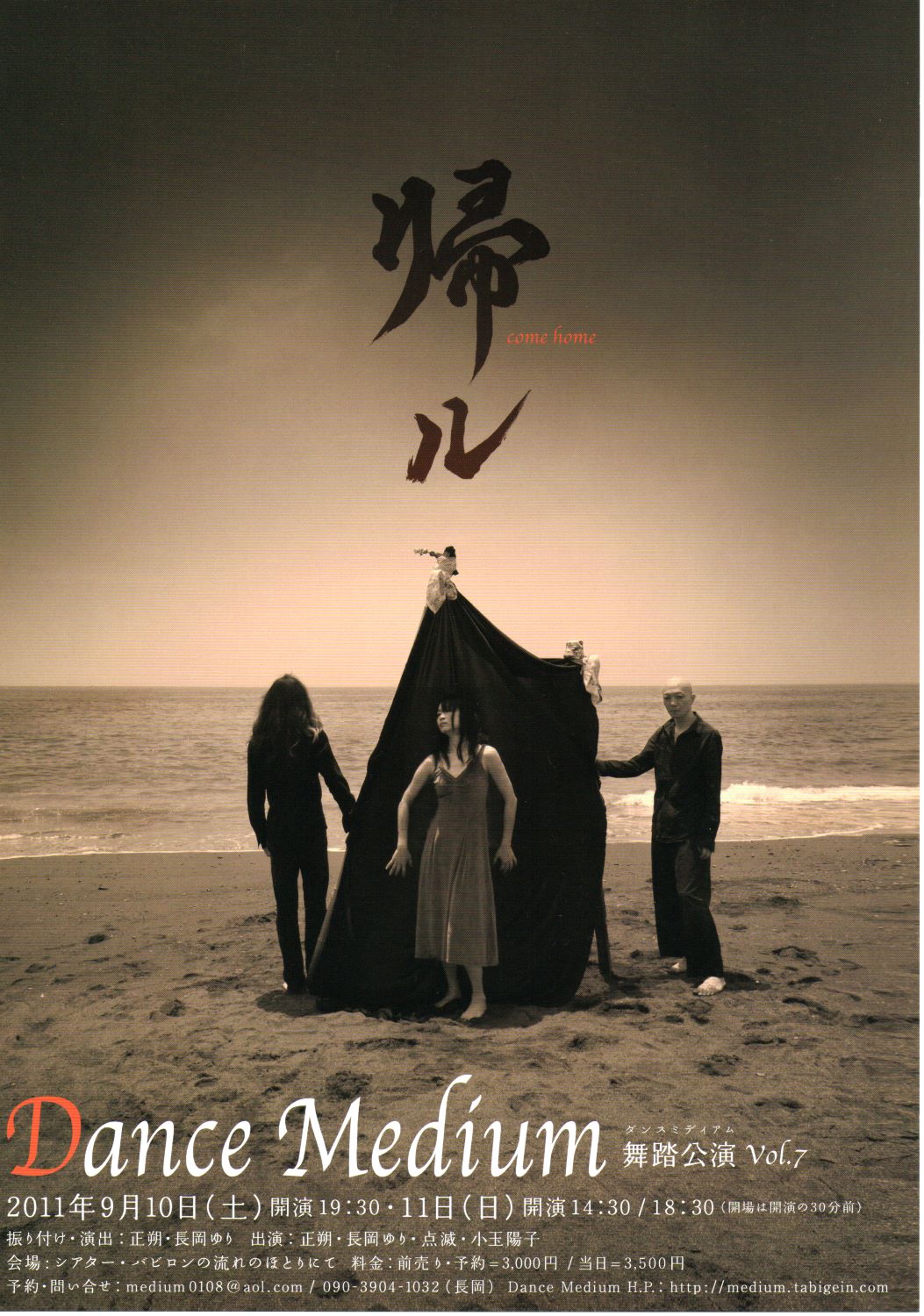
- Performer(s)
- Dance Medium Nagaoka Yuri
- Director/Choreographer
- Yuri Nagaoka
- Venue
- theatre Tokyo-Babylon
- Year performed
- 2011
-
Clear-Eyed Spirits
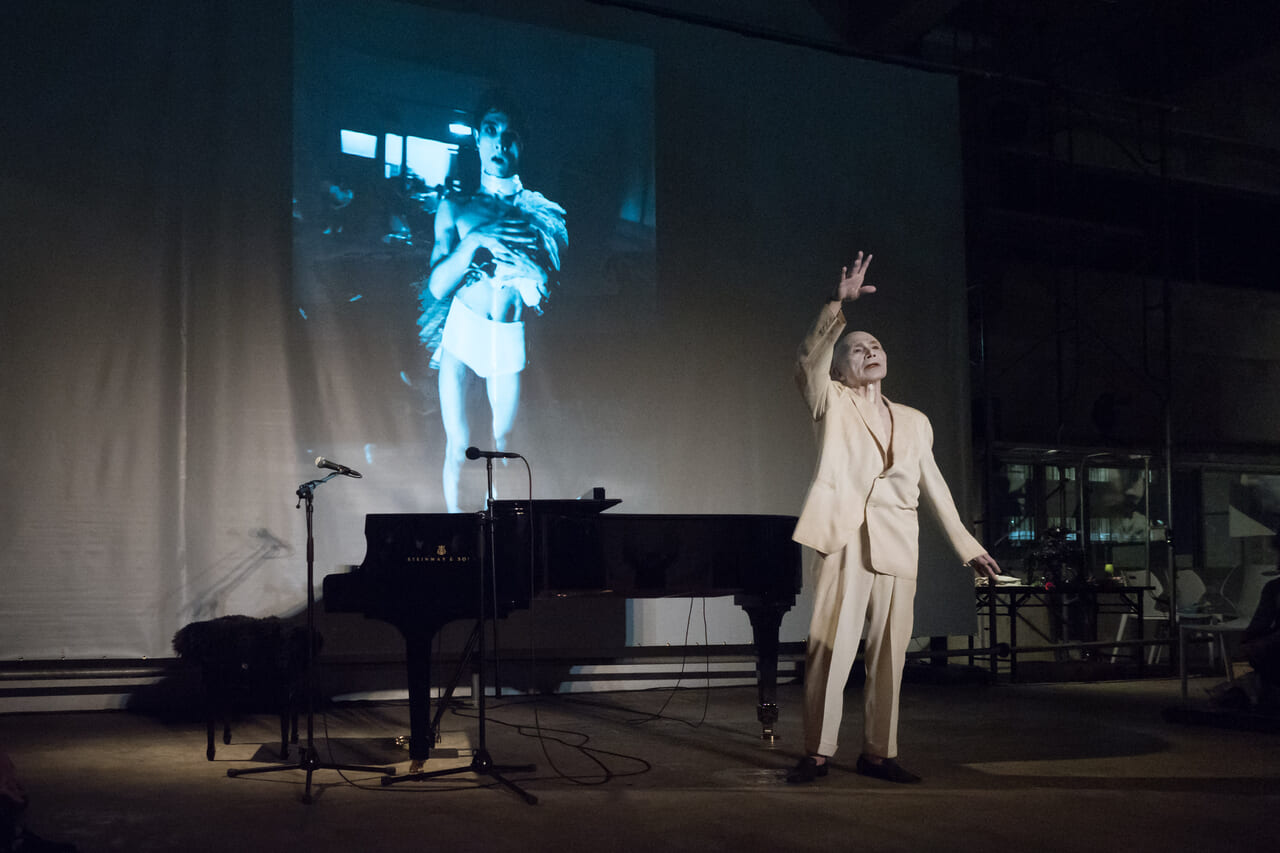
This collaboration between Yoshito Ohno and Anohni is deeply rooted in mutual respect, with Anohni holding both Kazuo Ohno and Yoshito Ohno in high regard. The two first performed together in 2010 in "Antony and the Ohnos", and later shared stages in London and São Paulo, before this performance in Tokyo. At the beginning of "Clear-Eyed Spirits", photographs taken by William Klein in 1961 of Tatsumi Hijikata, Kazuo Ohno, and Yoshito Ohno are projected onto a screen above the stage, offering a vivid glimpse into the early days of butoh. Against this historical backdrop, Yoshito Ohno takes the stage. He selects costume pieces and dances in response to Anohni’s songs, while Anohni plays the piano and sings, drawing inspiration from Yoshito’s movements. Together, they create a free and improvised performance marked by a quiet tension.
- Performer(s)
- NPO Dance Archive Network
- Director/Choreographer
- Yoshito Ohno, Anohni
- Venue
- Warehouse TERRADA G1-5F
- Year performed
- 2017
-
City of Memories
The title of this piece - 'City of Memories' represents the time we send on memory and unconsciousness. It is a dance that expresses, with contemporary originality, the time in which many lives are interwoven, their histories, the instantaneous energy of people and the mysterious aspects of nature and humans which cannot be fully understood. It is an early work in which Katsuko Orita began creating group performances.
-Awarded the Dance Critics Society Award
-Presented at the Katsuko Orita Dance Recital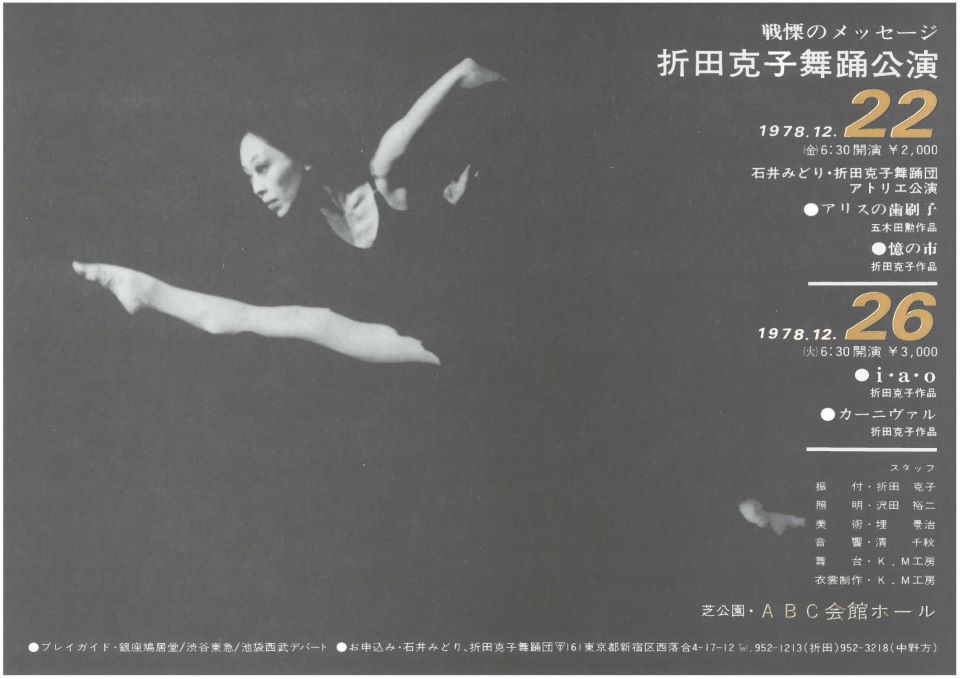
- Performer(s)
- Midori Ishii and Katsuko Orita Dance Studio
- Director/Choreographer
- Katsuko Orita
- Venue
- ABC Hall
- Year performed
- 1978
-
Champing at the Bit
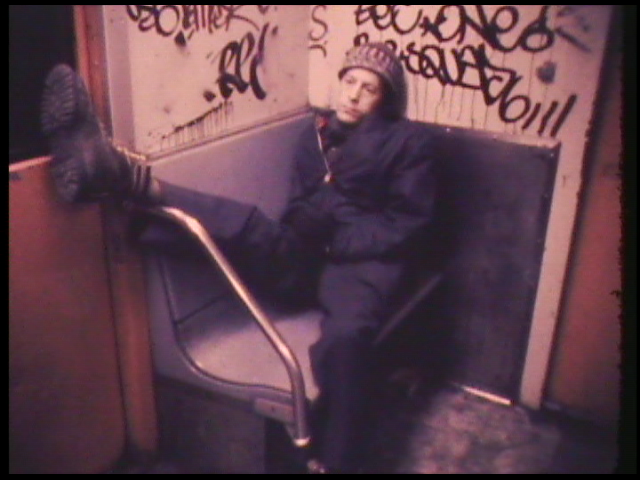
Shot in the subway of New York without permission in 1982. The members of the cast were the School of Hard Rocks.
- Performer(s)
- Yoshiko Chuma
- Director/Choreographer
- Yoshiko Chuma
- Venue
- New York
- Year performed
- 1982
-
Central and South America Tour Documentary
Footage documenting Byakko-sha’s final overseas tour. Although the company had performed in many parts of the world, this marked their first tour of Central and South America, where they staged "The Skylark and the Lying Buddha" in Mexico and Brazil.
The film focuses mainly on the everyday life of the tour, including scenes of the troupe making props. It also captures a visit to Las Pozas, the surrealist garden in Xilitla, Mexico, as well as moments at the company’s rehearsal space in Kyoto after their return to Japan. The following year, in 1994, Byakko-sha disbanded.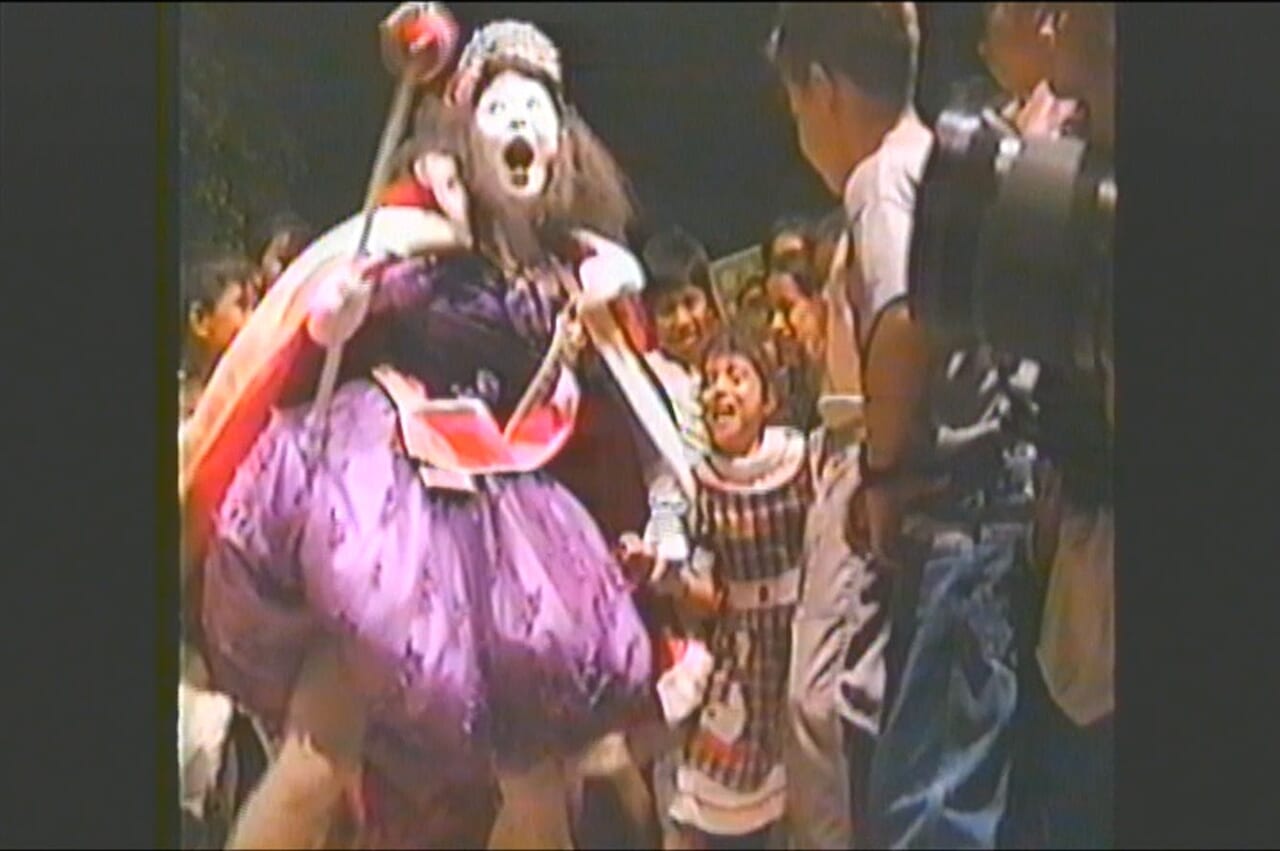
- Performer(s)
- Byakko-sha
- Director/Choreographer
- Byakko-sha
- Year performed
- 1993
-
Celebration: antologia di KAZUO OHNO
In 1999, Kazuo Ohno was awarded the first Michelangelo Antonioni Award for the Arts. Two-days of performance "Celebration: antologia di KAZUO OHNO" [Celebration: An Anthology of Kazuo Ohno's Works] were held at Venice Biennale, with the award ceremony held on stage at the end of the first day. "Celebration" features excerpts from Kazuo Ohno's key works including "Admiring La Argentina", "My Mother" and "The Dead Sea", as well as the award ceremony.
- In commemoration of Kazuo Ohno receiving the Michelangelo Antonioni Award for the Arts
-Biennale Danza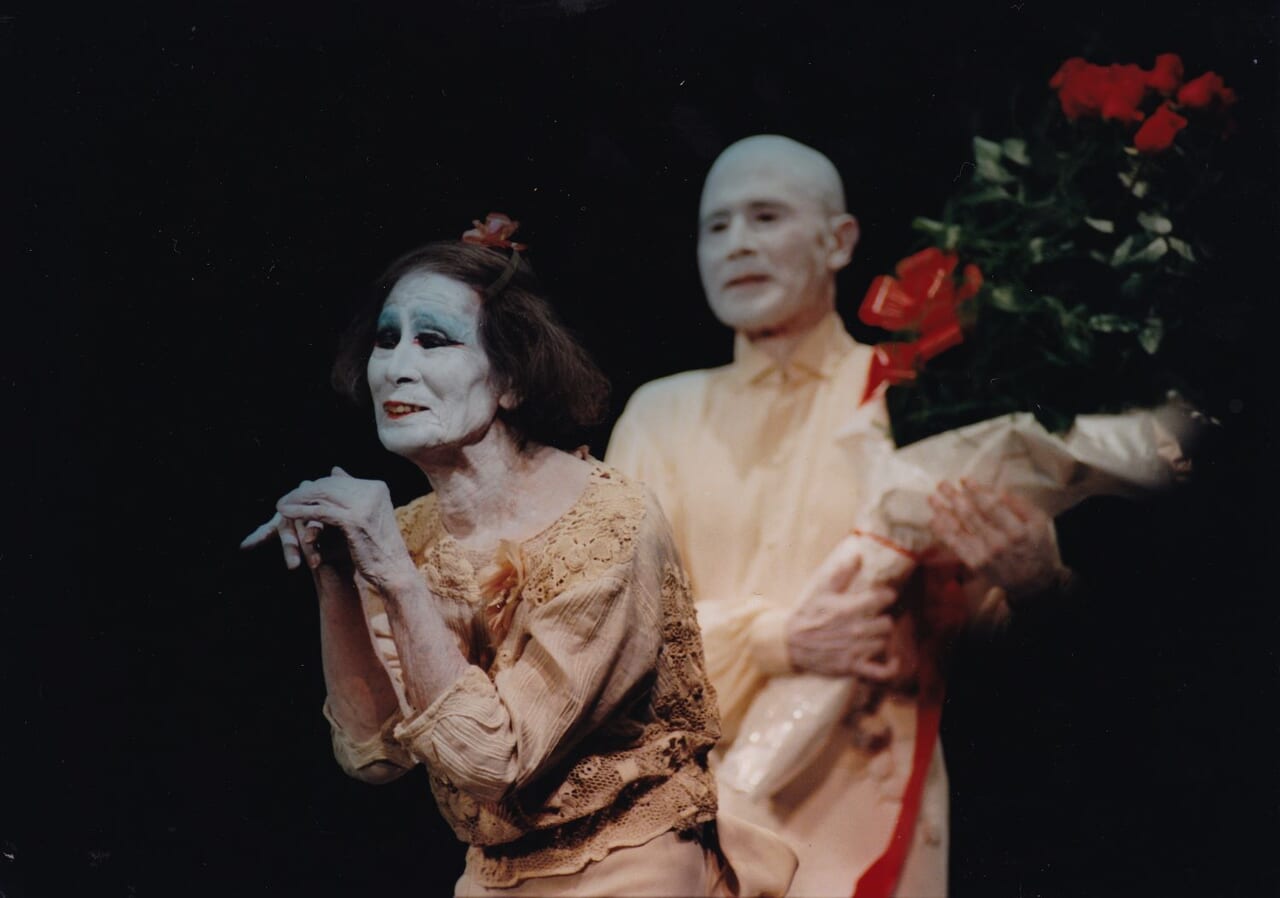
- Performer(s)
- Kazuo Ohno Dance Studio
- Director/Choreographer
- Yoshito Ohno
- Venue
- Teatro Carlo Goldoni
- Year performed
- 1999
-
Carmina Burana; Eternal Now; Alma Bella
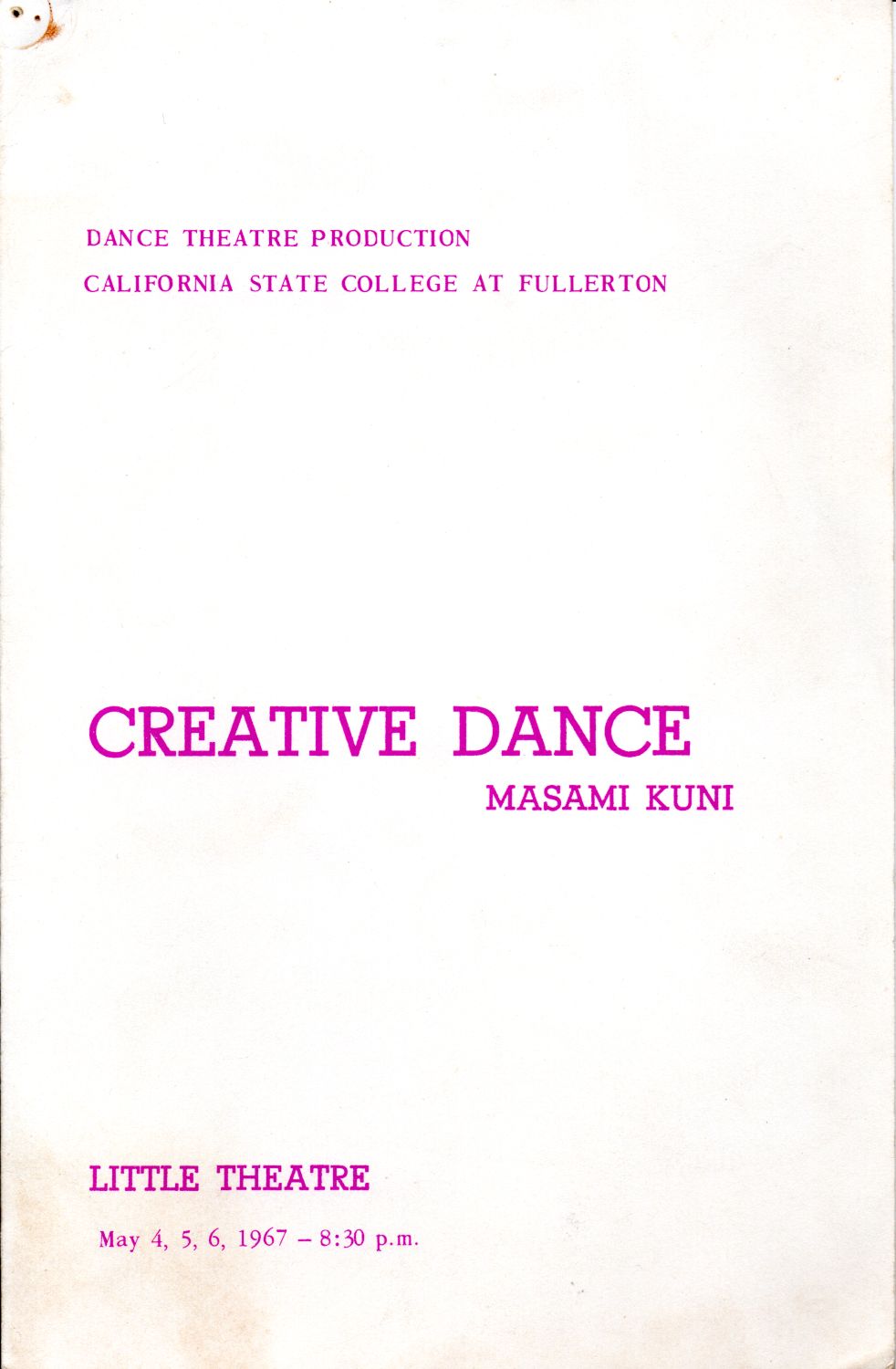
Masami Kuni was appointed Associate Professor in the Department of Theatre at California State University, Fullerton in 1964, later founding the Department of Dance and serving as its chair. Kuni’s approach to dance education emphasized holistic development, encouraging students to cultivate creativity through dance rather than becoming “instruments of dance.” “Carmina Burana” is a revival of four scenes choreographed by Kuni and performed in November 1966. “Eternal Now” is a scene from “Dance No. 3-18-6,” a work presented alongside “Carmina Burana” in November 1966. “Alma Bella” is a work centered on beauty and simplicity found only deep within the soul.
- Performer(s)
- Kuni Institute of Creative Dance
- Director/Choreographer
- Masami Kuni
- Venue
- The Little Theatre at California State University, Fullerton
- Year performed
- 1967
-
Carmen Miranda – Homage to Kazuo Ohno
Dance theatre by Teatro Macunaíma, a leading contemporary theatre company based in São Paulo. Ever since admiring each others work at the Nancy International Theatre Festival in 1980, the director of Teatro Macunaíma Antunes Filho and Kazuo Ohno had a deep, lifelong friendship. This homage to Kazuo Ohno brings Ohno's work to light by way of Carmen Miranda, Brazil's most famous singer and film actress of the 20th century. Four dancers played the roles of Carmen as a girl, a young woman, a middle-aged woman, and an old woman. On 27 March, the final day of the performance, Kazuo Ohno appeared onstage in a wheelchair during the curtain call.
- Kazuo Ohno Festival Special Programme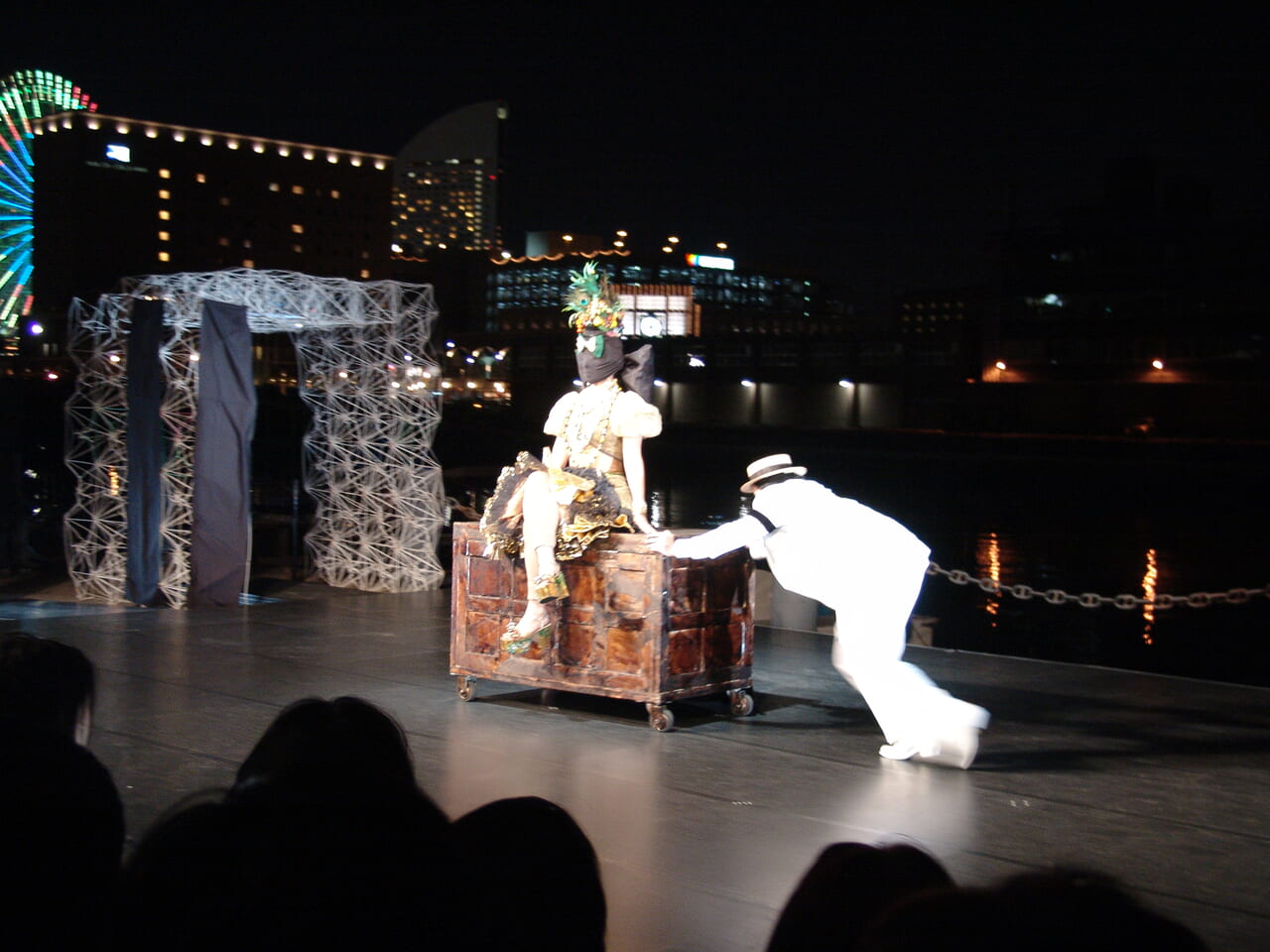
- Performer(s)
- Kazuo Ohno Dance Studio
- Director/Choreographer
- Antunes Filho
- Venue
- BankART Studio NYK
- Year performed
- 2005
-
The Captive World – a New Interpretation of Dr Caligari
The ballet adaptation of 'The Cabinet of Dr Caligari', made famous by film director Robert Wiene.
The story is about the delusions of a mentally ill man. A doctor who experiments on human subjects, and kidnaps a woman. A man comes to save the woman but is also captured. The woman is driven mad by the experiments and the man is mentally manipulated. In the end the sick man believing he is the doctor, kills the doctor and the woman, and is himself engulfed in flames.
How much of this is fact and how much is delusion?
- Participated in the ACA National Arts Festival 1984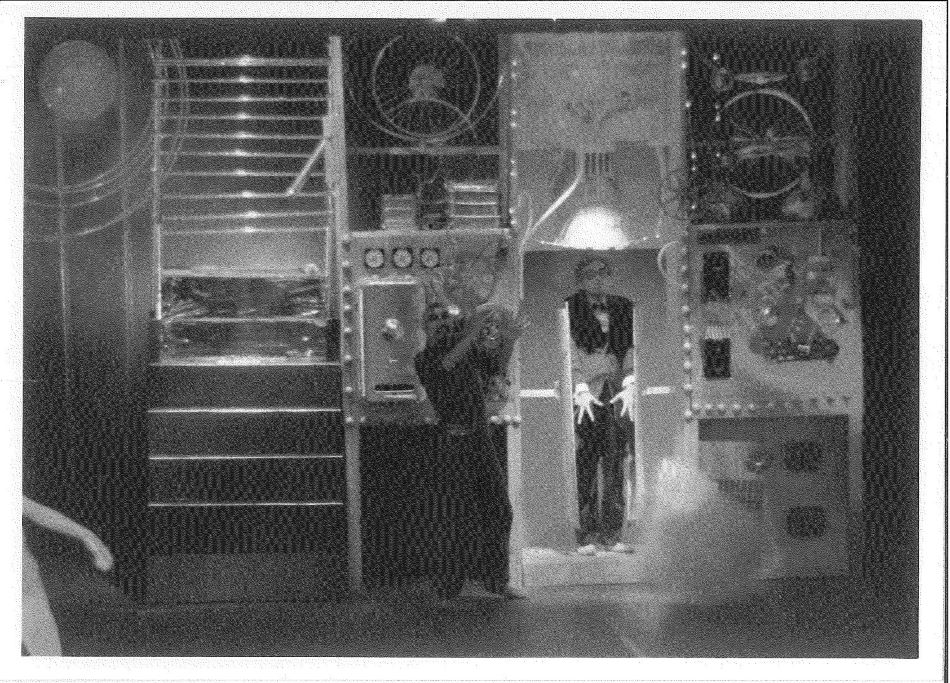
- Performer(s)
- Wakamatsu Miki & Tsuda Ikuko Free Dance Performance
- Director/Choreographer
- Miki Wakamatsu, Ikuko Tsuda
- Venue
- Yomiuri Hall
- Year performed
- 1984
-
Can’t Get Started
Mutsuko Tanaka and Anzu Furukawa, two female performers who spent the 1970s together as part of Dairakudakan, perform their inaugural "Momi no Kai" performance. Momi is a thin silk dyed bright red using safflowers. The flyer includes a Japanese translation of the lyrics to "I Can't Get Started" by Ira Gershwin.
- Mutsuko Tanaka / Anzu Furukawa "Momi no Kai - The First Performances"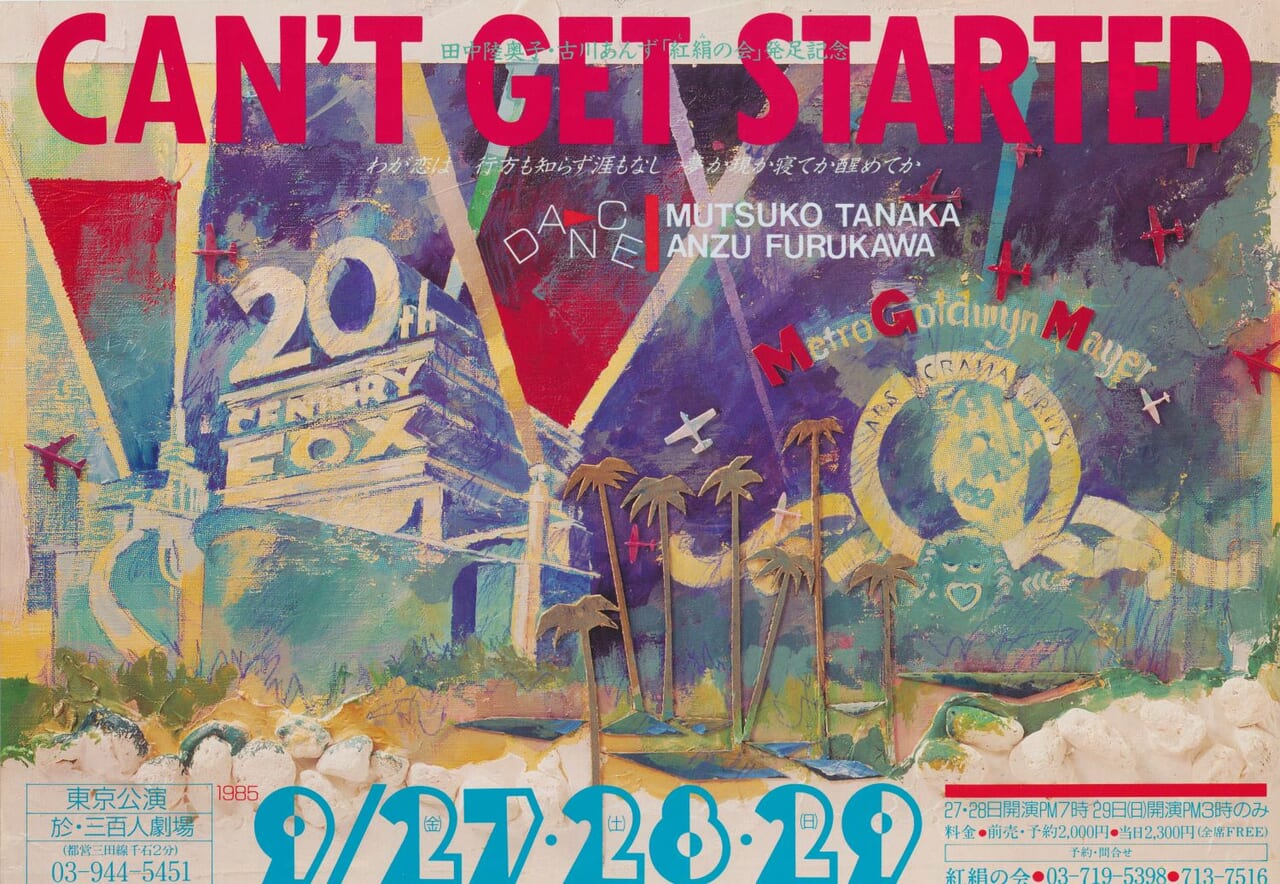
- Performer(s)
- Anzu Furukawa
- Director/Choreographer
- Anzu Furukawa, Mutsuko Tanaka
- Venue
- SANBIYAKUNINGEKIZIYO
- Year performed
- 1985
-
A Canoe going underneath a Cherry Blossom Tree / Dream of Love
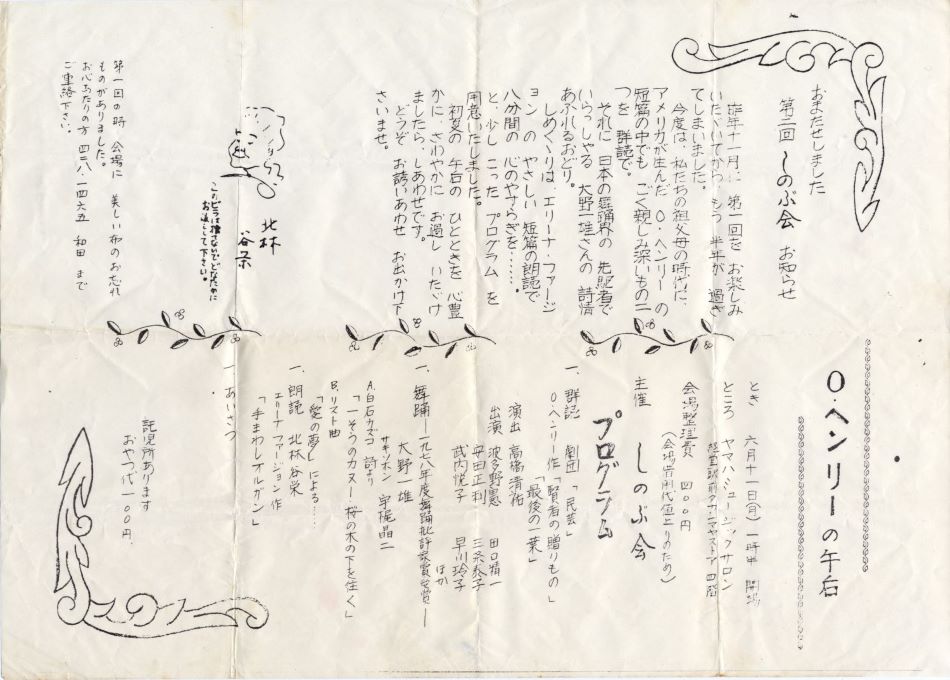
Kazuo Ohno performed two works at the second 'Shinobu-kai' event which was arranged, it is thought, by Kitabayashi Tanie of the Mingei Theatre Company. 'A Canoe going underneath a Cherry Blossom Tree' was based on a poem by Kazuko Shiraishi, and was also performed at a memorial for Takaya Eguchi in February that same year. 'Dream of Love' performed to the song by Liszt comes from the end of 'My Mother', but Ohno often danced this as a single-song performance for such occasions.
- Performer(s)
- Kazuo Ohno Dance Studio
- Director/Choreographer
- Kazuo Ohno
- Venue
- Yamaha Music Salon (Tokyo)
- Year performed
- 1979
-
CANDIES girlish hardcore
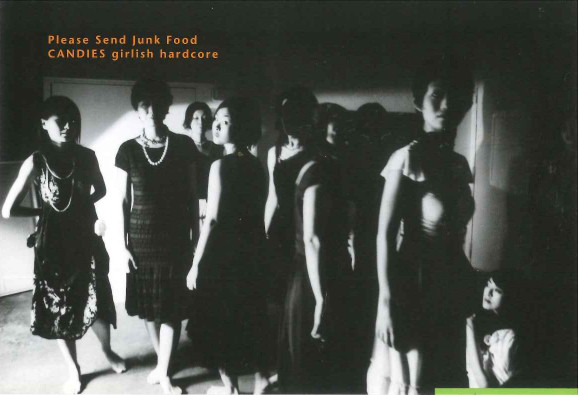
First international touring production. After premiering in Cardiff, UK, it was toured through London, Portland (USA) and New York before triumphantly returning to Tokyo and Osaka. Here we have the recording from the Japan society performance in New York. Works by Yubiwa Hotel at the time had an entire cast of female performers, and presented views on life, death, society and the world through the history of women's lives. They attracted a great deal of attention with innovative visuals, and audiences who would chat 'Mean Girls!' and 'Stunning!' at them.
- Performer(s)
- YUBIWA Hotel
- Director/Choreographer
- Shirotama Hitsujiya
- Venue
- Japan Society, New York.
- Year performed
- 2006
-
Caddy! Caddy! Caddy! – William Faulkner Dance Project
"Caddy! Caddy! Caddy!" is an epic dance work, with a live sound score and evolving, dynamic installation. An abstract portrayal of Faulkner's novels "The Sound and the Fury", "Absalom, Absalom!", and the story "A Rose for Emily", it was an unforgettable live experience. Utilising simultaneous, disparate and distinct intimate passages, the dance portrays a sense of confinement, entrapment, sadness, loneliness and courage and finally expands with a breathtaking finale in which the stage becomes the nexus for hundreds of threads of lighted colour reaching out into space. A simple play of light can become a medium for a face dancing the ravages of unforgiving time. Darkness illuminates the rhythm of the telling with speaking, sobbing and laughter. Faulkner's stories unfold, without foregrounding cause and effect, through many different voices interweaving in a choral fashion, forming a nonlinear composite - a rich blur of life. Evoking subtle essences, with this reckoning of time, Oguri presented "Caddy! Caddy! Caddy!".
Premiered on 1 March, 2007 in Los Angeles.
2007/3/1(Thu)~2007/3/5(Mon)REDCAT
2009/11/8(Sun)~2009/11/8(Sun)The Toby /The Toby Theater at Indianapolis Museum of Art (2009 Spirit & Place Festival)
2016/11/5(Sat)~2016/11/6(Sun)Hammer Museum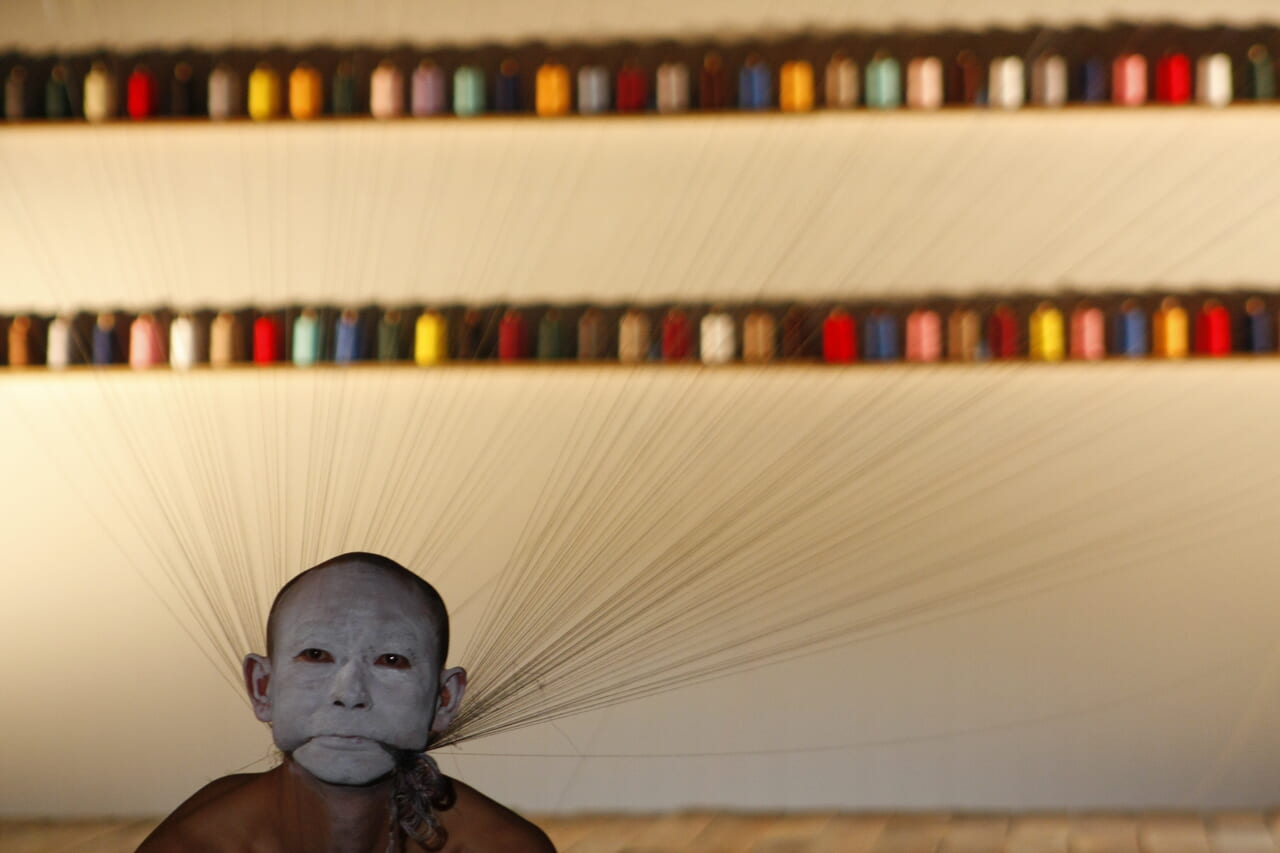
- Performer(s)
- Naoyuki Oguri
- Director/Choreographer
- Oguri
- Venue
- REDCAT, The Toby /The Toby Theater at Indianapolis Mueum of Art, Hammer Museum
- Year performed
- 2007
-
Byakkosha TV/Film/Concert Appearances
Apart from their performances, Byakko-sha also ran a "takeout" performance group which "delivered" Body and Art to a variety of events from weddings and birthday parties to concerts and TV commercials. The video includes the following Byakko-sha appearances:
- "Einstürzende Neubauten: Halber Mensch" directed by Sogo Ishii [later known as Gakuryu Ishii] (1986)
- "WIND BLOWS INSIDE OF EYES" from Tomoyasu Hotei's solo concert "GUITARHYTHM" (1988)
- Yoko Oginome's "Roppongi Junjoha", which aired on TBS Television's "The Best Ten" (1988)
- "Ikashita Baby" directed by Jun Togawa, from the film "One Room Story" (1991)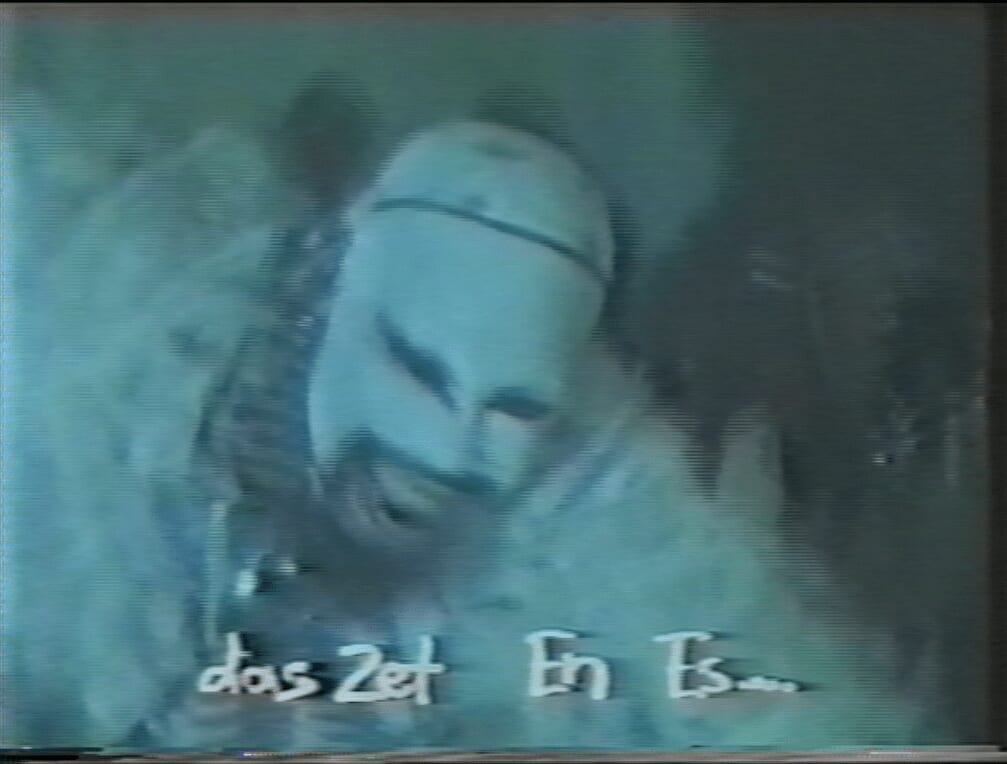
- Performer(s)
- Byakko-sha
- Year performed
- 1986
-
Byakko-sha Rehearsals 1982
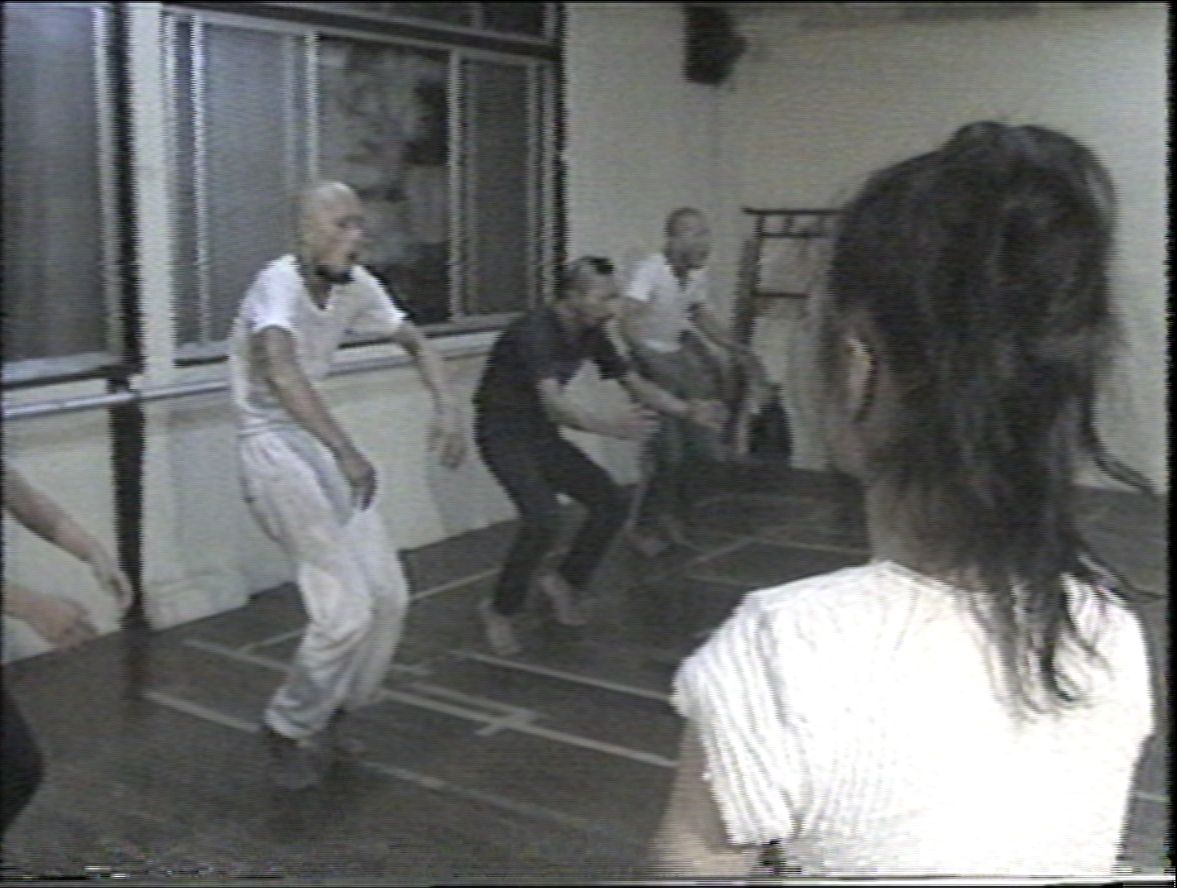
Byakko-sha lived communally in a residence with an attached studio in Higashikujō, Kyoto. In this footage, the camera traces the route from central Kyoto to the compound, and records practice sessions for students (with some Byakko-sha dancers also taking part). Practice for students were held once or twice a week in the evenings, and the video shows Sanae Hiruta teaching primarily basic exercises. In addition to butoh, she also taught movements for cabaret shows performed to earn living expenses. Although not included in this footage, practice for the dancers prior to performances was far more rigorous and intense.
- Performer(s)
- Byakko-sha
- Venue
- Byakkosha Studio
- Year performed
- 1982
-
BYAKKO-SHA Performance on December 1986 Unedited
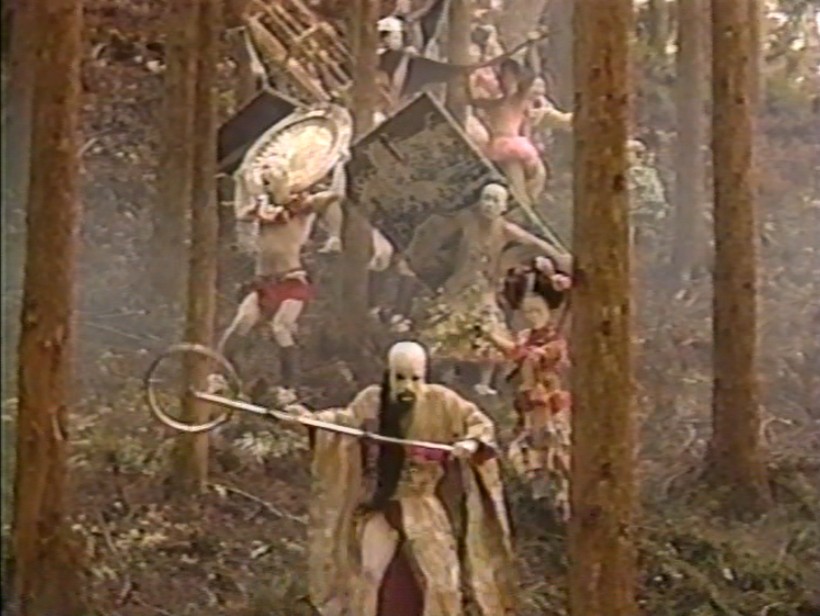
One of the pioneers of media art, Edin Vélez visited Japan in the late 1980s and produced documentary footage focused on butoh. Introducing Tatsumi Hijikata and Kazuo Ohno, and making extensive use of footage of Dairakudakan and Byakko-sha, "Dance of Darkness" was released in 1989. This video consists of unedited footage of an outdoor performance by Byakko-sha, filmed when Vélez visited Japan in 1986. Filming took place at several locations, including deep in the mountains of Kyoto’s Kitayama region and along nearby riverbanks, where Byakko-sha’s excessive “bright darkness” burst forth.
- Performer(s)
- Edin Vélez
- Director/Choreographer
- Isamu Osuka
- Year performed
- 1986
-
Byakko-sha DANCE PERFORMANCE 1982
Edited footage from Byakko-sha's "Saint Live Sparking" live house tour around Kansai in 1982. The performance titles were "Sairento koma - tsuki yori hayaku - " [Silent Spinning Top - Faster than the Moon], "Kusa no ue no hirune - mizu kara abura e - " [Nap on the Grass - From Water to Oil" and "Zonnenshutān no natsu - karappo no sekai - " [Sonnenstern's Summer - An Empty World].
The video contains edited footage of:
Byakko-sha '82 Saint Live Sparking No.1 "Silent Spinning Top - Faster than the Moon":
16 April 1982 takutaku (Kyoto)
22-23 April 1982 THE LIVE HOUSE CHICKEN GEORGE (Hyogo)
25 April 1982 BOOP A DOOP (Osaka)
Byakko-sha '82 Saint Live Sparking No.2 "Nap on the Grass - From Water to Oil":
22 May1982 Yokouchi no Hanako Mandolin Factory (Gifu)
25 May 1982 Pin-Spot (Wakayama)
27 May 1982 Circus & Circus (Kyoto)
28 May 1982 Banana Hall (Osaka)
Byakko-sha '82 Saint Live Sparking No.3 "Sonnenstern's Summer - An Empty World":
25 June 1982 ZA-SCÉNE (Kyoto)
27 June 1982 The Yume-za (Osaka)
30 June 1982 Taiyo Embujo Theatre (Hyogo)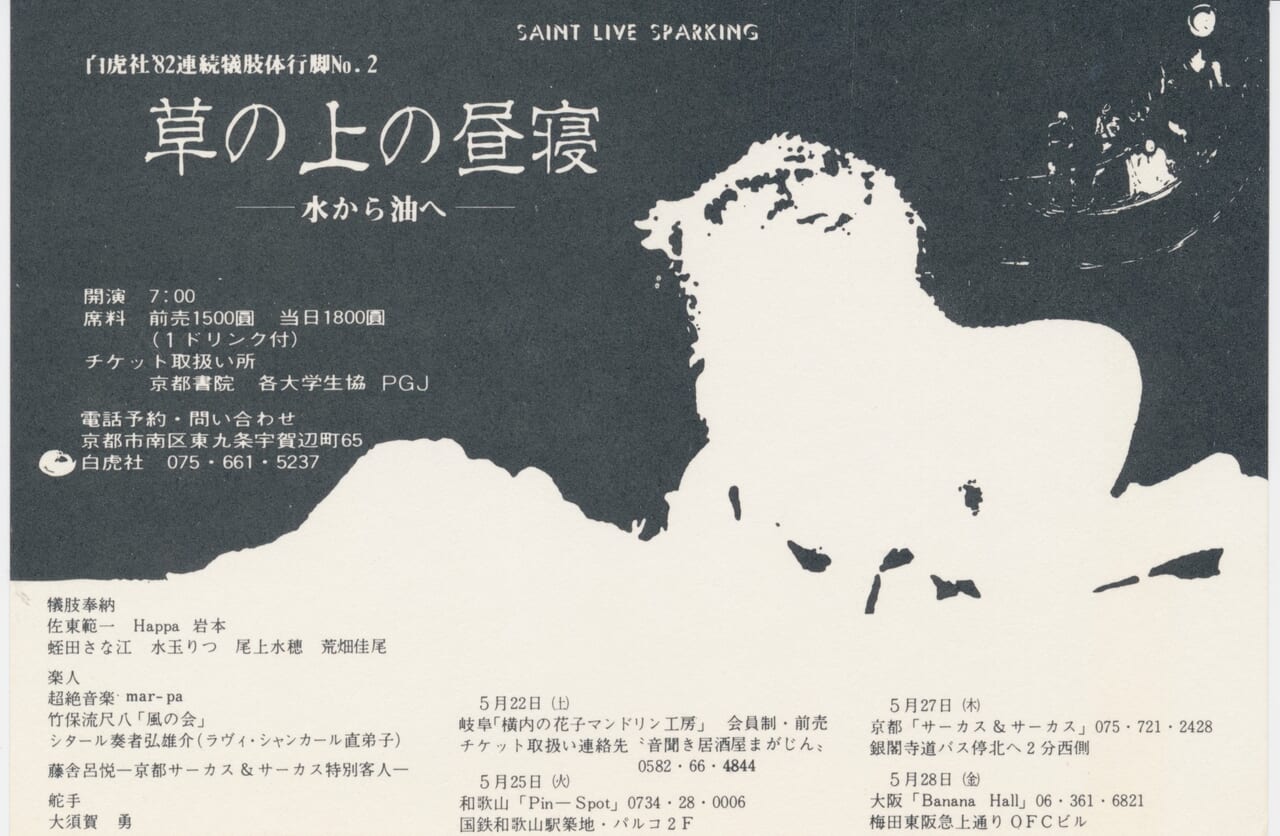
- Performer(s)
- Byakko-sha
- Director/Choreographer
- Isamu Osuka
- Venue
- Mainly live houses in Kansai area
- Year performed
- 1982

