
Dance Video Index
In this database, you will find 373 dance videos which were collected from the 2023 to 2025 fiscal years under the auspices of the EPAD (Eternal Performing Arts Archives and Digital Theatre) .
Overview
-
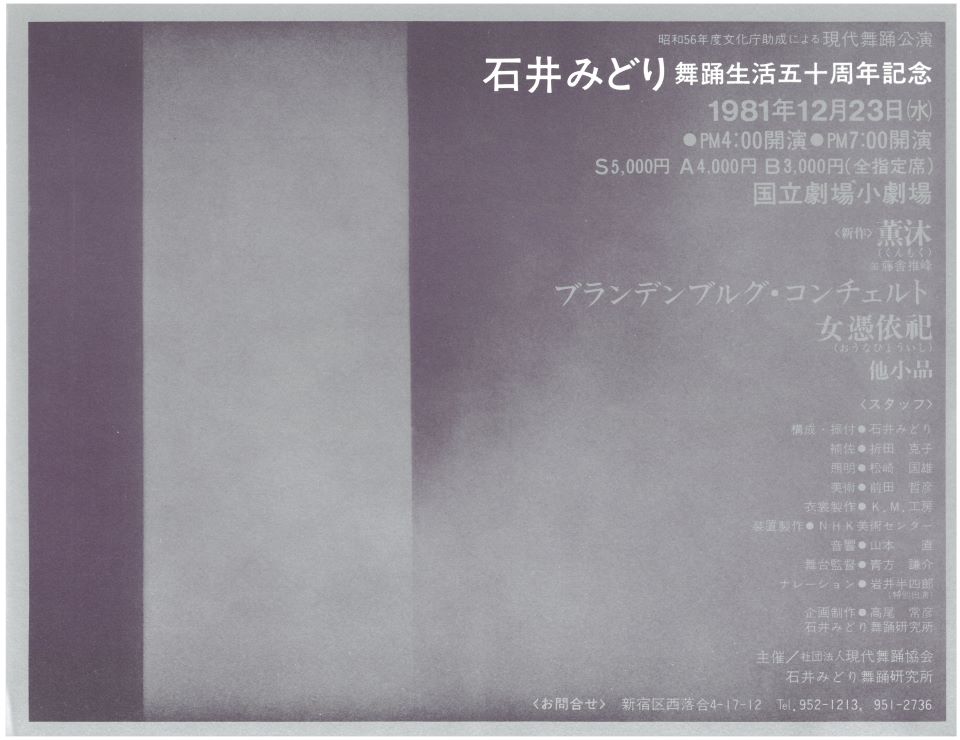
Brandenburg Concerto and 5 short pieces
British choreographer Anton Dolin said he had never seen anything like it, claiming that the music by Bach must have written for this piece; that was the effect of Midori Ishii's Brandenburg Concerto. Ishii's particular way of finding rhythm - moving from 'hold' (off-beat), having 'stolen sounds' and being 'still in the midst of movement' - these are also traditionally Japanese ways of finding rhythm. This is one of Ishii's signature pieces, which exemplifies these ideas.
-The first section of Midori Ishii's 50 Years of Dance anniversary performance, including Brandenburg Concerto, and five short pieces: 'Southern Moon' (6'22"") / 'Golliwog's Cakewalk' (2'22"") / 'Udaru' (5'32"") / 'Three Themes' (0'32"") / 'Four Walls' (7'35"") / 'Brandenburg Concerto' (18'33"")
- Performer(s)
- Midori Ishii and Katsuko Orita Dance Studio
- Director/Choreographer
- Midori Ishii
- Venue
- National Theatre of Japan : Small Theatre
- Year performed
- 1981
-
Bravos Pioneiros; Cançao da Alegria [Songs of Joy]
"Bravos Pioneiros": Struck by the sight of the Issei pioneers' tanned, muscular bodies, intense gazes, and white beards - a human presence unlike anything she had encountered before - Akiko Ohara felt as though she were witnessing a living masterpiece. This work was created in response to the striking beauty of these workers at their labour.
"Canção de Alegria" [Songs of Joy]: Akiko Ohara recalls her excitement upon arriving at Yuba Farm, followed Yuba theme songs sung in a chorus (lyrics and music by Masakatsu Yazaki), including "Porque o sol é quente" [Because the Sun is Hot], "Os companheiros do yuba" [Friends of Yuba], and "Canção de Alegria" [Song of Joy]. As with "Bravos Pioneiros", this piece captures life on Yuba Farm and has been performed numerous times.
"Bravos Pioneiros" premiered in 1963, and "Cançao de Alegria" [Songs of Joy] premiered in 1978. Both works were performed at Yuba Farm, in Japan and throughout Brazil. Commemorating the 70th anniversary of Japanese immigration to Brazil, the programme for Ballet Yuba's first tour of Japan in 1978 across 13 venues began with "Bravos Pioneiros" and ended with "Cançao de Alegria" [Songs of Joy], which was created specially for the tour. "Cançao de Alegria" [Songs of Joy] was edited in 2021.![Bravos Pioneiros; Cançao da Alegria [Songs of Joy]](https://video.dance-archive.net/en/wp-content/uploads/2025/01/P005246_14498.jpg)
- Performer(s)
- Ballet Yuba
- Director/Choreographer
- Akiko Ohara
- Venue
- Teatro Yuba
- Year performed
- 2021
-
Buried TeaBowl – OKUNI
New work by Australia's leading Japanese artist and dancer Yumi Umiumare, "Buried TeaBowl - OKUNI" was presented at BLACKCAT GALLERY in 2022. This intimate yet grand solo performance installation combines dance, butoh, theatre, song and tea ceremony, with a stunning video (produced by Takeshi Kondo) that was filmed during the COVID-19 lockdown. The piece explores the life of Izumo no Okuni, a historical Japanese dancer and shrine maiden from the early 1600s, who is credited with founding kabuki theatre but remains an enigmatic figure. Umiumare's contemporary interpretation of Okuni appears in various forms, moving between the real and the surreal, drawing the audience into a world of dreams and fantasy.
While evoking the "myths" and power of invaluable women buried in history, Umiumare's unique narrative and humour in "Buried TeaBowl - OKUNI" bring forth a punkish, feminine, and liberated Okuni - one that speaks to the needs of the present day.
- OzAsia Festival 2023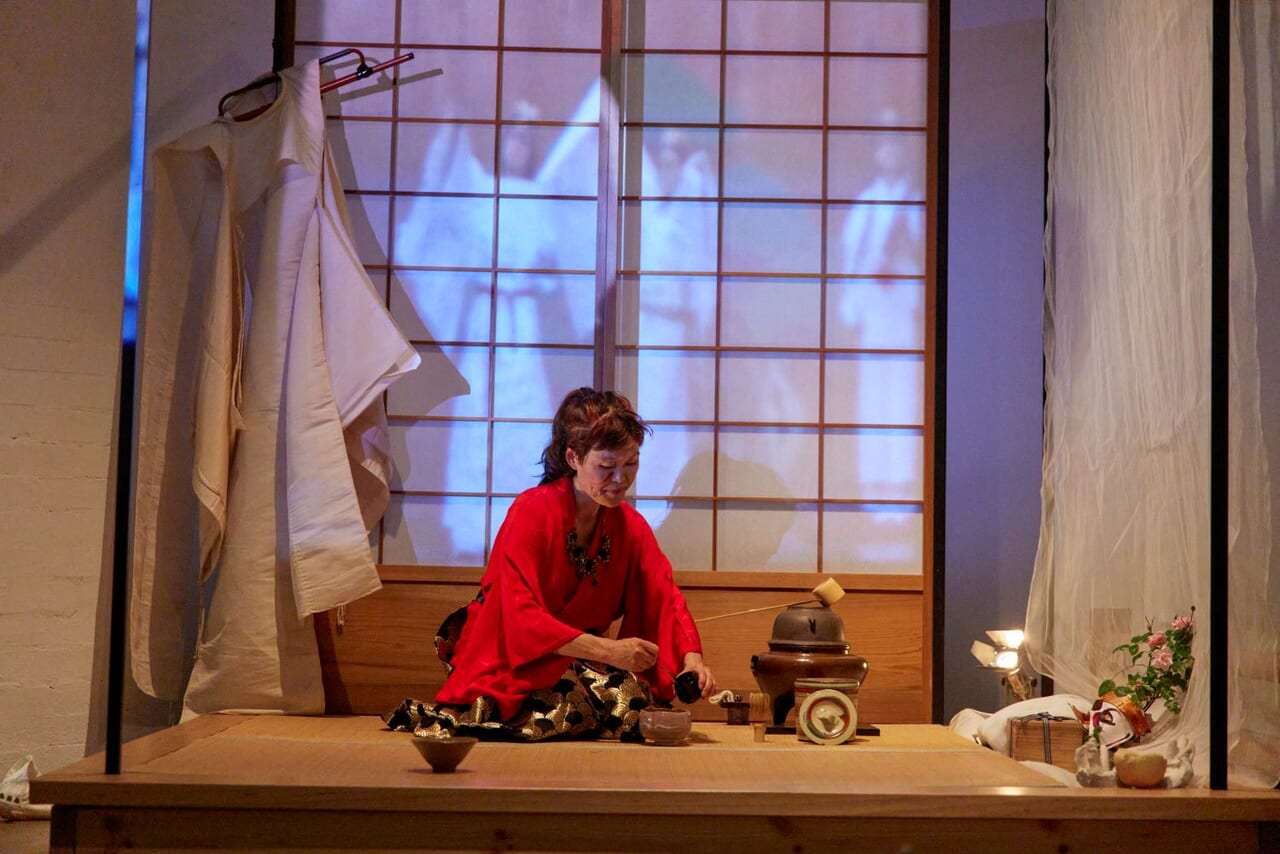
- Performer(s)
- Yumi Umiumare
- Director/Choreographer
- Yumi Umiumare
- Venue
- BLACKCAT Gallery (Sol Gallery)
- Year performed
- 2022
-
Butoh “BOKUGEI” – Tatsumi Hijikata Memorial Concert
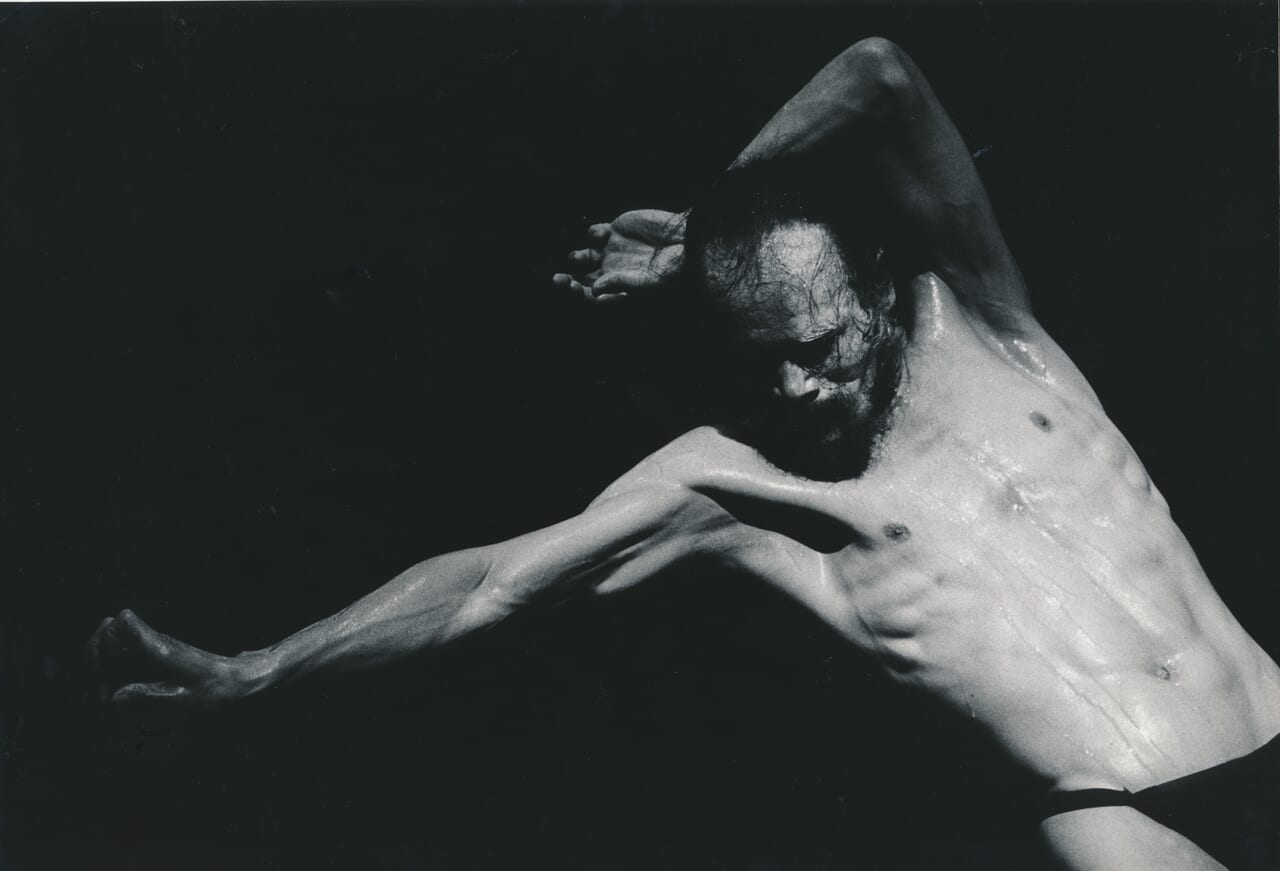
Performance by Teru Goi in memory of Tatsumi Hijikata, who passed away in January 1986. Sounds, music and costume - including a red skirt - evoke Hijikata throughout the performance. Goi dances with total abandon, smearing lipstick on his lips, exposing the tattoos of the gods of wind and thunder on his back, and stabbing his body with two kenzan [small base with sharp spikes used in flower arranging]. His extreme focus and vulnerability are palpable. A review in The Japan Times Weekly described it "as if the spirit of Hijikata had descended on him" (Yuri Kageyama, 19 September 1987).
- Performer(s)
- Teru Goi
- Director/Choreographer
- Teru Goi
- Venue
- Sogetsu Hall
- Year performed
- 1987
-
Butoh is a Corpse Striving to Stand
The title is an aphorism that Tatsumi Hijikata himself used to express his own butoh. The piece was directed by Akiko Motofuji as part of 'Japanese Summer 1960-64' at Art Tower Mito, and presented as a tribute to Hijikata in a retrospective exhibition that looked back on avant-garde artists from the first half of the 1960s. It was performed in the entrance hall by Akiko Motofuji, Kazuo Ohno and Yoshito Ohno among others, in front of a large photograph taken from the finale scene of [Hijikata's] 'Rebellion of the Body'.
- Performer(s)
- Asbestos-kan
- Director/Choreographer
- Akiko Motofuji
- Venue
- Art Tower Mito Contemporary Art Gallery
- Year performed
- 1997
-
Butoh of 21,000 Nautical Miles
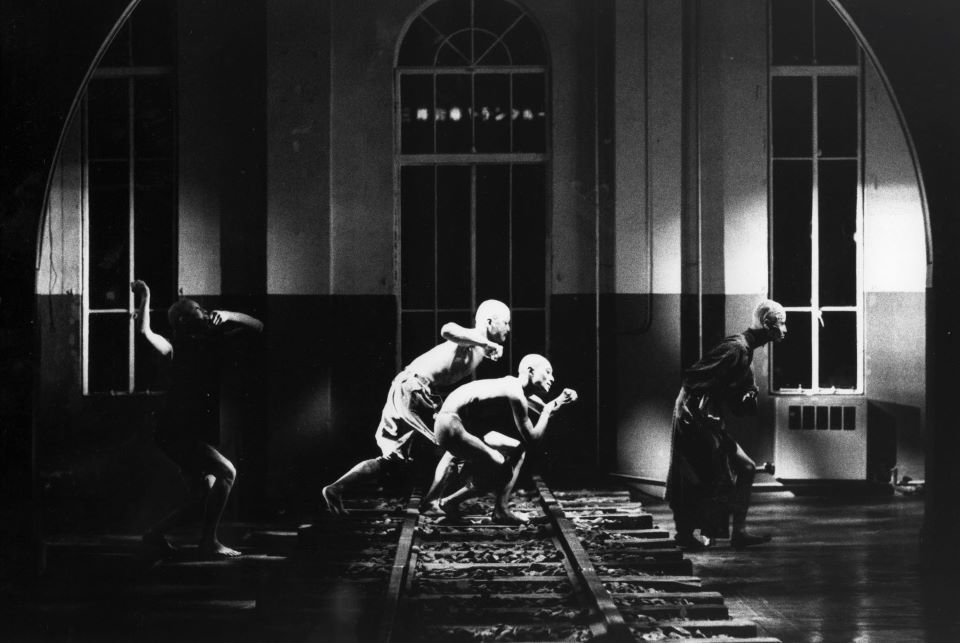
A 30m long railway track replicating the Manchuria Railway was built with sleepers and stones, and a boat designed for audience seating was towed over it. This was a work of remembrance, and included themes such as ghosts of former Japanese soldiers, brides wandering the tracks, a group dance of deranged young Indians from which emerges a golden Buddha, and other extraordinary and everyday representations, interwoven with images more related to Buddhist philosophy, as appears more in later work.
-This work was performed from 5-16 September. with 4 subtitles:
First Easterly Wind (5-7 September)
Westerly Wind of the day of the Buddha's death (8-10 September)
Southerly Wind of the Rainy Season (11-13 September)
Early Autumn Typhoon (14-16 September)"
- Performer(s)
- UNO-MAN
- Director/Choreographer
- Man Uno
- Venue
- Sagacho Exhibit Space
- Year performed
- 1984
-
Butoh Yori no Shokan: Twentieth Century, Peony
- If "butoh" were to appear, manifest, or descend upon the stage, applause would be in order.
I’ve never seen such a god of butoh smile upon the stage, but I cannot afford to sit and do nothing. If the god is hesitant, we must drag him out, smoke him out, and force him to smile: even if it’s a twisted one. That is our way of returning to butoh. - (From the programme)
At the same venue where he performed his first solo butoh in 1971 (then: Koenji Hall), 64-year-old Yasuhiko Takeuchi returns to his roots, 40 years later.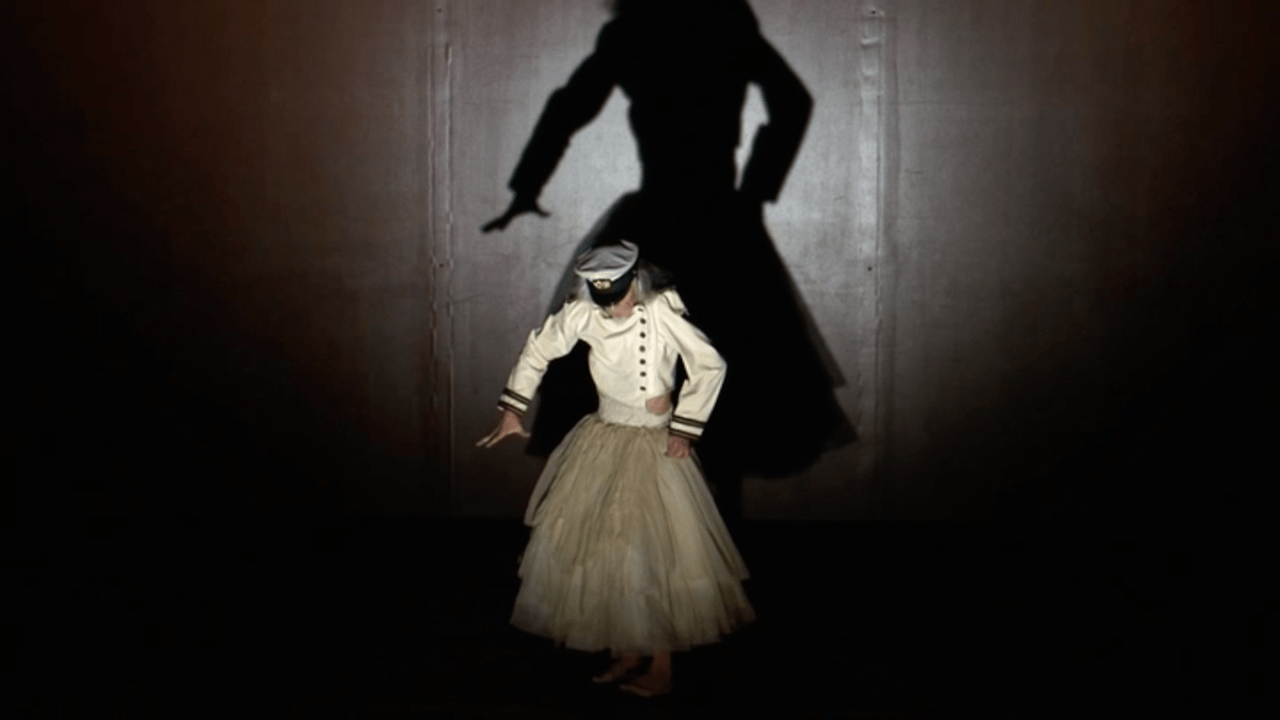
- Performer(s)
- Yasuhiko Takeuchi
- Director/Choreographer
- Yasuhiko Takeuchi
- Venue
- ZA-KOENJI Public Theatre 1
- Year performed
- 2011
-
Butoh Yori no Shokan: Theory of Origins, 1993
""This work was quite something! I included an entirely nude scene... It was created in the heat of the moment, and I was relieved that it didn't cause any trouble with Sogetsu Hall... Or perhaps I didn't even think about that! Now it's a good story to tell."" (Takeuchi)
A recital commemorating the 22nd anniversary of Takeuchi Yasuhiko's solo dance career. At the 40th anniversary another recital was held under the same title 'Butoh Yori no Shokan' [The Summons of Butoh].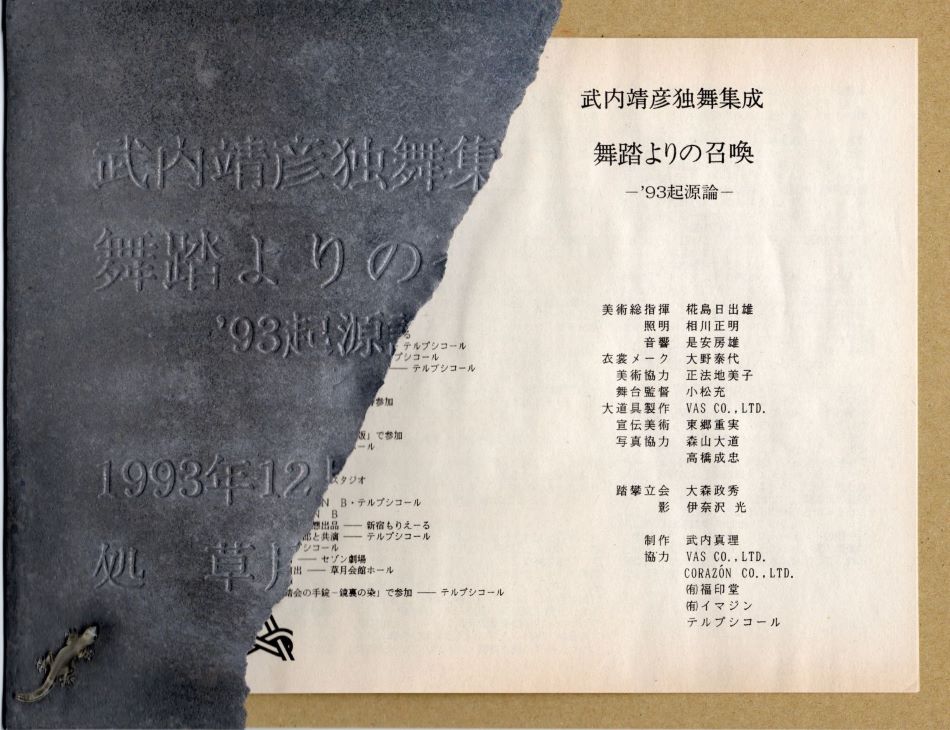
- Performer(s)
- Yasuhiko Takeuchi
- Director/Choreographer
- Yasuhiko Takeuchi
- Venue
- Sogetsu Hall
- Year performed
- 1993
-
Butoh-ichi – The Blind Thief
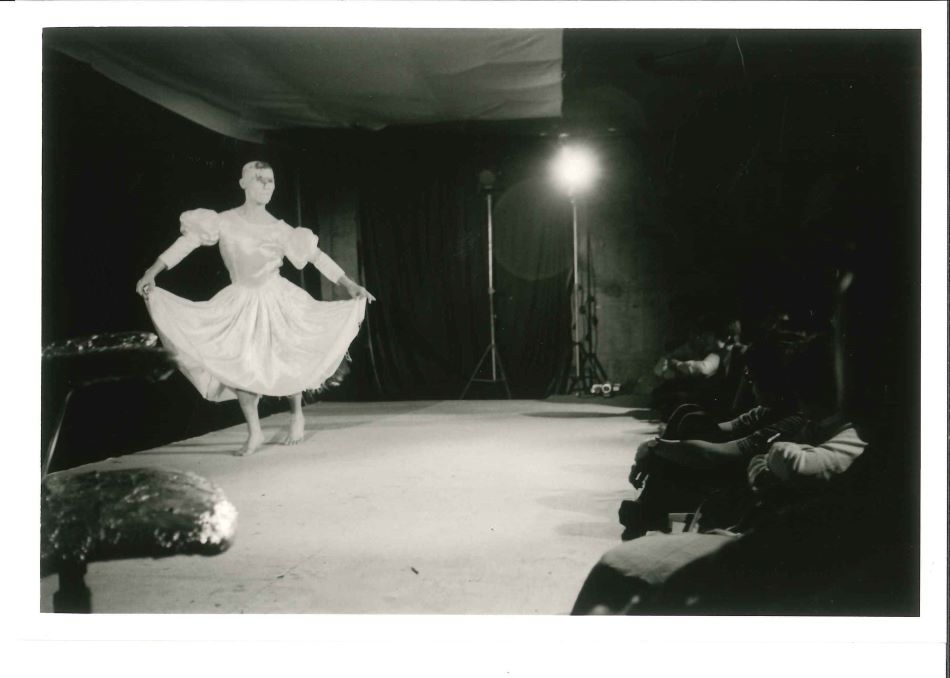
Performed at the Mitsutaka Ishii Dance Experience. It begins with the words 'Niku-ichi' emblazoned in the darkness. Ishii drags a blind old woman out from the audience, makes her play a shamisen and dances spectacularly. Then, held by four stage hands, he performs a bizarre strip dance. A large monster, similar to the lion in a lion dance draped in a large cloth, circles the stage. A crazed Ishii wielding a scythe reveals the true nature of a harvester. As a man in an iron helmet is polished with an electric grinder, sparks and bright yellow demonic flames colour the world of darkness. In the finale, Ishii lines up all the performers on stage and performs a dance of thanks.
- Performer(s)
- Mitsutaka Ishii
- Director/Choreographer
- Mitsutaka Ishii
- Venue
- Ikebukuro Sphere Theater
- Year performed
- 1969
-
The Butterfly Dream
New solo work by Pechika Satoh, an artist admired by many for her introspective performances. After going down the stairs of the Former Hakubutsukan Dobutsuen Station carrying a fish tank, she plays with water in the underground space, and eventually transforms from a larva into a butterfly wearing a giant sunflower, and heads up to the surface. A quiet, thrilling video performance that transforms the relationship between ground and underground, life and death, and inside and outside.
-Takao Kawaguchi Selection: Un Certain Regard
-Tokyo Real Underground (Tokyo Tokyo FESTIVAL Special 13): 1 April - 15 August 2021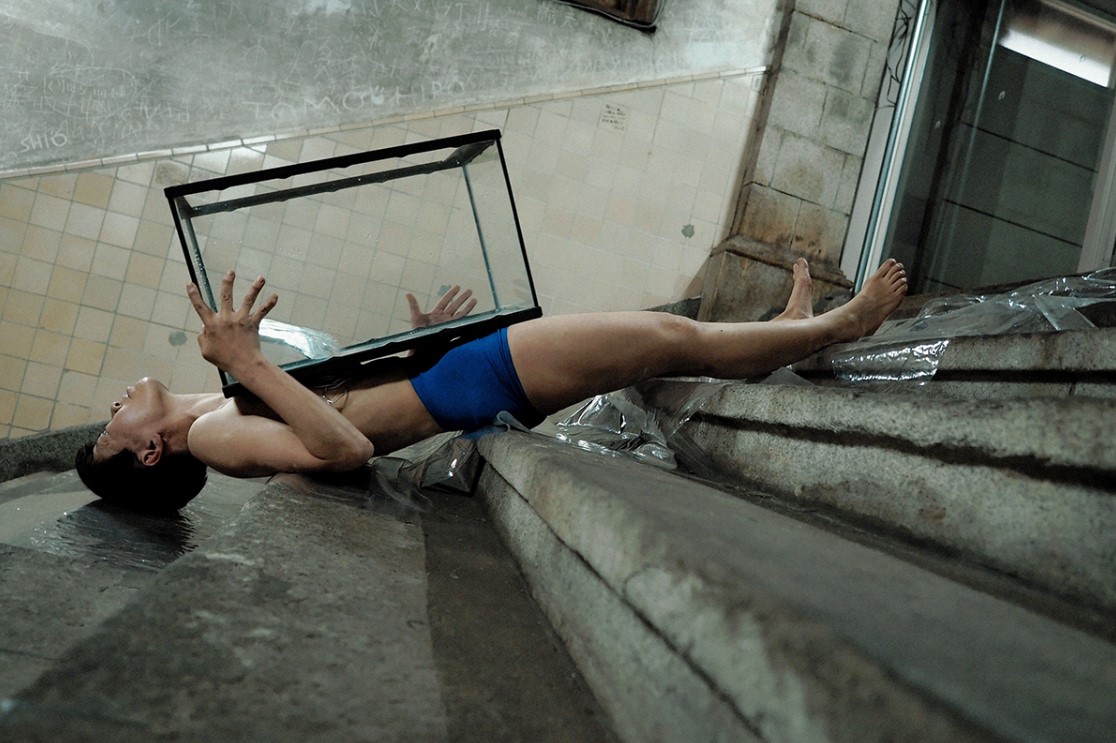
- Performer(s)
- NPO Dance Archive Network
- Director/Choreographer
- Pechika Satoh
- Venue
- Filmed at the former Hakubutsukan Dobutsuen Station [Museum Zoo Station]
- Year performed
- 2021
-
Byakko-sha in Israel and Europe
In June and July of 1985, Byakko-sha embarked on a two-month tour of Israel and Europe as the first leg of a World Butoh Caravan tour that was planned to span five continents, carrying two tonnes of luggage. They toured Israel, West Germany, Switzerland, Italy, Belgium, and France, performing "Hibari to Nejaka" (The Skylark and the Lying Buddha) 27 times, attracting a total audience of about 20,000. The video documents this tour, featuring some performance footage as well as backstage and rehearsal scenes, along with footage of street demonstrations across various cities, at a total of 36 locations.
Tour route:
Jerusalem, Israel (5-18 Jun)
Berlin, West Germany (19-30 Jun)
Zurich, Switzerland (1-7 Jul)
Spoleto, Italy (8-13 Jul)
Rome, Italy (14 Jul)
Antwerp, Belgium (15-20 Jul)
Toulon, France (21-28 Jul)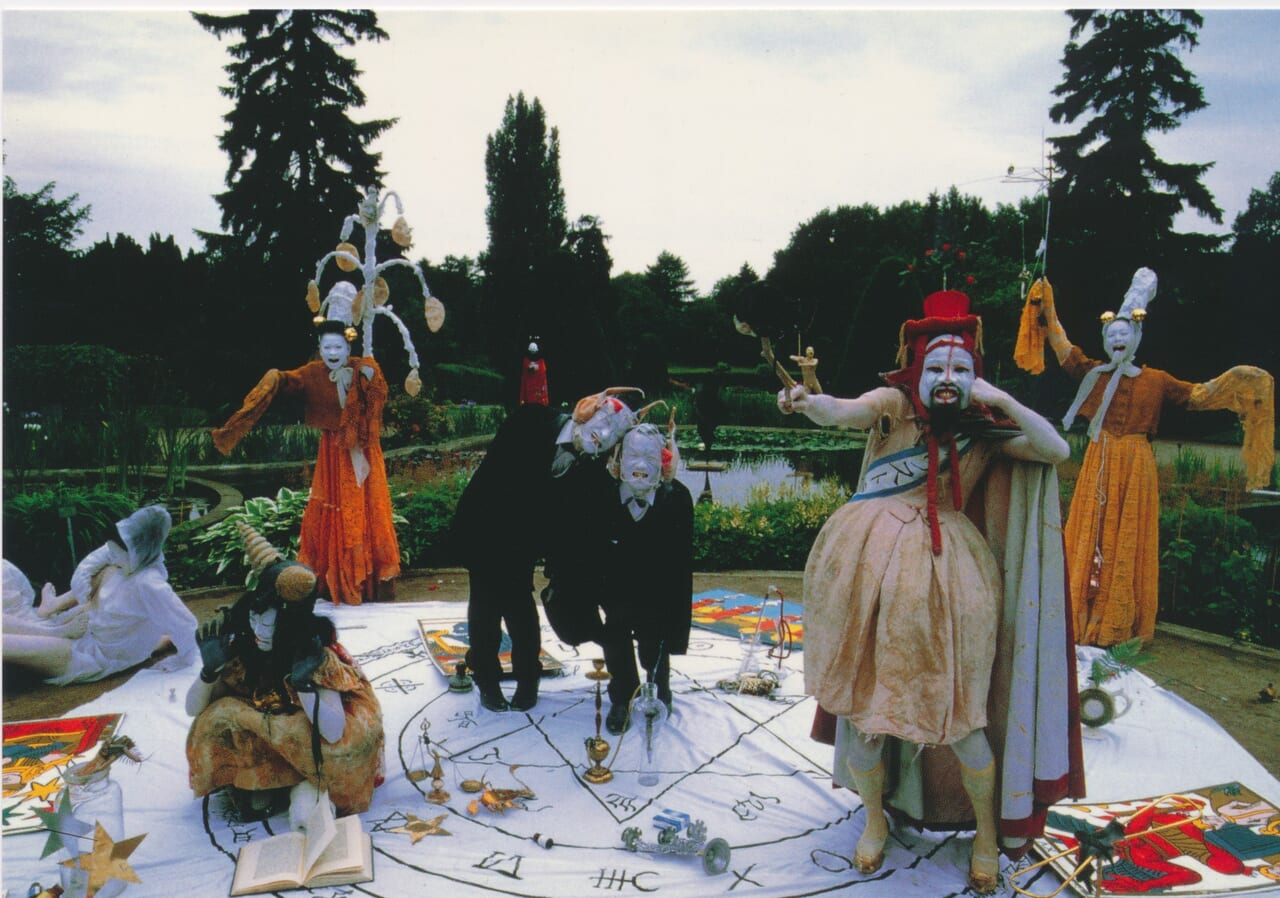
- Performer(s)
- Byakko-sha
- Director/Choreographer
- Isamu Osuka
- Venue
- National Theater, Jerusalem (The Israel Festival) / Theater Manufaktur, Berlin (Berlin Festival Horizont) / Zürcher Theater Spektakel, Zurich / Teatro Nuovo Gian Carlo Menotti, Spoleto (Spoleto Festival) / Teatro Argentina, Rome / De Singel, Antwerp) / Châteauvallon Indoor Theatre, near Toulon (Châteauvallon Festival)
- Year performed
- 1985
-
Byakko-sha on the Yomiuri TV programme “11PM”
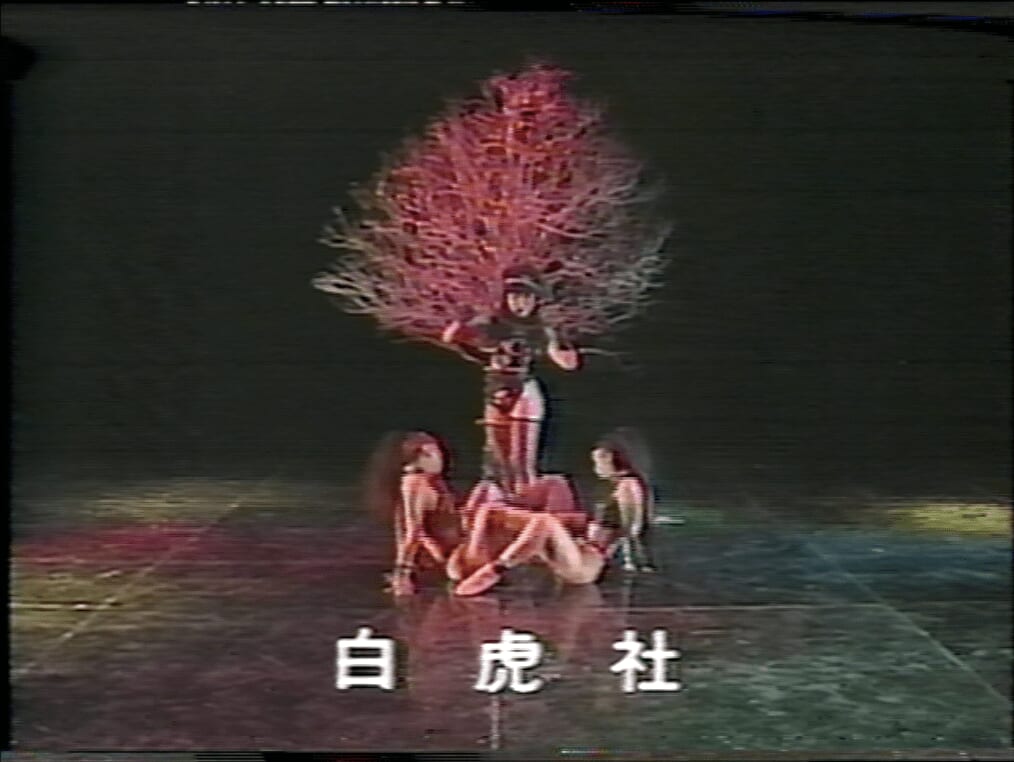
"11PM" was a legendary late-night programme on Nippon TV, covering a wide range of topics from eroticism to social issues. The video is a compilation of Byakko-sha’s guest appearances on the show in 1985 (when the programme began at 11:20 PM and was called "11PM+20"), 1986, and 1988. The 1985 episode was titled "The Body is Art!? Let’s Take Off [our clothes] and Think!! Naked Philosophy Variety Show", while the 1986 episode was called "Hadaka no Geijutsu Daishugo!" [Naked Art Gathering!]. It includes an interview with Isamu Osuka, performances by Byakko-sha, footage from their overseas tours, and announcements for their upcoming performances.
- Performer(s)
- Byakko-sha
- Director/Choreographer
- Isamu Osuka
- Year performed
- 1985
-
Byakko-sha: The Secret Behind Their International Success
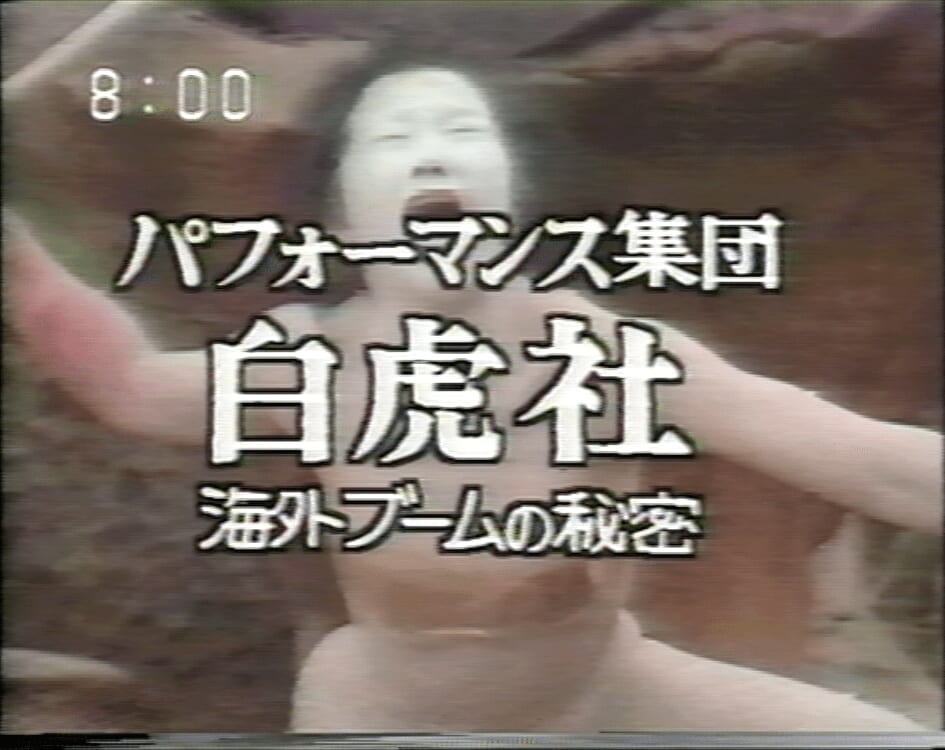
An episode of NHK’s "ETV8 Culture Journal" featuring Byakko-sha, with its founder Isamu Osuka as a guest, exploring the secret behind the group’s popularity. The programme highlights Osuka’s wide-ranging activities, including "PARCO Super School: The Byakko-sha World", "Byakko-sha Tokyo Performance: The Skylark and the Lying Buddha" (Korakuen Ice Palace), "Miracle Report" video, tour of Indonesia, and summer gassyuku [intensive training camp] in Kumano. Impressions of the Tokyo performance are shared by Nagisa Oshima, Shinbo Minami, Françoise Moréchand and others who attended, along with general audience feedback.
- Performer(s)
- Byakko-sha
- Year performed
- 1986
-
Byakko-sha DANCE PERFORMANCE 1980-81
Byakko-sha's university festival tour in the Kansai region, held between 1980 and 1981, shortly after the company’s founding. The video includes footage of performances of "Himei no Mori" [The Forest of Hidden Screams] (1980, Ritsumeikan University), "Geikotsu no Mori" [The Forest of Whale's Bones] (1980, Doshisha University), and "Shonen Shojo no Kusudama" [The Kusudama of Boys and Girls] (1981, Kwansei Gakuin University and Kyoto City University of Arts).
1980/5/10(Sat)~1980/5/10(Sat)Ritsumeikan University's Igakukan Hall 1
1980/10/31(Fri)~1980/10/31(Fri)Doshisha Students' Hall
1981/11/2(Mon)~1981/11/2(Mon)Kwansei Gakuin University Students' Hall
1981/11/22(Sun)~1981/11/22(Sun)Kyoto City University of Arts' Open-air hall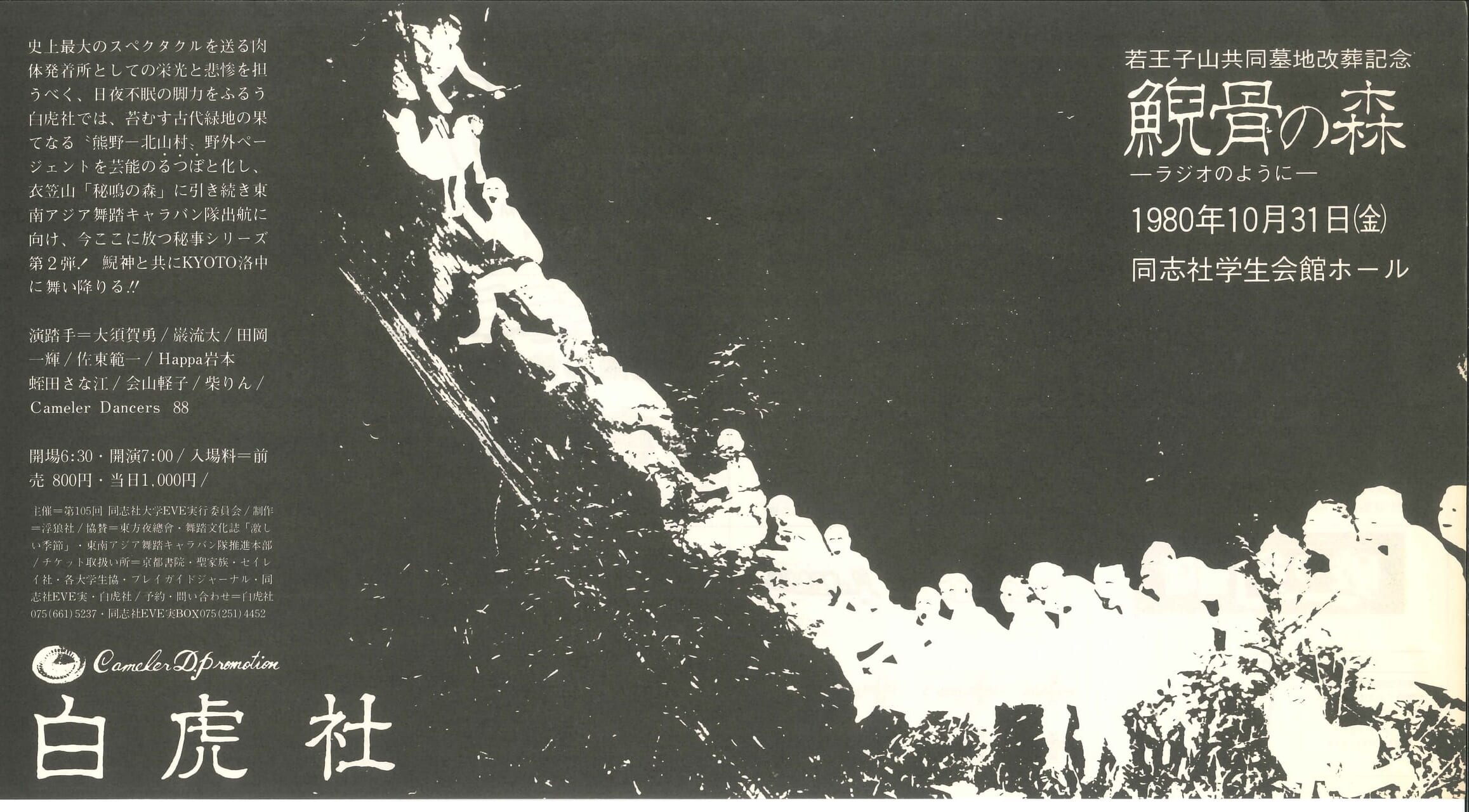
- Performer(s)
- Byakko-sha
- Director/Choreographer
- Isamu Osuka
- Venue
- Ritsumeikan University's Igakukan Hall 1 and other venues
- Year performed
- 1980
-
Byakko-sha DANCE PERFORMANCE 1982
Edited footage from Byakko-sha's "Saint Live Sparking" live house tour around Kansai in 1982. The performance titles were "Sairento koma - tsuki yori hayaku - " [Silent Spinning Top - Faster than the Moon], "Kusa no ue no hirune - mizu kara abura e - " [Nap on the Grass - From Water to Oil" and "Zonnenshutān no natsu - karappo no sekai - " [Sonnenstern's Summer - An Empty World].
The video contains edited footage of:
Byakko-sha '82 Saint Live Sparking No.1 "Silent Spinning Top - Faster than the Moon":
16 April 1982 takutaku (Kyoto)
22-23 April 1982 THE LIVE HOUSE CHICKEN GEORGE (Hyogo)
25 April 1982 BOOP A DOOP (Osaka)
Byakko-sha '82 Saint Live Sparking No.2 "Nap on the Grass - From Water to Oil":
22 May1982 Yokouchi no Hanako Mandolin Factory (Gifu)
25 May 1982 Pin-Spot (Wakayama)
27 May 1982 Circus & Circus (Kyoto)
28 May 1982 Banana Hall (Osaka)
Byakko-sha '82 Saint Live Sparking No.3 "Sonnenstern's Summer - An Empty World":
25 June 1982 ZA-SCÉNE (Kyoto)
27 June 1982 The Yume-za (Osaka)
30 June 1982 Taiyo Embujo Theatre (Hyogo)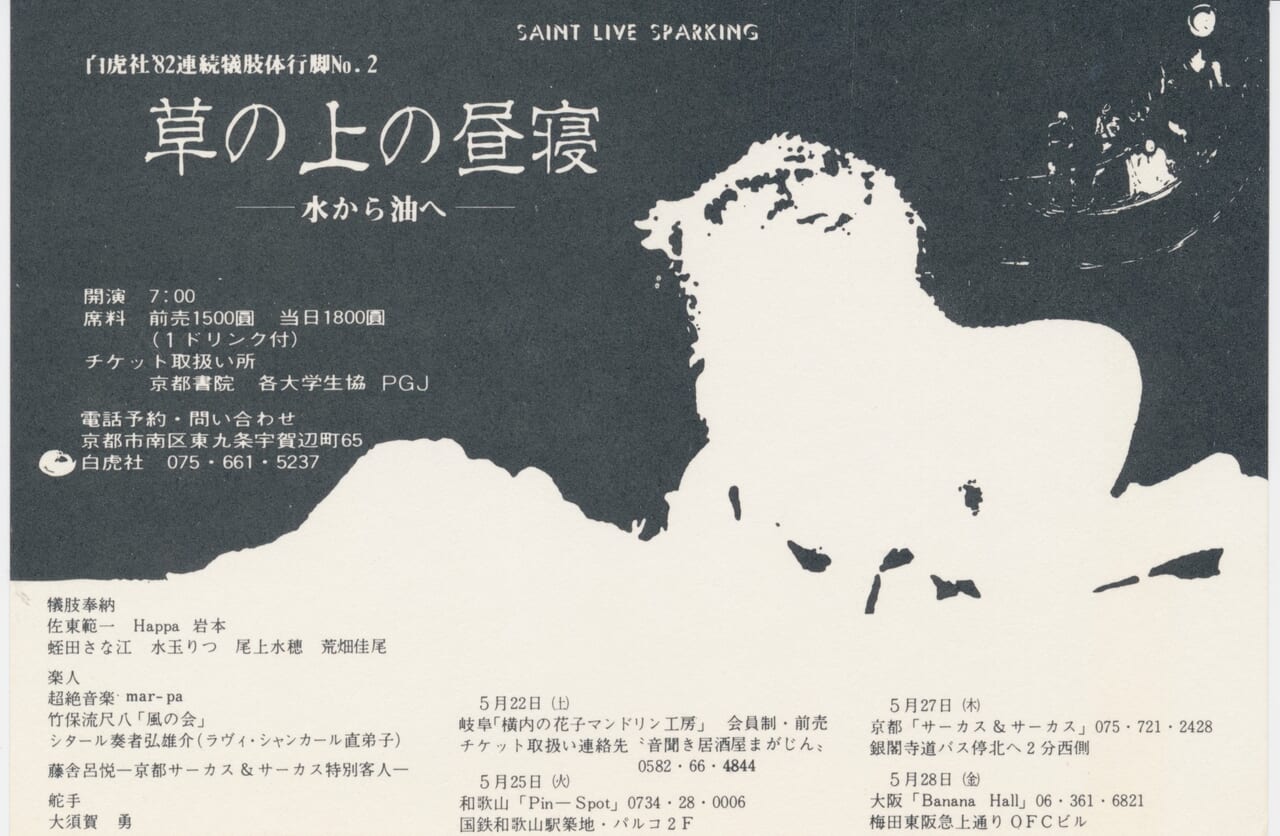
- Performer(s)
- Byakko-sha
- Director/Choreographer
- Isamu Osuka
- Venue
- Mainly live houses in Kansai area
- Year performed
- 1982
-
BYAKKO-SHA Performance on December 1986 Unedited
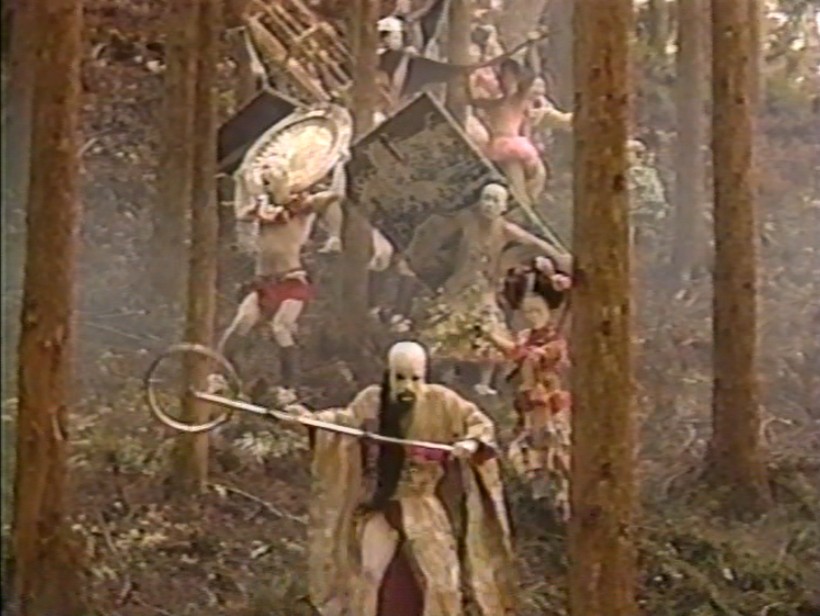
One of the pioneers of media art, Edin Vélez visited Japan in the late 1980s and produced documentary footage focused on butoh. Introducing Tatsumi Hijikata and Kazuo Ohno, and making extensive use of footage of Dairakudakan and Byakko-sha, "Dance of Darkness" was released in 1989. This video consists of unedited footage of an outdoor performance by Byakko-sha, filmed when Vélez visited Japan in 1986. Filming took place at several locations, including deep in the mountains of Kyoto’s Kitayama region and along nearby riverbanks, where Byakko-sha’s excessive “bright darkness” burst forth.
- Performer(s)
- Edin Vélez
- Director/Choreographer
- Isamu Osuka
- Year performed
- 1986
-
Byakko-sha Rehearsals 1982
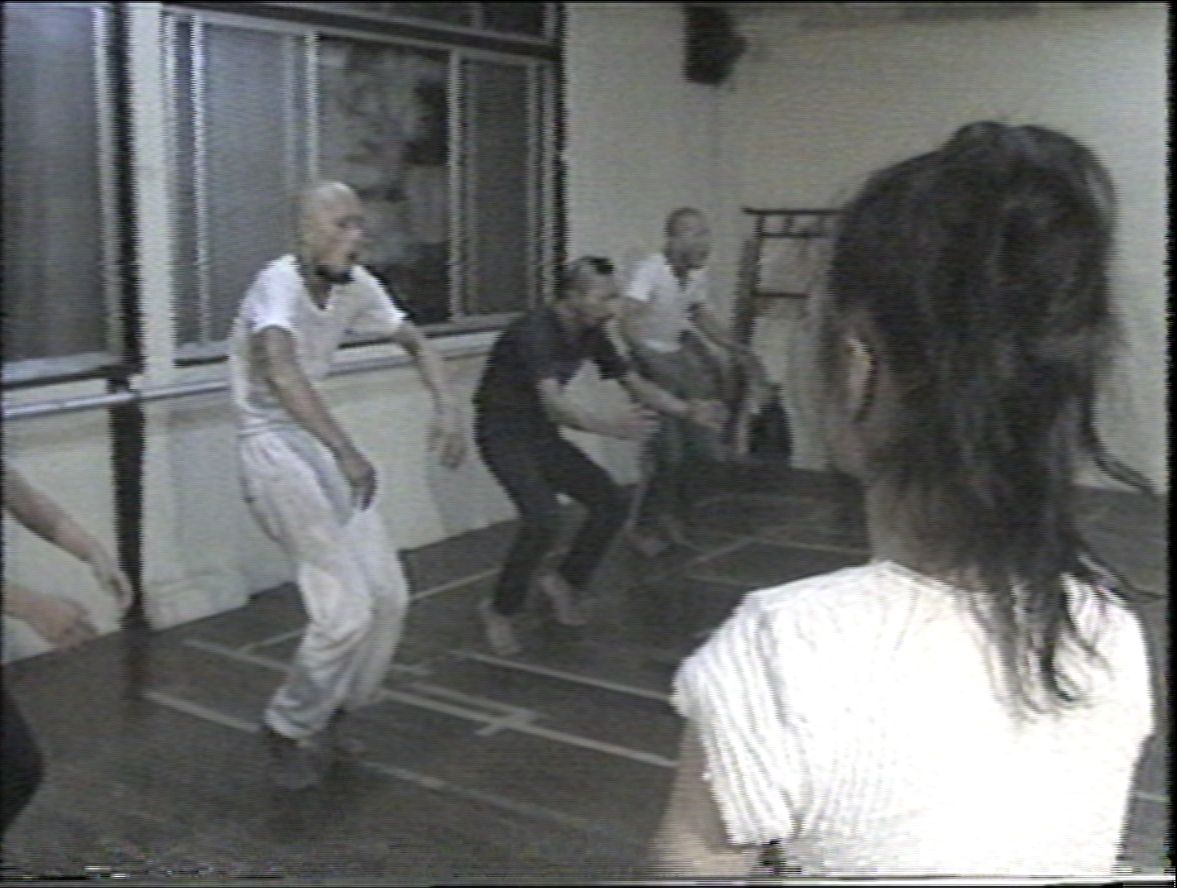
Byakko-sha lived communally in a residence with an attached studio in Higashikujō, Kyoto. In this footage, the camera traces the route from central Kyoto to the compound, and records practice sessions for students (with some Byakko-sha dancers also taking part). Practice for students were held once or twice a week in the evenings, and the video shows Sanae Hiruta teaching primarily basic exercises. In addition to butoh, she also taught movements for cabaret shows performed to earn living expenses. Although not included in this footage, practice for the dancers prior to performances was far more rigorous and intense.
- Performer(s)
- Byakko-sha
- Venue
- Byakkosha Studio
- Year performed
- 1982
-
Byakkosha TV/Film/Concert Appearances
Apart from their performances, Byakko-sha also ran a "takeout" performance group which "delivered" Body and Art to a variety of events from weddings and birthday parties to concerts and TV commercials. The video includes the following Byakko-sha appearances:
- "Einstürzende Neubauten: Halber Mensch" directed by Sogo Ishii [later known as Gakuryu Ishii] (1986)
- "WIND BLOWS INSIDE OF EYES" from Tomoyasu Hotei's solo concert "GUITARHYTHM" (1988)
- Yoko Oginome's "Roppongi Junjoha", which aired on TBS Television's "The Best Ten" (1988)
- "Ikashita Baby" directed by Jun Togawa, from the film "One Room Story" (1991)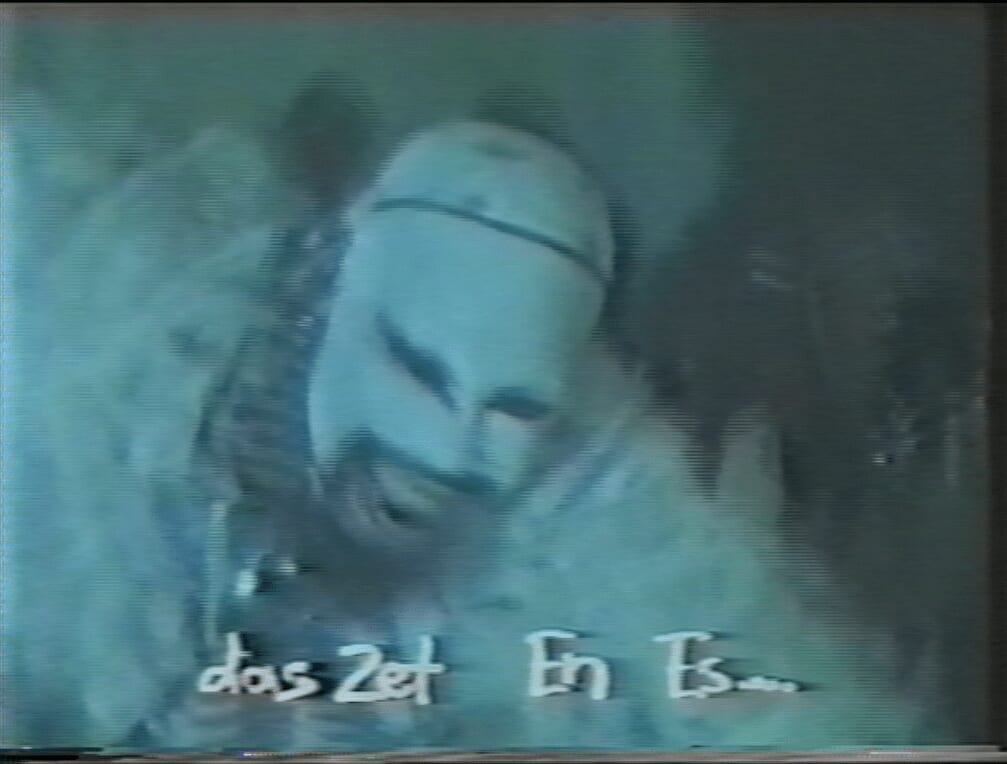
- Performer(s)
- Byakko-sha
- Year performed
- 1986
-
Caddy! Caddy! Caddy! – William Faulkner Dance Project
"Caddy! Caddy! Caddy!" is an epic dance work, with a live sound score and evolving, dynamic installation. An abstract portrayal of Faulkner's novels "The Sound and the Fury", "Absalom, Absalom!", and the story "A Rose for Emily", it was an unforgettable live experience. Utilising simultaneous, disparate and distinct intimate passages, the dance portrays a sense of confinement, entrapment, sadness, loneliness and courage and finally expands with a breathtaking finale in which the stage becomes the nexus for hundreds of threads of lighted colour reaching out into space. A simple play of light can become a medium for a face dancing the ravages of unforgiving time. Darkness illuminates the rhythm of the telling with speaking, sobbing and laughter. Faulkner's stories unfold, without foregrounding cause and effect, through many different voices interweaving in a choral fashion, forming a nonlinear composite - a rich blur of life. Evoking subtle essences, with this reckoning of time, Oguri presented "Caddy! Caddy! Caddy!".
Premiered on 1 March, 2007 in Los Angeles.
2007/3/1(Thu)~2007/3/5(Mon)REDCAT
2009/11/8(Sun)~2009/11/8(Sun)The Toby /The Toby Theater at Indianapolis Museum of Art (2009 Spirit & Place Festival)
2016/11/5(Sat)~2016/11/6(Sun)Hammer Museum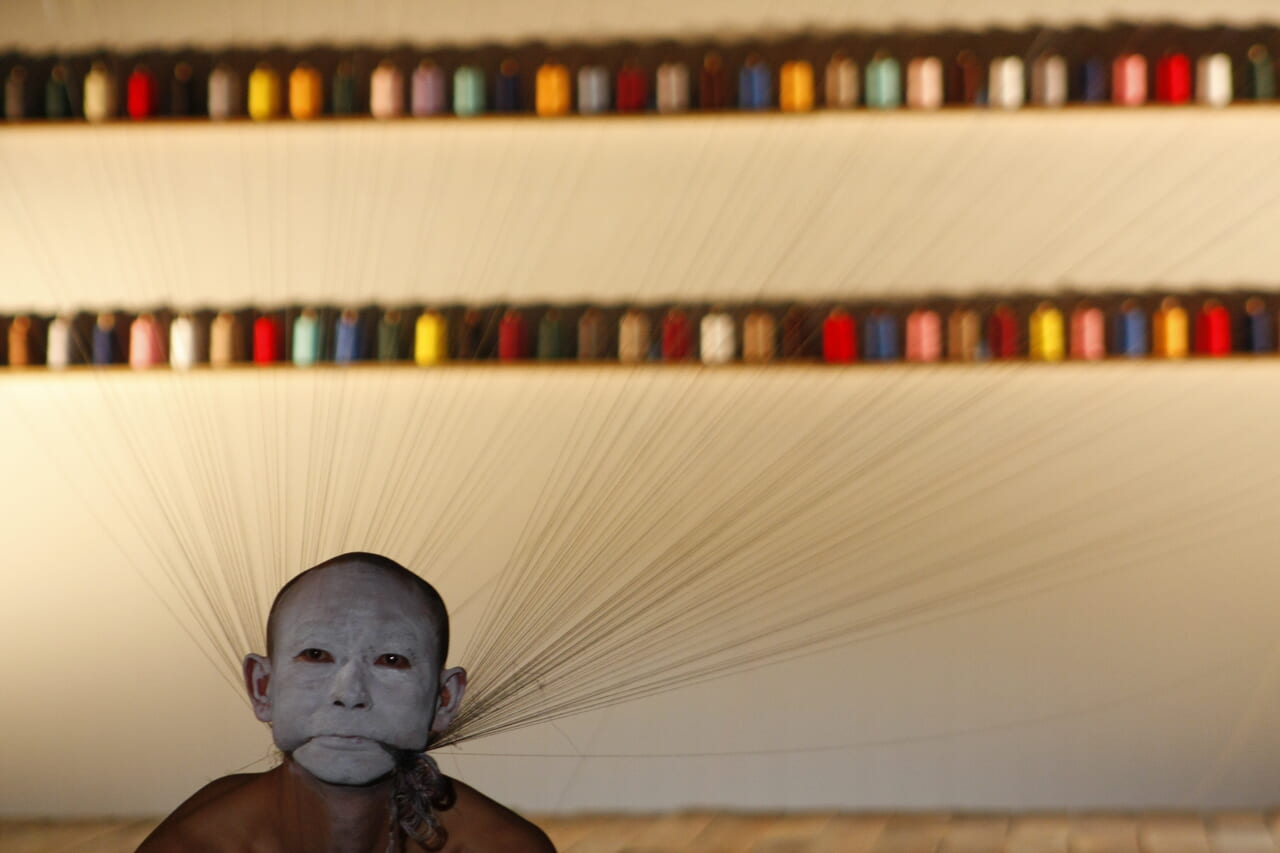
- Performer(s)
- Naoyuki Oguri
- Director/Choreographer
- Oguri
- Venue
- REDCAT, The Toby /The Toby Theater at Indianapolis Mueum of Art, Hammer Museum
- Year performed
- 2007
-
CANDIES girlish hardcore
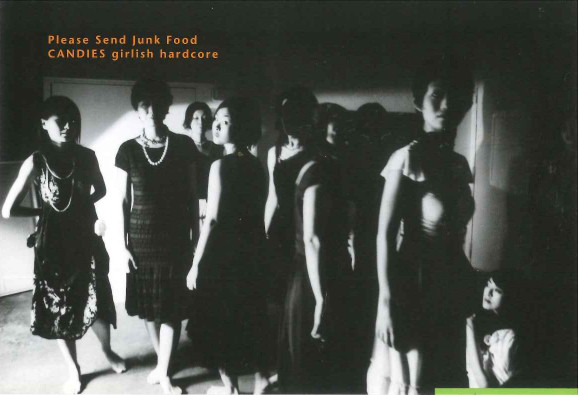
First international touring production. After premiering in Cardiff, UK, it was toured through London, Portland (USA) and New York before triumphantly returning to Tokyo and Osaka. Here we have the recording from the Japan society performance in New York. Works by Yubiwa Hotel at the time had an entire cast of female performers, and presented views on life, death, society and the world through the history of women's lives. They attracted a great deal of attention with innovative visuals, and audiences who would chat 'Mean Girls!' and 'Stunning!' at them.
- Performer(s)
- YUBIWA Hotel
- Director/Choreographer
- Shirotama Hitsujiya
- Venue
- Japan Society, New York.
- Year performed
- 2006

