
Dance Video Index
In this database, you will find 373 dance videos which were collected from the 2023 to 2025 fiscal years under the auspices of the EPAD (Eternal Performing Arts Archives and Digital Theatre) .
Overview
-
Tengu
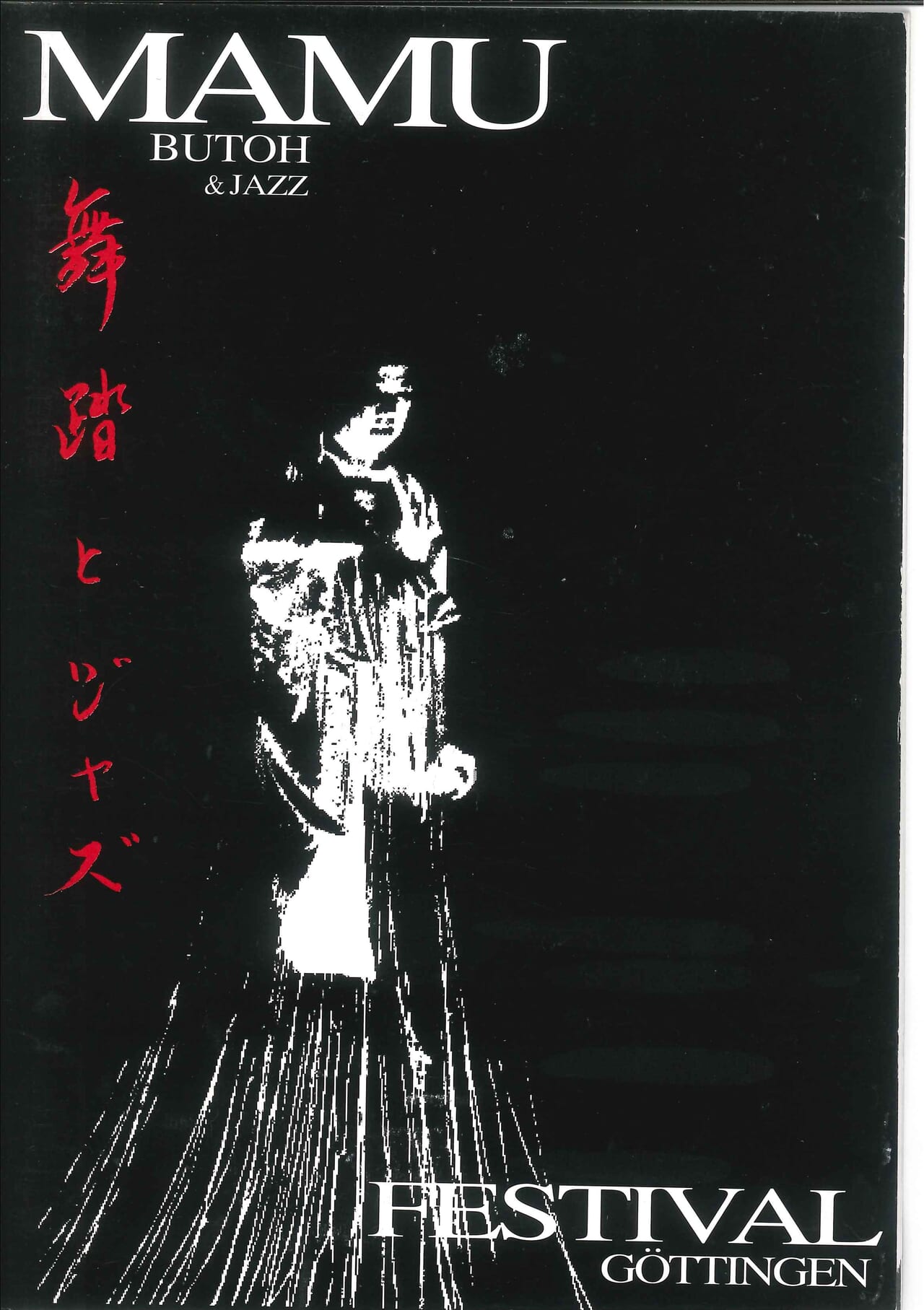
Live improvised performance with Tadashi Endo, Aki Takase and Itaru Oki. It was presented at the first Mamu Festival, an annual "butoh and jazz" festival held in Göttingen, Germany, which invited butoh dancers to perform alongside jazz musicians.
- Performer(s)
- Tadashi Endo (Butoh Centre MAMU)
- Director/Choreographer
- Tadashi Endo
- Venue
- Junges Theater Göttingen
- Year performed
- 1992
-
Tentai no Aki
This work marks a turning point for Yamada Setsuko, where she began calling her work 'dance' instead of 'butoh'. Through an installation by Naito Hisayoshi, the manufactured space of Studio 200 in Seibu Ikebukuro became a stage leading to the other world - the ends of the earth, with bronze surfaces, rusty iron, scrap wood and white sand. Starting with the guitar piece 'International' by Shomura Kiyoshi, synthesised sounds by HIROKI intersect with Yamada's centripetal dance movements of rhythmic tension, creating a world formed of simplicity.
- Yamada Setsuko Dance Performance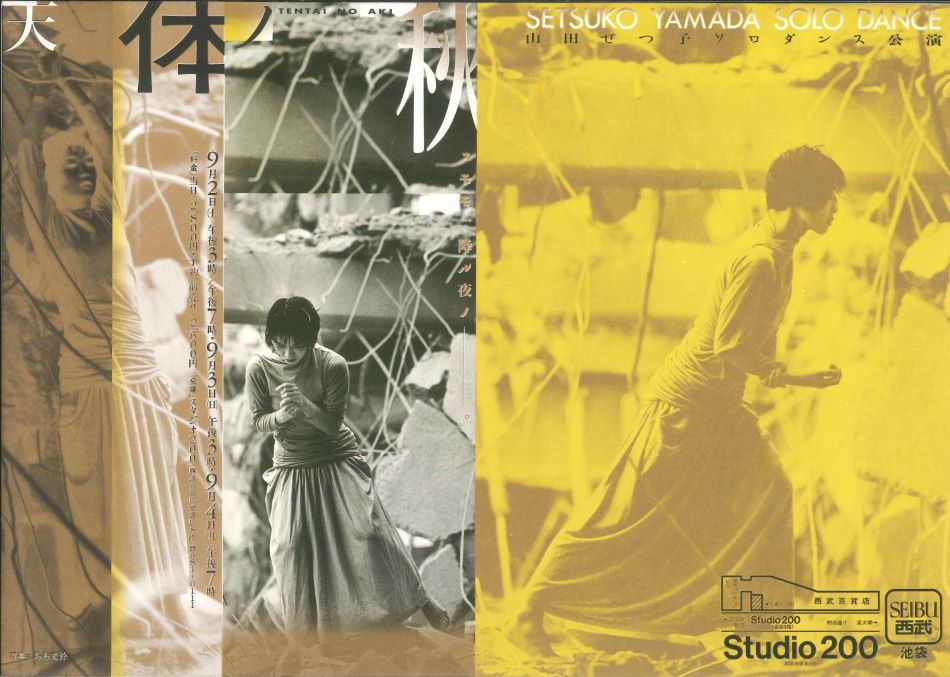
- Performer(s)
- Setsuko Yamada
- Director/Choreographer
- Setsuko Yamada
- Venue
- Studio 200
- Year performed
- 1989
-
Terminal Paranoid
A site-specific work performed at an abandoned boarding school in Graz, Austria.
The piece was created during a two-week intensive workshop with students of Yumiko Yoshioka, and co-choreographed by Eugeny Koylov, who was invited from St Petersburg. There was also a powerful installation by artist Joachim Manger, which worked together with the dance. It was the 2nd running of a project that has been held annually since 1995. Video footage for the 3rd run, set in a huge quarry used as an aeroplane repair site, has unfortunately been lost.
- Butoh dance/theatre project- Performer(s)
- tatoeba
- Director/Choreographer
- Yumiko Yoshioka, Eugeny Koylov
- Venue
- Closed school in Graz
- Year performed
- 1996
-
Theoria of the Mirror
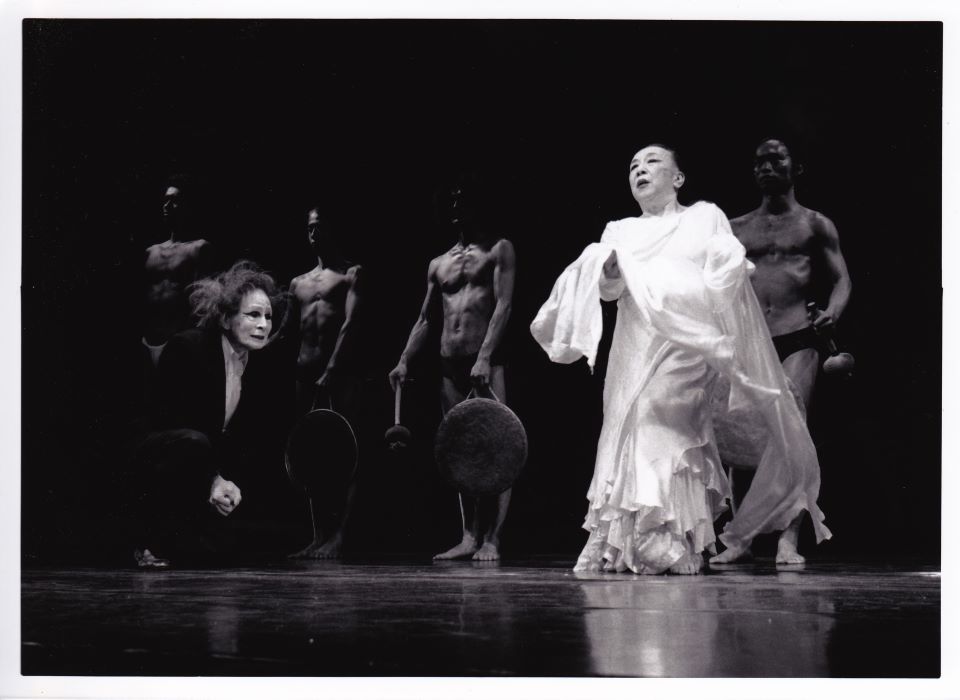
A new butoh work by Akiko Motofuji examining the issues of existence, nothingness, time and eternity, based on the book 'Kagami no Theoria' [Theoria of the Mirror] by Chimako Tada and incorporating a version of the mirror legend from Nagoya. It was performed as part of 'Eventalk Part VI: Visualising Tatsumi Hijikata' organised by the Aichi Arts Centre. Led by Akiko Motofuji with the Asbestos-kan troupe, a collaborative butoh atmosphere was created featuring Yoshito Ohno and a special guest appearance by Kazuo Ohno.
- Performer(s)
- Asbestos-kan
- Director/Choreographer
- Akiko Motofuji
- Venue
- Aichi Prefectural Art Theater : Mini theater
- Year performed
- 1997
-
“There’s Another Way to Look at It” & “Untitled”
This piece, performed as one of a series of butoh performances for "Whispers of Strange Matter II O", consists of solo and duo performances by Mitsutaka Ishii and Masahide Omori. Emphasising the improvisational nature of butoh, the solo parts are entirely unchoreographed, and the duo sections created with just a few prior arrangements. A loose and highly improvised composition, each dancer attempts to see how they can blend with the body of the other.
-Ammonite Claw Extravaganza
-Bigakko Annual Report 2011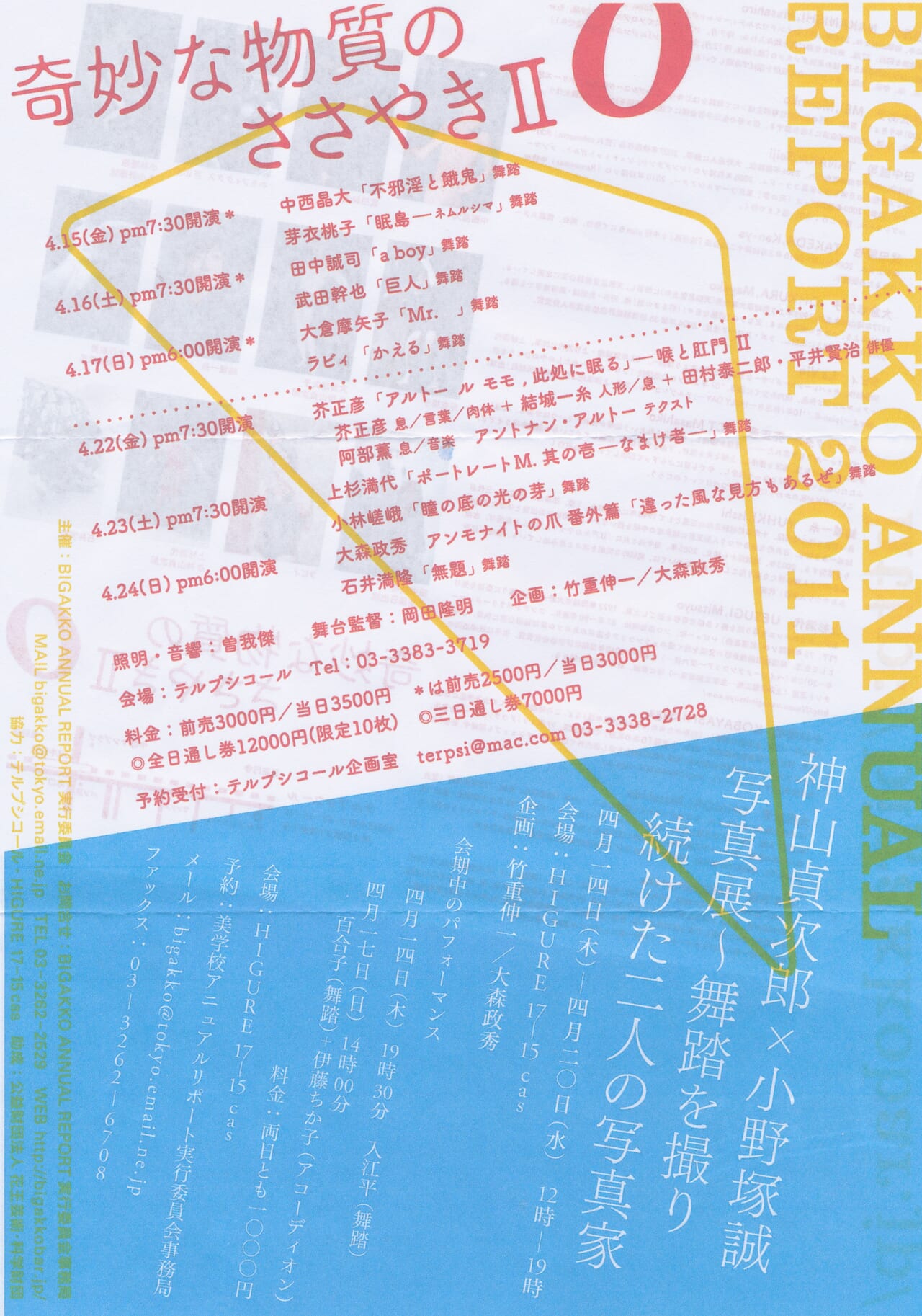
- Performer(s)
- Terpsichore
- Director/Choreographer
- Masahide Omori, Mitsutaka Ishii
- Venue
- Terpsichore
- Year performed
- 2011
-
Thieves Guild
The first Tohoku region performance by Daizu-ko Farm, who celebrate the human spirit. The stage and seating were set up over the flowing Hirose River, beneath the Ohashi Bridge near Aoba Castle, with an eight-metre tall stained glass window erected on the river’s surface behind the stage. The performance portrays the colourful lives of the river dwellers - the women as 'yotaka' [low-ranking prostitutes], the men as thieves - stealing, laughing, getting caught and crying, depicted in muddy, unpretentious humanity.
The performance was repeatedly interrupted by rain, and the river eventually flowed over the stage. The piano, which had been used since their street performance days, was finally put to rest.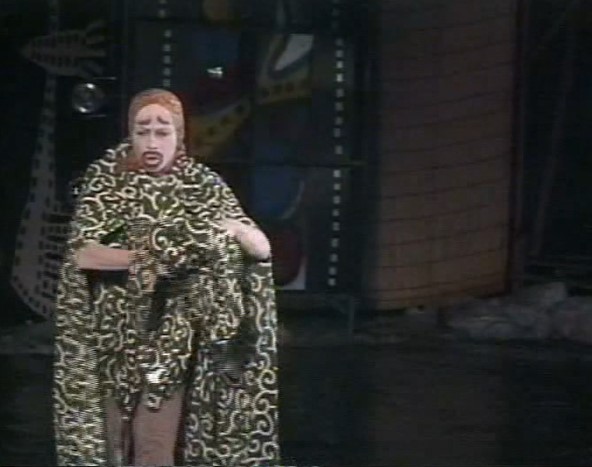
- Performer(s)
- Butoh Orchestra Daizu-ko Farm
- Director/Choreographer
- Hoshino Rashinban
- Venue
- Temporary outdoor stage under Ohashi bridge at the Hirose River
- Year performed
- 1999
-
5th Third World Theatre Festival, Seoul
A record of Byakko-sha’s first overseas tour. At the 5th Third World Theatre Festival, held on stages across Seoul, the International Youth Theatre Center (KSEC)'s performance of "The Straits" attracted significant attention. "The Straits" combined dance by Byakko-sha, a play about a Korean war veteran and his daughter living in Japan by Saburo Ri (Park Byung-yang)'s Korean Theatre Performance Society, and rock music incorporating pansori by Poe Pak and Rise. In addition to the stage performance, the video also shows scenery from train windows and, briefly, theater scholar Jan Kott, who highly praised Byakko-sha.
- The original footage consists of five rolls of 8mm film and has no sound.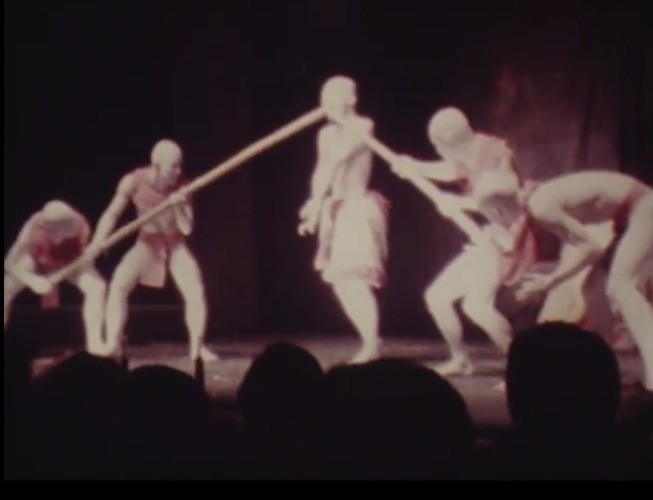
- Performer(s)
- Byakko-sha
- Director/Choreographer
- Isamu Osuka
- Venue
- Munye Theater, Seoul
- Year performed
- 1981
-
Thoughts on Yesenin
The Russian poet Sergei Yesenin, who had many colourful relationships, including marriages to Isadora Duncan and Tolstoy's granddaughter, was considered the 'last of the rural poets', writing about nature and comparing rural women to the Virgin Mary. He regarded himself a 'distanced poet', a wanderer with a fear of restraint. Taking from his final message the idea that "Life is a joke, but if there is no greatness in life, it cannot be that there is only greatness in death", the work contrasts Yesenin with the character of a clown.
- Participated in the ACA National Arts Festival 1975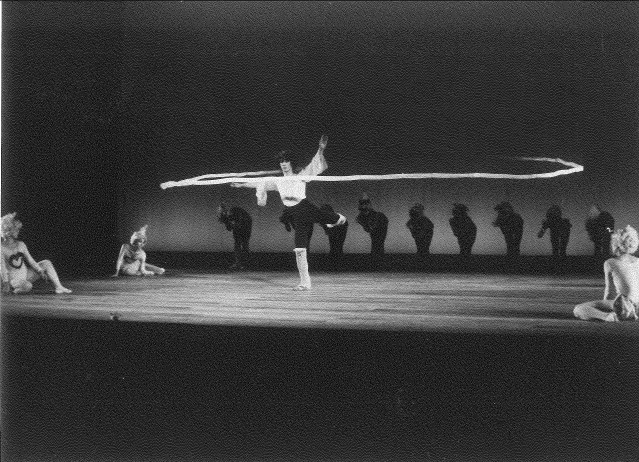
- Performer(s)
- Wakamatsu Miki & Tsuda Ikuko Free Dance Performance
- Director/Choreographer
- Miki Wakamatsu, Ikuko Tsuda
- Venue
- Toranomon Hall
- Year performed
- 1975
-
Three
Three modern-day dancers copy three masterworks by the founders of butoh: Tatsumi Hijikata, Kazuo Ohno and Yoshito Ohno. Mikiko Kawamura, Takao Kawaguchi and Dai Matsuoka respond to the spirit of butoh with modern methods. Kawamura reproduces Hijikata’s "Hosotan" (Story of Smallpox), Kawaguchi reconstructs Kazuo Ohno’s "Admiring La Argentina", and Matsuoka recreates Yoshito Ohno’s "Hijikata Sansho". With careful study of archived footage from the original performances and intense training, they transport butoh to the here and now.
- Tokyo Real Underground festival (Tokyo Tokyo FESTIVAL Special 13): 1 April - 15 August 2021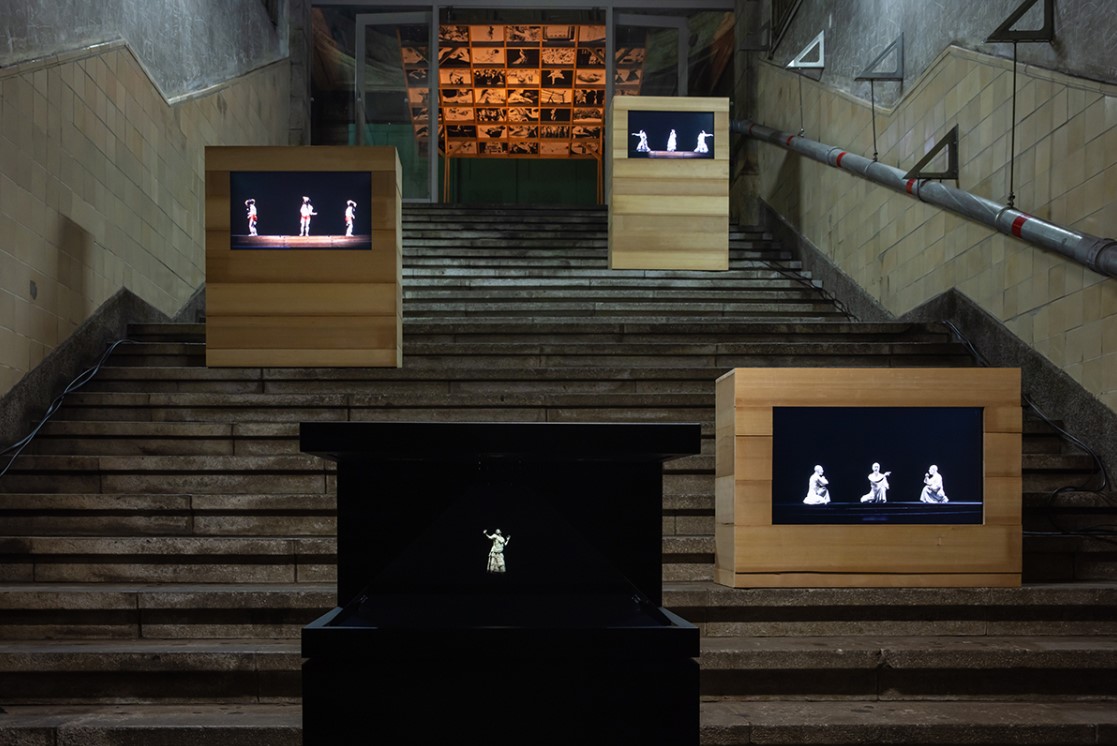
- Performer(s)
- NPO Dance Archive Network
- Director/Choreographer
- Naoto Iina
- Venue
- Filmed at Former Hakubutsukan Dobutsuen Station [Museum Zoo Station]
- Year performed
- 2021
-
Through the tunnel. There was a house
For the first time in a long time, I walked around the town where I was born and raised. The takoyaki restaurant by the canal, the chimney of a deserted sentō, a tunnel around 1m high... between the nostalgic scenes were karaoke bars and convenience stores that I had never seen before. Soaking my mind and body in this town where I had spent my childhood untroubled, something unexpected spilled out of the time and space accumulated there. I waited patiently for it to spill out again.
- Participated in the 6th OSAKA DANCE EXPERIENCE: 1st half
- Osamu Jareo and Misako Terada Dance Performance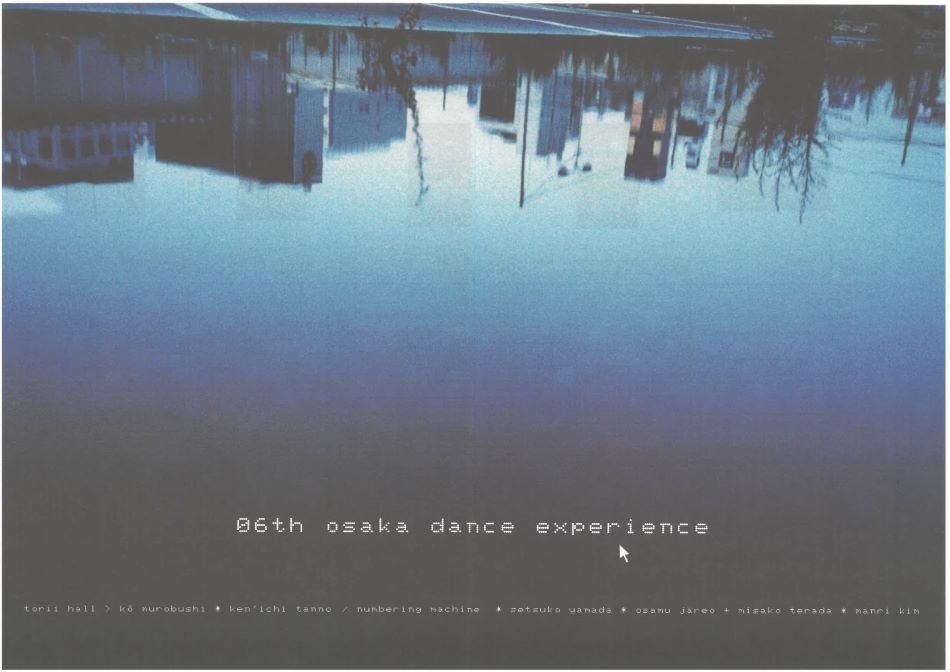
- Performer(s)
- TORII HALL
- Director/Choreographer
- Osamu Jareo + Misako Terada
- Venue
- TORII HALL
- Year performed
- 2000
-
TOOBOE (Howl)
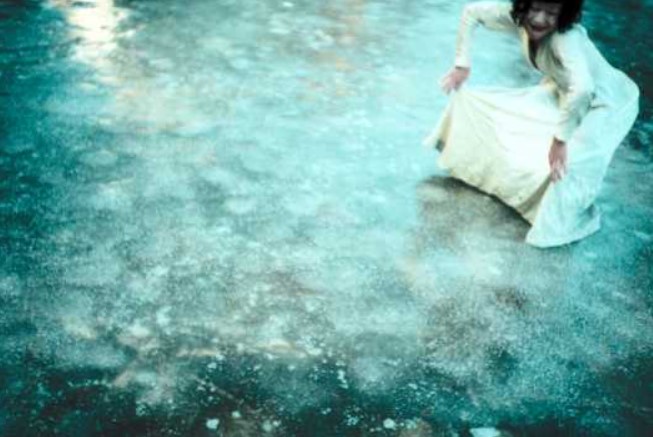
TOOBOE (Howl) is a solo dance performance by Yuko Kaseki, co-created with Marc Ates. The production’s starting point was based on a story of the same name by Japanese author Hyakken Uchida (1889-1971). The story is told through illogical, odd happenings that emerge from the ordinary. Through his peculiar vision of consideration, consciously simple episode of expression success to find out the cleft in the ordinary construction. Through the door to the other side, to possibility of fantasy level, it gives one side anxiety on the other side appear the strange humour.
Yuko Kaseki expose this situation by absurdity as same as humorous, with brevity way exist herself and her body in this world. Premiered in November 1998 at the loplop in Berlin.
- Performer(s)
- Yuko Kaseki
- Director/Choreographer
- Yuko Kaseki
- Venue
- DOCK11 (Berlin)
- Year performed
- 2002
-
Tohoku Kabuki Project 3: Hijikata Tatasumi’s Lecture
The sound recording of the lecture by Hijikata. The 'Tohoku Kabuki Project', composed and directed by Tasumi Hijikata, included performances by Yoko Ashikawa and the Tohoku Kabuki Research Group, as well as lectures and slides, and was held four times in March, June, September and December 1985 as the 'Studio 200 Butoh Lecture'. In the first session, lectures were given by Nario Gōda and Makoto Ōoka, by Akiko Baba and Kuniichi Uno in the second, Ryōichi Enomoto and Tatsumi Hijikata in the third, and Kazuo Nagao in the fourth. Hijikata was unable to attend the fourth session due to illness and died in January in the following year.
- Tohoku Kabuki Project 3 was held on 28-30 September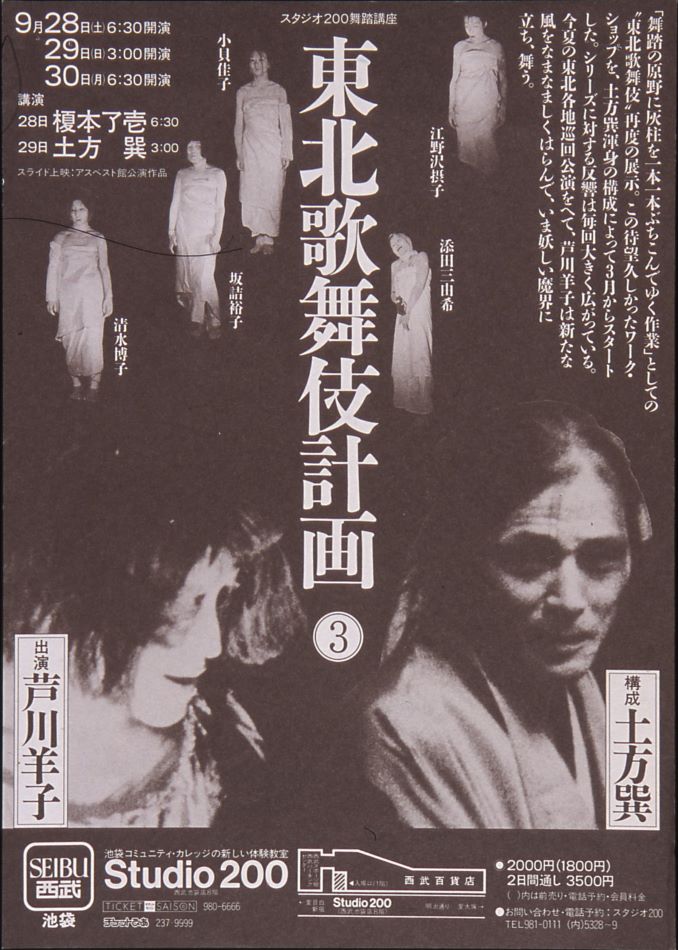
- Performer(s)
- Studio 200
- Director/Choreographer
- Tatsumi Hijikata
- Venue
- Studio 200
- Year performed
- 1985
-
Tokyo DasSHOKU Girl
Tokyo DasSHOKU Girl touches on the shadowy life of Japan which many never encounter. DasSHOKU (to bleach) strips off the colour of the superficial to reveal the reality behind the happy face of consumerism, bleaching away the commonly held views of Japanese women as kawai, or cute, polite and submissive. In Tokyo DasSHOKU Girl Yumi pays homage to the roots of Butoh as an anarchic dangerous and at the same time beautiful dance form.
- Winner of the Melborne Fringe Festival Award and Green Room Award, Australia
- Performed on 7th, 8th, 9th, 14th, 15th and 16th of October, 1999 at the Melbourne Fringe Festival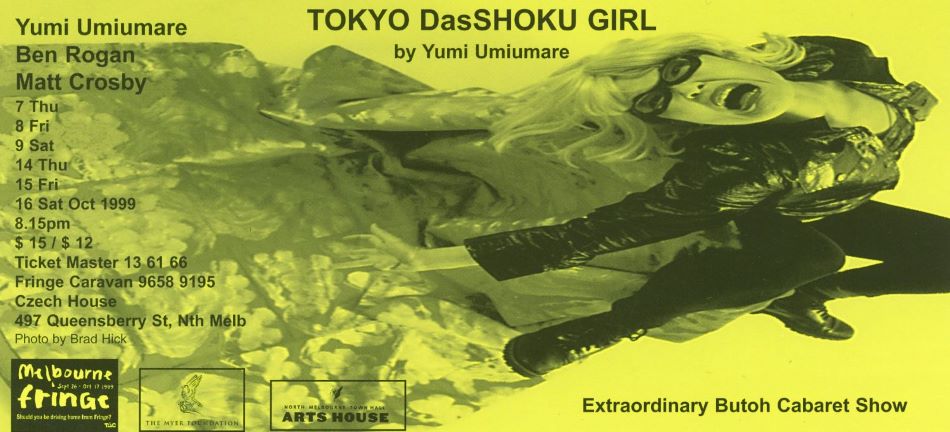
- Performer(s)
- Yumi Umiumare
- Director/Choreographer
- Yumi Umiumare
- Venue
- Czech House
- Year performed
- 1999
-
The Topography of the Fantasy II
The second work based on Atsushi Tanigawa's "The Topography of the Fantasy", following the first in 1998. Asking the question "Who Am I?", the piece is a journey of self-discovery in pursuit of another self. Following the back of a shadowy man, we wander through various worlds. In addition to Waguri and Katata (Shinonome Butoh), performers include young people in their twenties and the pantomime group SOUKI, who are seen here performing butoh for the first time. Using butoh-fu [butoh notation], which formed the basis of Waguri's work, the performance also addresses "transformation", one of the foundational concepts of Hijikata's butoh.
- Tokyo International Arts Festival - Agency for Cultural Affairs International Exchange/Cooperation Programme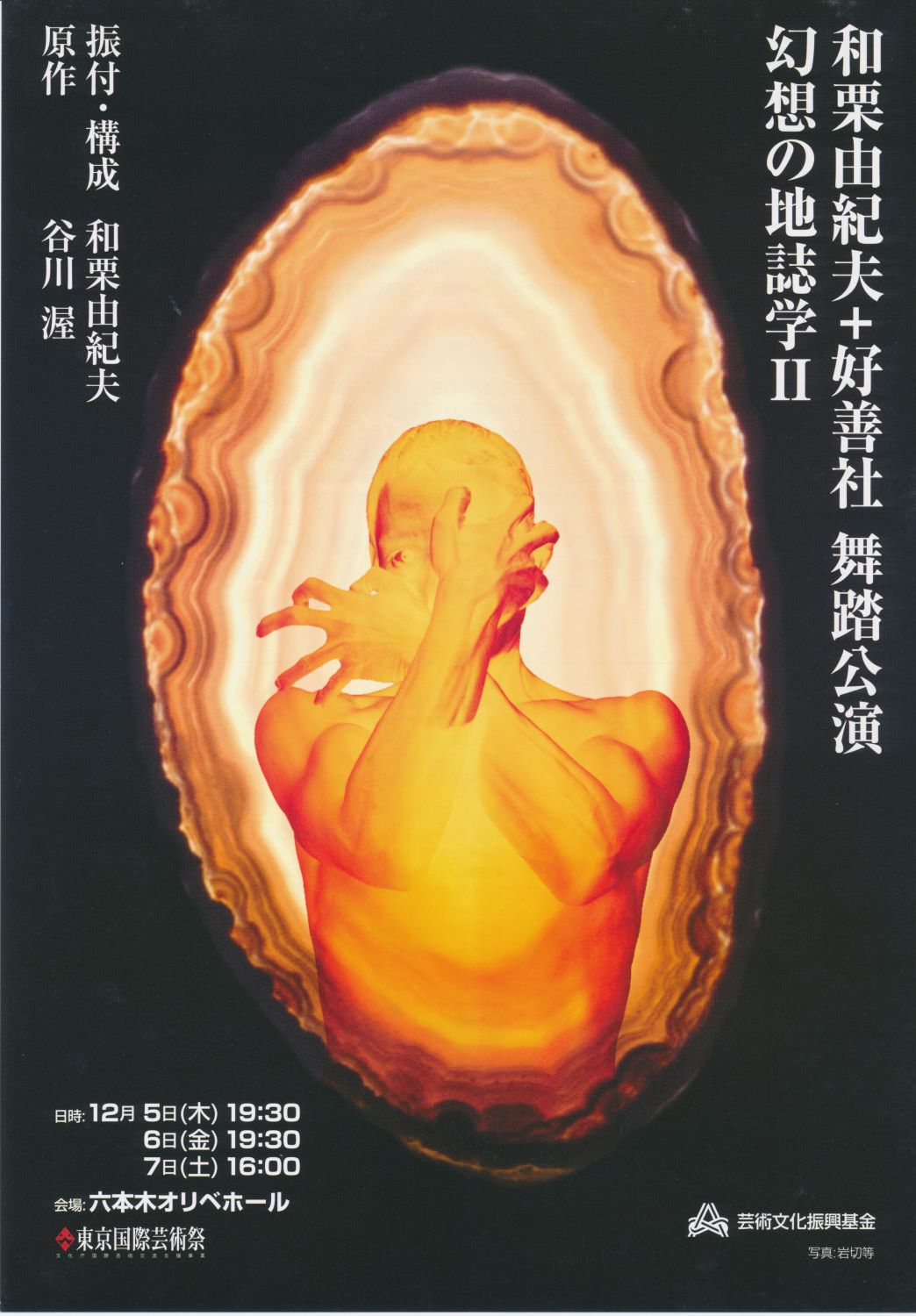
- Performer(s)
- Kozensha
- Director/Choreographer
- Yukio Waguri
- Venue
- Oribe Hall
- Year performed
- 2002
-
TORIKUBI – To dance wildly in the old day
Inspired by the poem 'Torikubi' [The Bird's Head] by Yamanaka Chieko, this work contains ancient ritualistic elements. Yamada performs wearing a large headdress and adopting a limp, clearly searching for a new perspective on the body. Usually known for performing solo, in this piece she is joined by Sato Miwako and Sugiyama Keiko. Performed in a space composed of earth, water and paper, this work appears to cross the boundaries between dance, gesticulation and actions.
- Yamada Setsuko Butoh Performance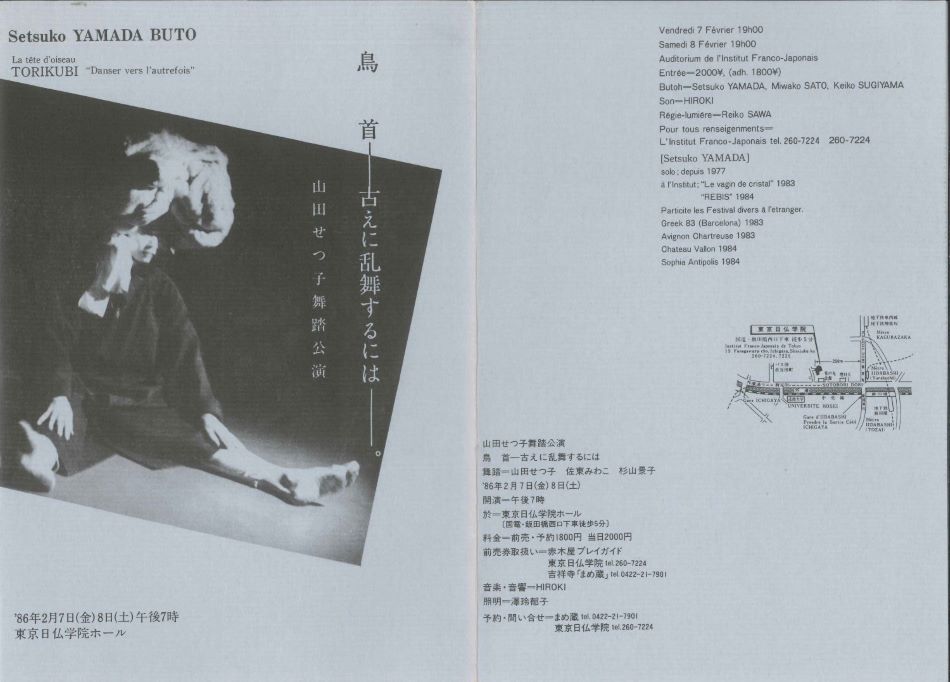
- Performer(s)
- Setsuko Yamada
- Director/Choreographer
- Setsuko Yamada
- Venue
- Institut français de Tokyo
- Year performed
- 1986
-
Retsukigou 2 (The Torn Sign 2)
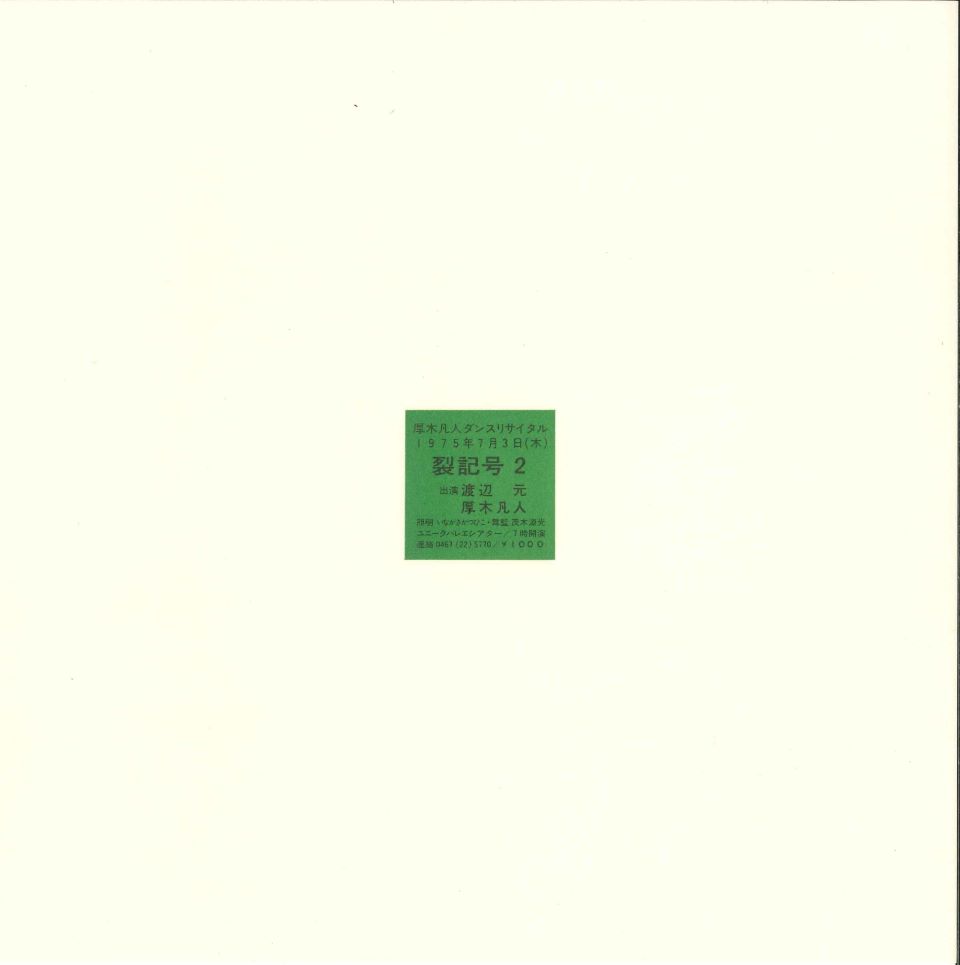
"The 'Retsukigou' [Torn Sign] series (1975-82) began in 1975, with 'Retsukigou 2' following the same year, continuing for the 8 years until 'Retsukigou 8' in 1982. The term 'Retsukigou' comes from the phrases 'signs are meant to be broken' and 'destined to be torn'.
'Retsukigou 2' was performed three times. First at the Unique Ballet Theatre, and later at the Théâtre des Champs-Elysées in France (where it won 3rd prize in the International Dance Festival in 1975), and at Seibu Theatre (at 'DANCE TODAY 75' organised by Atsugi Bonjin)."
- dance today '75
- Three Mention (Paris International Dance Festival, 1975)
- Premiered on July 3, 1975 at the Unique Ballet Theatre.
- Performer(s)
- Bonjin Atsugi
- Director/Choreographer
- Bonjin Atsugi
- Venue
- Seibu Theater
- Year performed
- 1975
-
DISTANCE (Retsukigou 3)
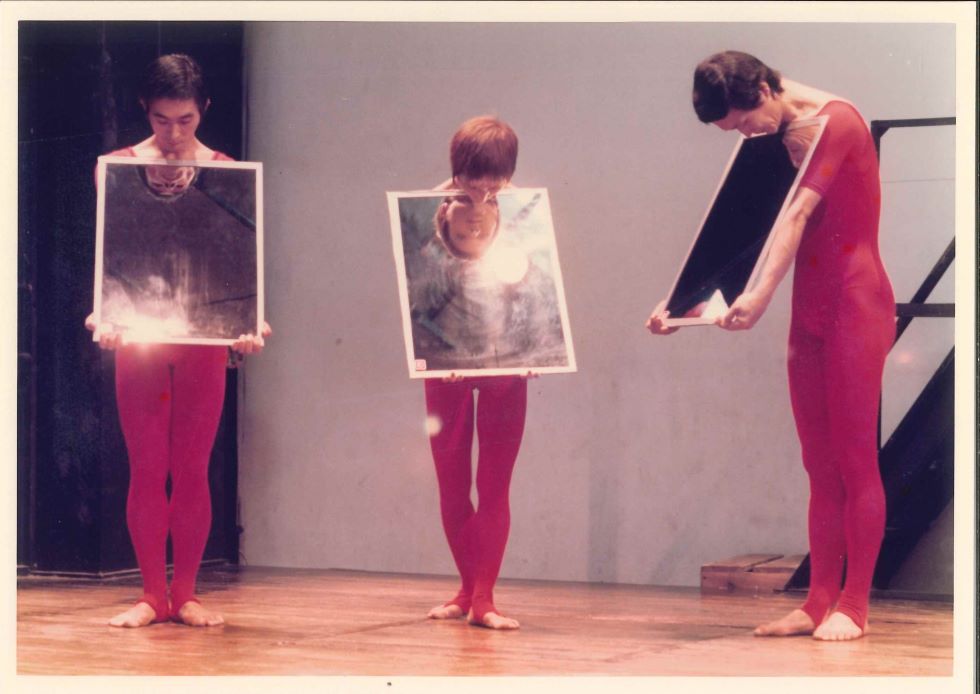
Third in the 'Retsukigou' series. Three dancers each stare into a mirror they hold, performing simple actions such as walking and falling onto their backs. They turn the mirrors to objects in the studio, uttering their names and characteristics. Two go into the corridor, and the audience perceive their movements through the sound of their voice. When one returns, the other leaves. The cycle is repeated with the mirror put down, looking directly at things, and speaking from memory without looking at anything. At the end, movements are performed in relation to the space.
- Performer(s)
- Bonjin Atsugi
- Director/Choreographer
- Bonjin Atsugi
- Venue
- Unique Ballet Theatre
- Year performed
- 1977
-
Retsukigou 5 (The Torn Sign 5)
A strong line of light divides the floor in two, and five performers develop intense movements. With Atsugi in the centre, Watanabe and Tanegashima form a pair alongside Aritomi and Ebara. There is no music, and timing is measured with Atsugi's breaths. Running, embracing, slapping the abdomen, the pace of the feet, grabbing the ankles, putting together soles of the feet, rotations, floor movements etc, are all performed thoroughly and accurately. The exercise, lasting just over one hour with a break in the middle, has the performers sweating profusely and having difficulties breathing; their bodies in raw opposition to their will.
-Artist Union Symposium 1979
-Premiered on September, 1978 at the Auditorium of the Sophia University's Bldg.No.1.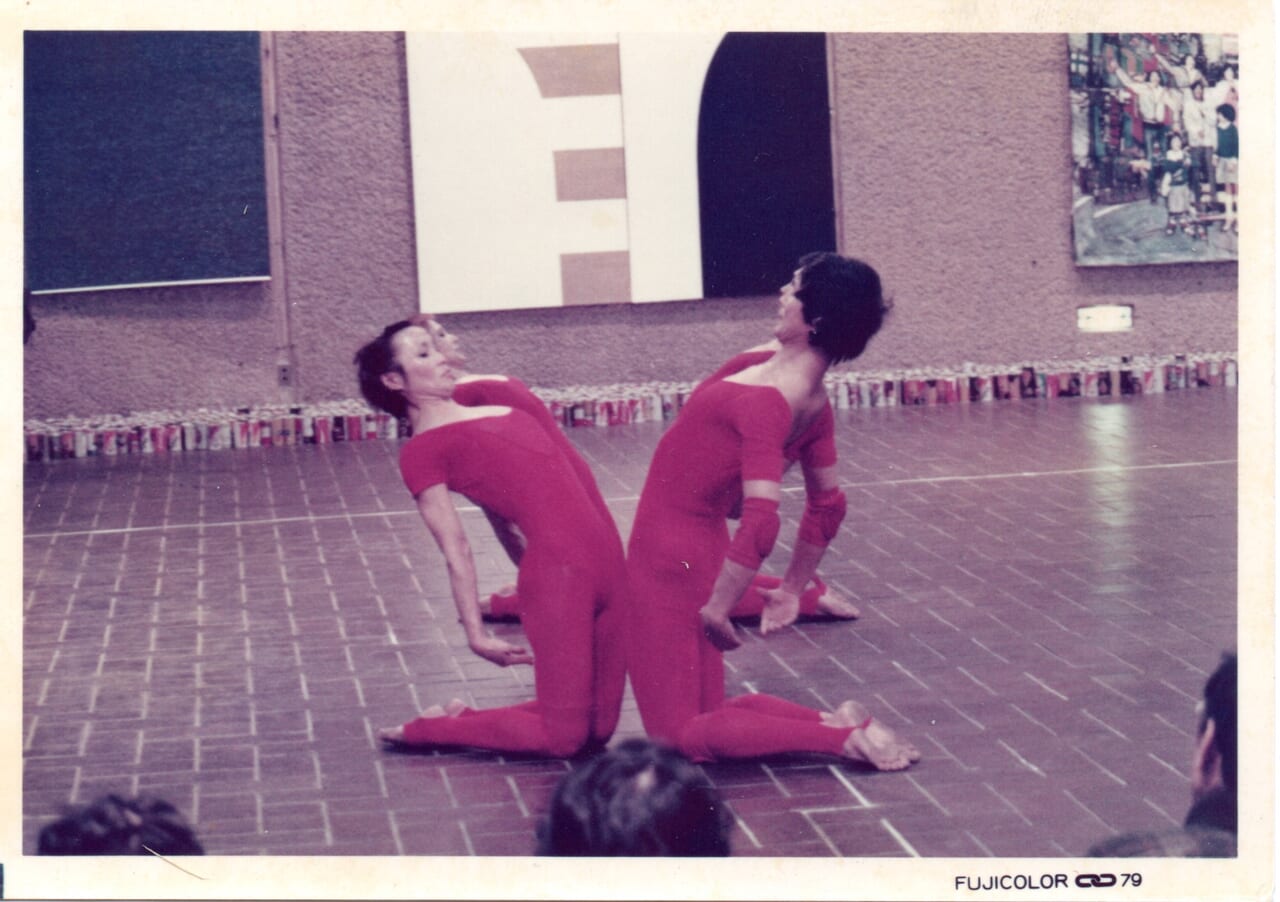
- Performer(s)
- Bonjin Atsugi
- Director/Choreographer
- Bonjin Atsugi
- Venue
- Tokyo Metropolitan Art Museum
- Year performed
- 1979
-
Retsukigou 6 (The Torn Sign 6)
The piece begins with five dancers rotating in the dark, on their backs, with their feet pointed in the air. The light gradually fades up, but the movement continues. Then the dancers, standing on their shoulders, warp to form a bridge and fall to the floor. Their feet make a loud sound on the floor. They then hit the floor with their hands and feet, and form a circle repeating this phrase. In the middle of the piece, all five dancers line up in single file, marching with a stride of only a few centimetres.
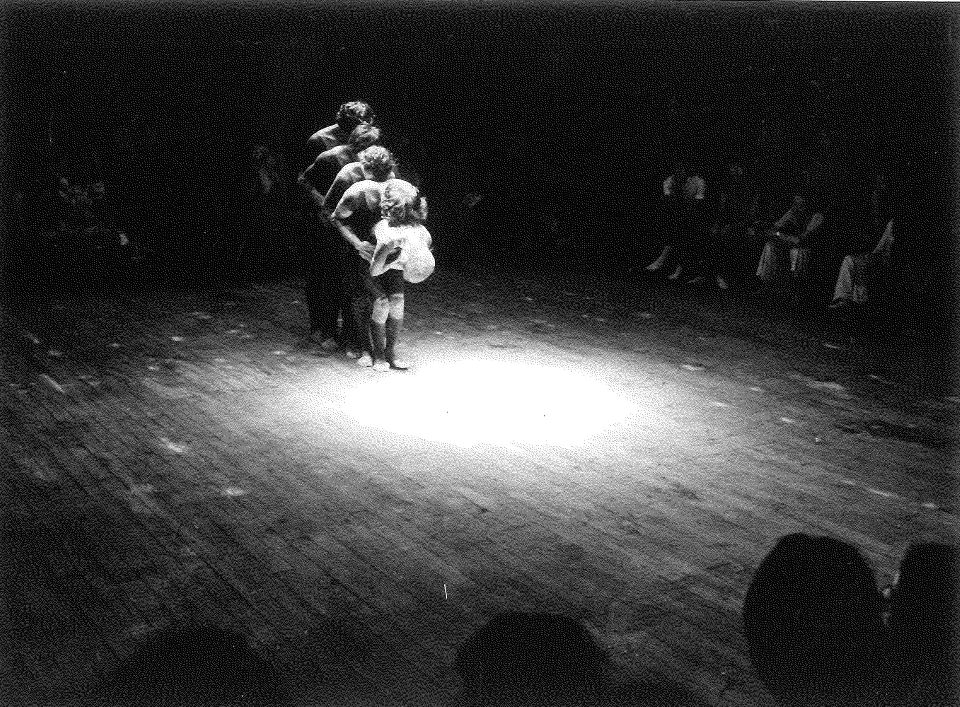
- Performer(s)
- Bonjin Atsugi
- Director/Choreographer
- Bonjin Atsugi
- Venue
- Auditorium at the Sophia University's Bldg.No.1
- Year performed
- 1979
-
Traveler / summer [Tabibito – Viajante]
A fugaku work of spring, summer, autumn and winter based on the haiku of “Oku no hosomichi" (The Narrow Road to the Interior) by Matsuo Basho (1644-1694).
Vivid summer colors passing a dark narrow path.
Months and days are eternal travellers, the years too are voyagers.
One rice field planted, only a willow remains.
Passing through, adorned in blooming unohana flowers. (Sora)
Summer grass grows where soldiers once dreamed.
A temple shines bright through the May rain.
Fleas, lice, then horse pisses by pillow.
Silkworm farmers are as the ancient, humble. (Sora)
Collecting May rains, the Mogami River runs swift.
- Wind’s garden project 2009
- Participated in the Festival Visões Urbanas 2019
- Funded by the 4th Sao Paulo Municipal Dance Promotion Program.
- The "Wind’s garden Project", based at Casa do Vento (Wind’s House in Sao Paulo), began in 2001 with Toshi Tanaka & Ciça Ohno (Fu Bu Myo In) and continues to this day.
- "Fugaku" (art of the wind) is an original word that has been used as a generic term for performance art by Fu Bu Myo In since 2003.
![Traveler / summer [Tabibito – Viajante]](https://video.dance-archive.net/en/wp-content/uploads/2025/01/ss_tabibito2.jpg)
- Performer(s)
- Toshi Tanaka
- Director/Choreographer
- Toshi Tanaka
- Venue
- Sala Crisantempo in São Paulo
- Year performed
- 2007

