
Overview
-
Splish Splash
The performers of Splish Splash seem to reproduce the axial stop-and-go movement of the computer game Pacman in apparitional, partly repretitive movment patterns in different settings.The rapid and surreal visual language and the symbolic props create a cryptic commentary on facts of the entertainment industry.

- Performer(s)
- Yoshiko Chuma
- Director/Choreographer
- Yoshiko Chuma
- Year performed
- 1982
-
Spiral Dream – Two Nights of Butoh + Piano
Spirals are the form of life. They surround us everywhere: in the bud of a morning glory, the structure of the galaxy, in DNA. Spirals dance through life, living, death and destruction, all creation. We are suspended in the dream of the body, in the midst of ascent and descent. But do not be alarmed, because we know that truth is hidden in the unformed and the invisible. Butoh is a signpost. Seeds should be sown in fresh soil. Let us wait for the day new, never before seen sprouts appear.
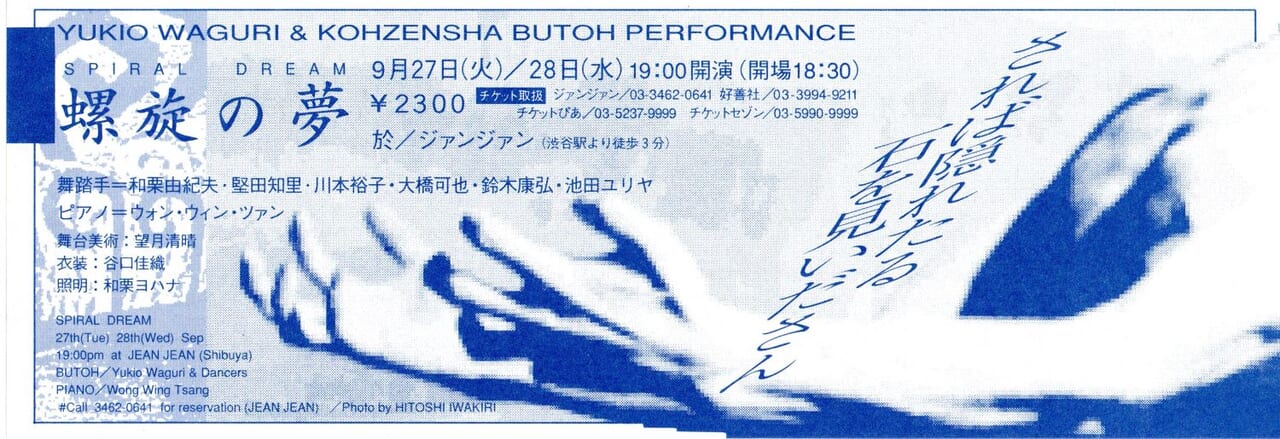
- Performer(s)
- Yukio Waguri + Kozensha
- Director/Choreographer
- Yukio Waguri
- Venue
- Jean-Jean (Tokyo)
- Year performed
- 1994
-
Spiral Dream – Then Find the Hidden Stone
Spirals are the form of life. They surround us everywhere: in the bud of a morning glory, the structure of the galaxy, in DNA. Spirals dance through life, living, death and destruction, all creation. We are suspended in the dream of the body, in the midst of ascent and descent. But do not be alarmed, because we know that truth is hidden in the unformed and the invisible. Butoh is a signpost. Seeds should be sown in fresh soil. Let us wait for the day new, never before seen sprouts appear.
- Performer(s)
- Yukio Waguri + Kozensha
- Director/Choreographer
- Yukio Waguri
- Venue
- La Vita Hall
- Year performed
- 1994
-
Konpaku [Soul]
One of Midori Ishii's early works was 'Himeyuri no To' [Tower of Himeyuri]. This work, 'Konpaku', shows her shift from direct expression to a more abstract form of expression. This dance of mourning performed to Faure's 'Requiem' expresses sorrow over the tragedy of war, and the desire to heal people through dance and music.
During the war, Ishii went to Southeast Asia with composer Yuji Koseki and others to give performances for the troops. They also performed many performances of encouragement in Japan.
-From an Midori Ishii Dance Performance.![Konpaku [Soul]](https://video.dance-archive.net/en/wp-content/uploads/2024/01/V00025_ishiiorita1s_f.jpg)
- Performer(s)
- Midori Ishii and Katsuko Orita Dance Studio
- Director/Choreographer
- Midori Ishii
- Venue
- Tokyo Post Saving Hall
- Year performed
- 1987
-
Song of the Owl
Katsuko Orita collected owls, which are said to bring good luck*. In Greek mythology, the owl is a symbol of the goddess Athena. This work explores the nocturnal and mysterious characteristics of the owl as its theme.
*Not living owls
-Presented at the KATSUKO ORITA DANCE RECITAL.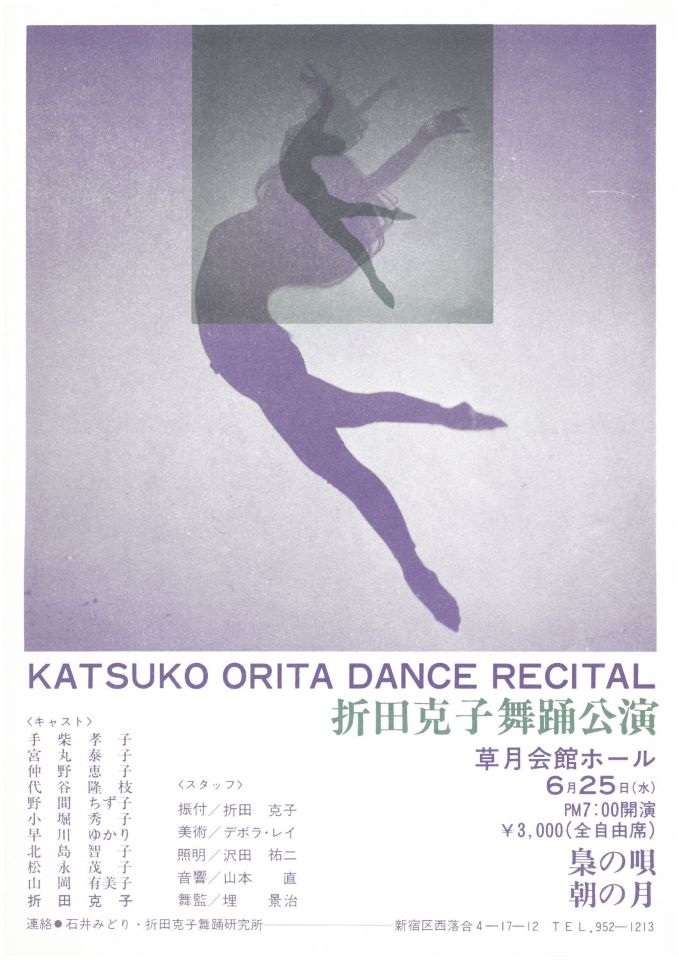
- Performer(s)
- Midori Ishii and Katsuko Orita Dance Studio
- Director/Choreographer
- Katsuko Orita
- Venue
- Sogetsu Hall
- Year performed
- 1980
-
Someil de Terre
Wind Burial - Fern in the Wind', 'Cremation - Egg in the Fire', 'Water Burial - Stone at the Bottom of the Water' and 'Bird Burial - Bird Woman's Head', were the four parts to Yoshimoto Daisuke's 'Funeral Series' performed between 1983 and 1987. With this addition of 'Someil de Terre', it became a 5-part series. Original concept: 'Stanislav de Gala Soshaku Kōfujin' [Madame de Stanislav de Gala Mastication]
- Daisuke Yoshimoto Butoh Dance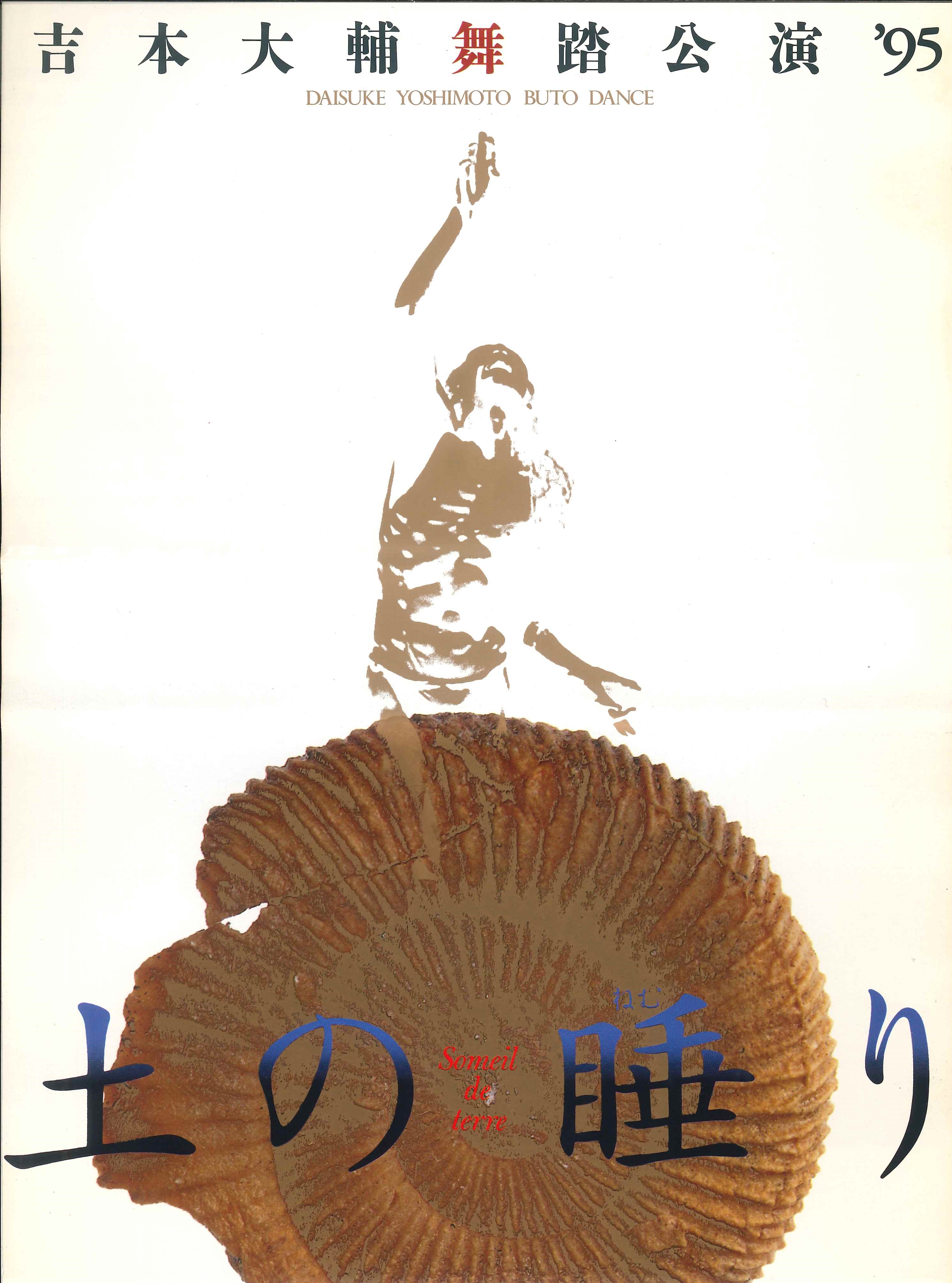
- Performer(s)
- Daisuke Yoshimoto
- Director/Choreographer
- Daisuke Yoshimoto
- Venue
- Sogetsu Hall
- Year performed
- 1995
-
Soft Moon
"Has Humankind really lost Memory
of when the soft Moon approached the Earth
Drawing out all kinds of hard protrusions
and Revealing the Earths True Nature"
From the Katsuko Orita Dance Performance. The brains behind Orita's work during the 1980s were:
Script - Yuichi Konno ; Artwork - Tetsuhiko Maeda ; Lighting - Yuji Sawada.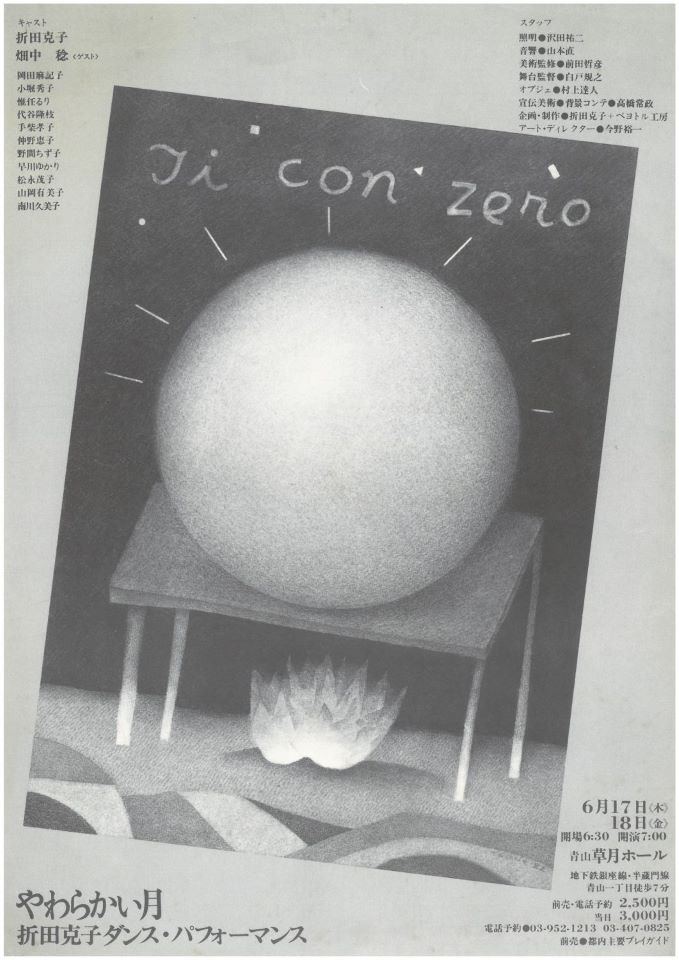
- Performer(s)
- Midori Ishii and Katsuko Orita Dance Studio
- Director/Choreographer
- Katsuko Orita
- Venue
- Sogetsu Hall
- Year performed
- 1982
-
The Skylark and the Lying Buddha (Yokohama version)
The Skylark chirps and flies straight towards the heavens, while the Lying Buddha rests on his side with his chin propped up on his hand and smiles, and the two cross each other like a Christian cross... The theme revolves around the perspective of the body as an instrument for measuring the world. (From the flyer)
This is the new Yokohama version of "Hibari to Nejaka" (The Skylark and the Lying Buddha), which was met with great enthusiasm after its premiere in 1983 and during its European tour in 1985.
This version was also performed in Yokohama (as part of Yokohama Art Wave 1989) on 6-7 October, and in Osaka on 10 October.
-300th Anniversary of the Birth of Jakuchu Ito / Hibari Misora Memorial Performance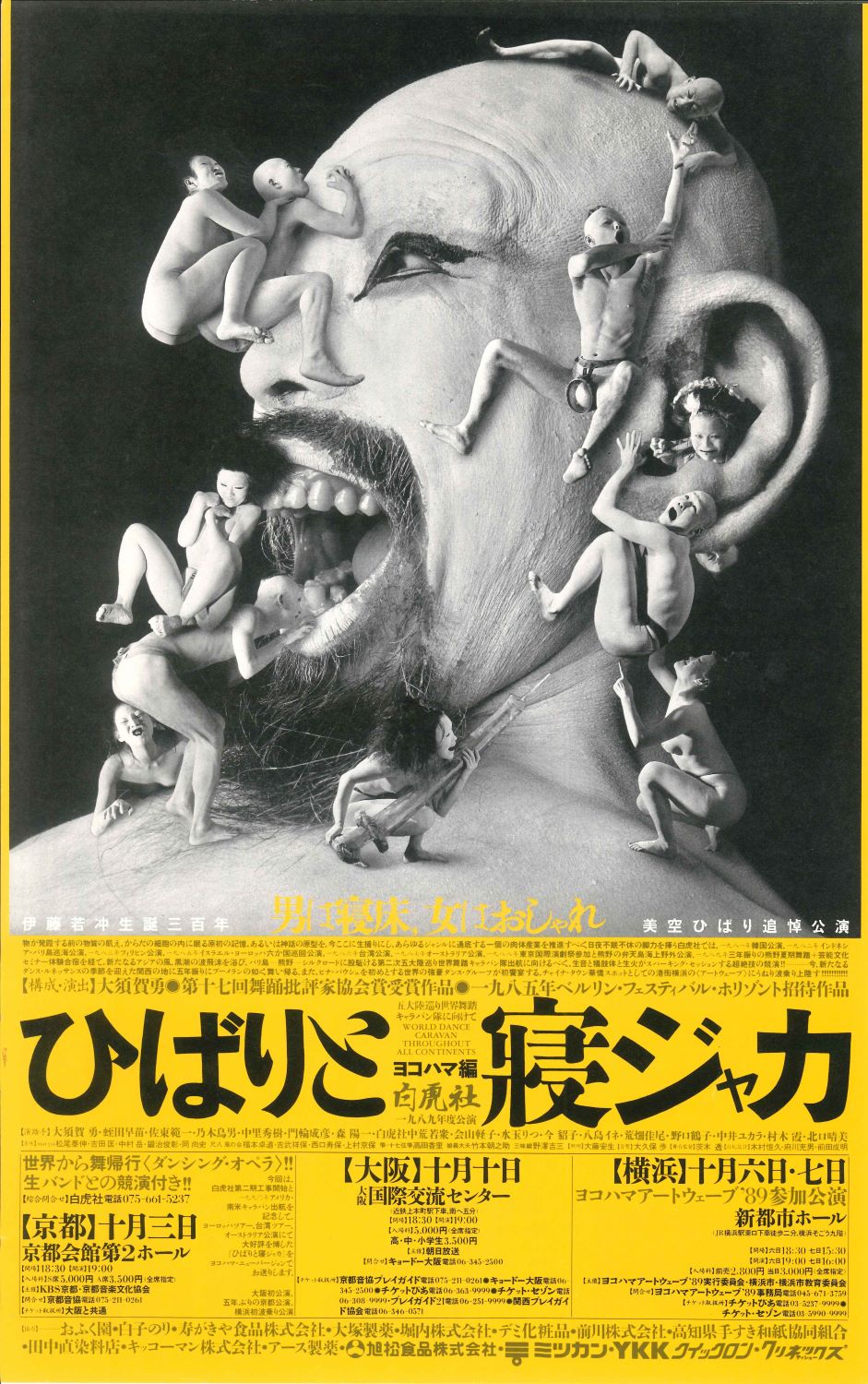
- Performer(s)
- Byakko-sha
- Director/Choreographer
- Isamu Osuka
- Venue
- KyotoKaikan No.2 hall
- Year performed
- 1989
-
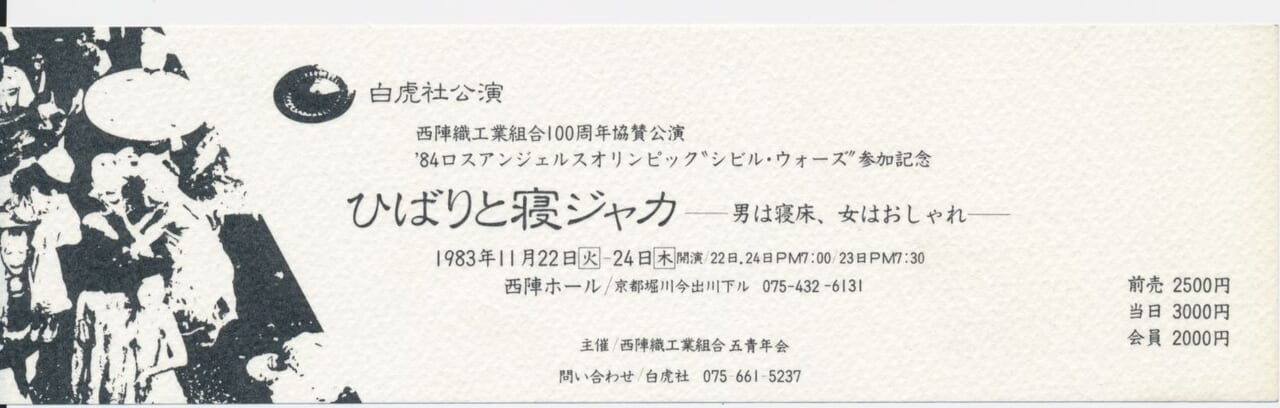
The Skylark and the Lying Buddha (Nishijin Performance)
Based in Kyoto, Byakko-sha engaged in numerous collaborations with people connected to Nishijin textiles, including appearances in kimono fashion shows. This performance was the premiere of Byakko-sha’s representative work, "The Skylark and the Lying Buddha: Men are Beds, Women are Stylish." In the footage, the opening head-shaving scene is not included. The performance was billed as "A Commemorative Performance in Support of the Nishijin Textile Industrial Association’s 100th Anniversary and Participation in the ’84 Los Angeles Olympics 'CIVIL warS'," although participation in "CIVIL warS" ultimately did not come to pass.
- Performer(s)
- Byakko-sha
- Director/Choreographer
- Isamu Osuka
- Venue
- Nishijin Hall
- Year performed
- 1983
-
The Skylark and the Lying Buddha (in Melbourne)
Australian premiere of Byakko-sha's signature piece, "Hibari to Nejaka" (The Skylark and the Lying Buddha), which had its world premiere in 1983. In 1985, it was awarded the 17th Dance Critics Society of Japan Award for its "contribution to the revitalisation of performing arts by rethinking 'noise' and 'foolishness' from a modern perspective" during its Tokyo performance. It was also enthusiastically received during its European tour.
The video is a compilation of highlights.
It was performed 7 times in September, 1987.
-Spoleto Melbourne Festival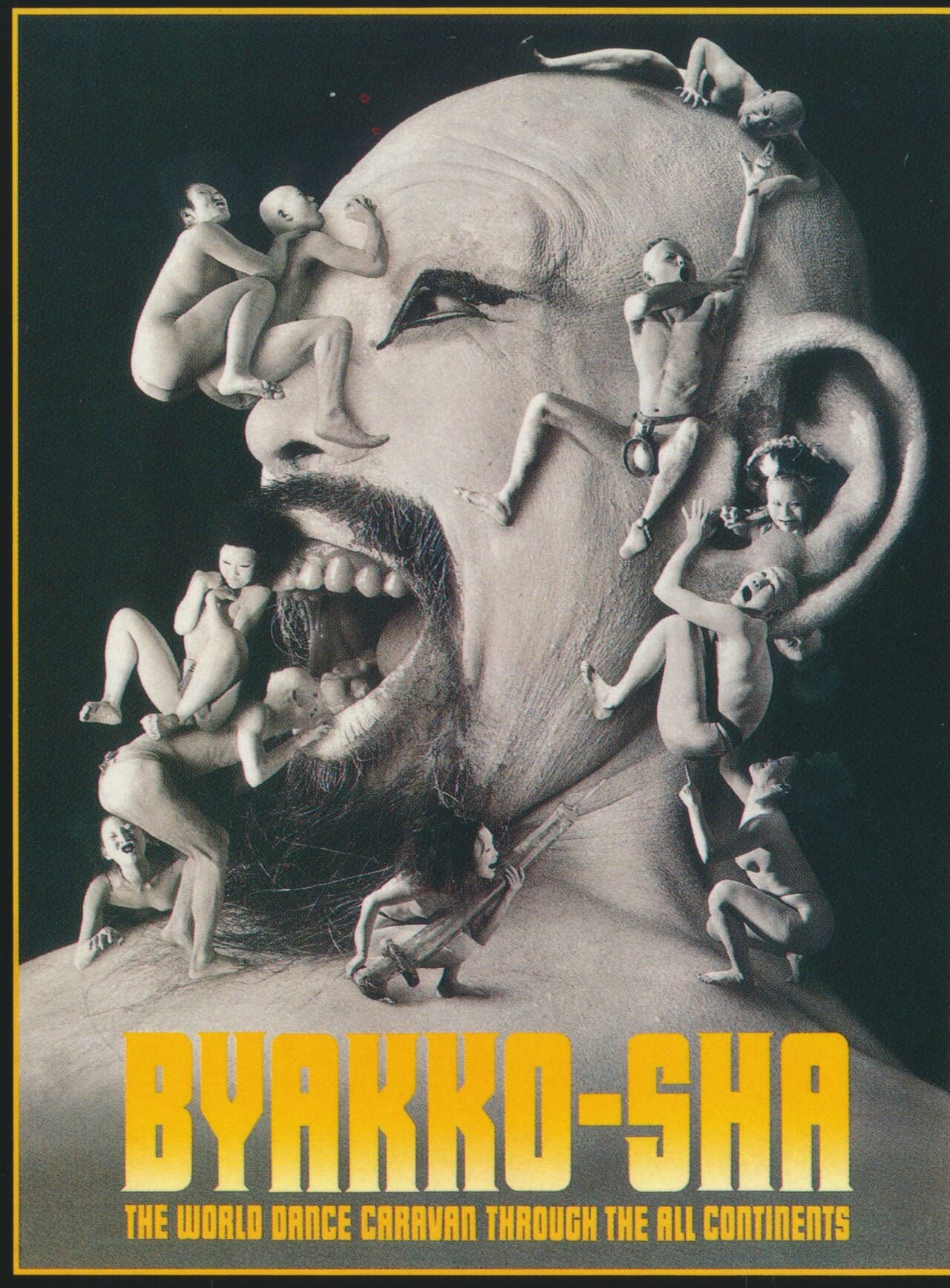
- Performer(s)
- Byakko-sha
- Director/Choreographer
- Isamu Osuka
- Venue
- Victorian Arts Centre Playhouse Theatre
- Year performed
- 1987
-
The Skylark and the Lying Buddha (Butoh Festival ’85)
A vivid recreation of primitive creatures such as elephants, crocodiles, and demons - beings that know nothing of modernity or the self - living and playing in a forest after the rainy season. (From the flyer)
Kyoto-based Byakko-sha's first performance in Tokyo. "Hibari to Nejaka" [The Skylark and the Lying Buddha] was first performed in 1983, and went on to become one of Byakko-sha's signature pieces, performed all over the world, showcasing the wild energy of their early work.
- Butoh Festival '85: Collection of Butoh Confessions - Seven Seasons and Castles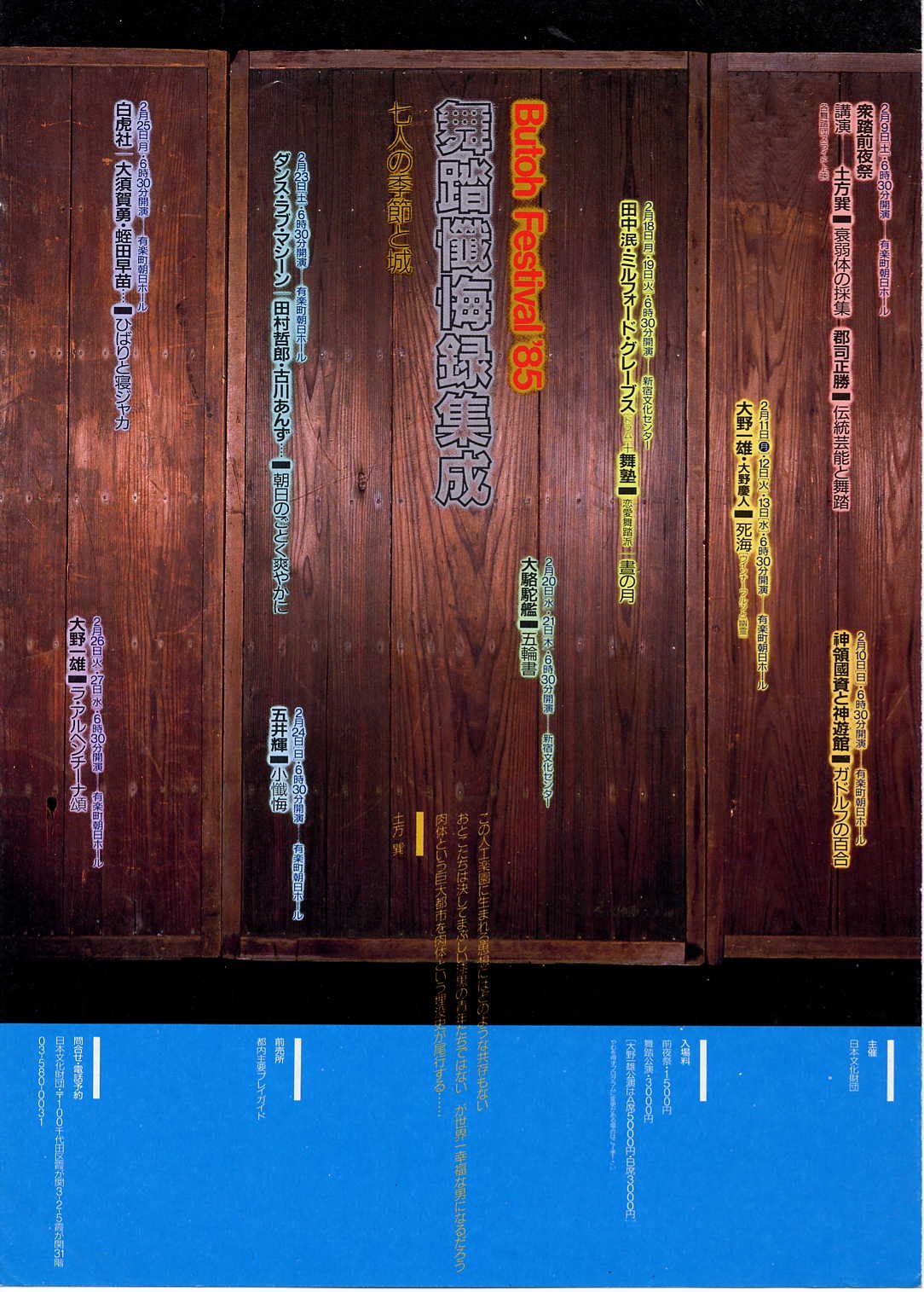
- Performer(s)
- Nippon Cultural Centre
- Director/Choreographer
- Isamu Osuka
- Venue
- Yurakucho Asahi Hall
- Year performed
- 1985
-
SINSAI BAKABON
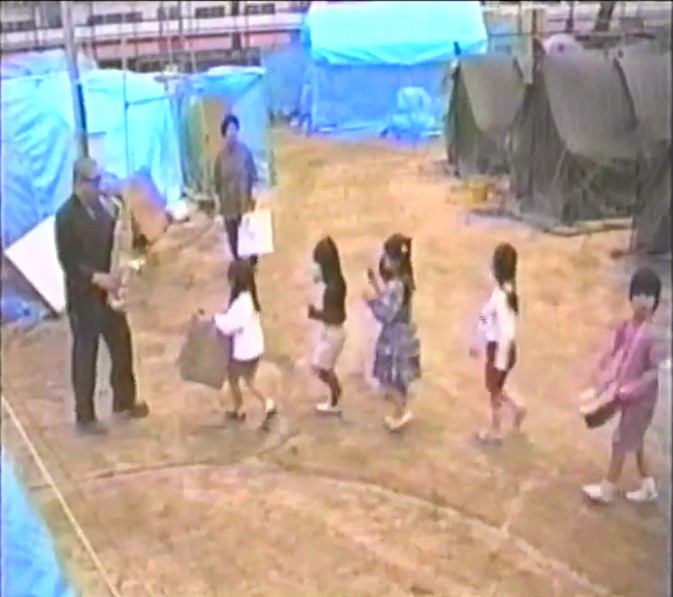
At the end of April 1995, three months after the Great Hanshin Earthquake, a group of butoh dancers and musicians formed Moonlight Kabudan and visited tent villages serving as emergency shelters in Kobe’s Higashinada and Nagata districts. They interacted with residents, built makeshift stages, and brought music and dance to lift people’s spirits. The performances were made possible through the support of many people, including former members of Byakko-sha, which had disbanded the previous year; the butoh dancer Rosa Yuki; students and rōnin from Ashiya City; and above all, the people living in the shelters themselves. With laughter, torchlight and movement, the stage briefly conjured an otherworldly space amid the disaster-stricken landscape.
Performances were held at:
Uozaki Hachimangu Shrine on 21 April
Mori Park in Higashinada-ku on 22 April
Hommachi Park in Hyogo-ku on 23 April
Nakanominami Park in Higashinada-ku on 25 April
Iwaya Park in Nada-ku on 28 April
Kobe City Mikura elementary school and Minamikomae Park in Nagata-ku on 30 April
- Performer(s)
- Tsuneo Ogura
- Venue
- Kobe city
- Year performed
- 1996
-
Sinking Waterfall: A Collaboration of Drums, Sculpture, Light and Butoh
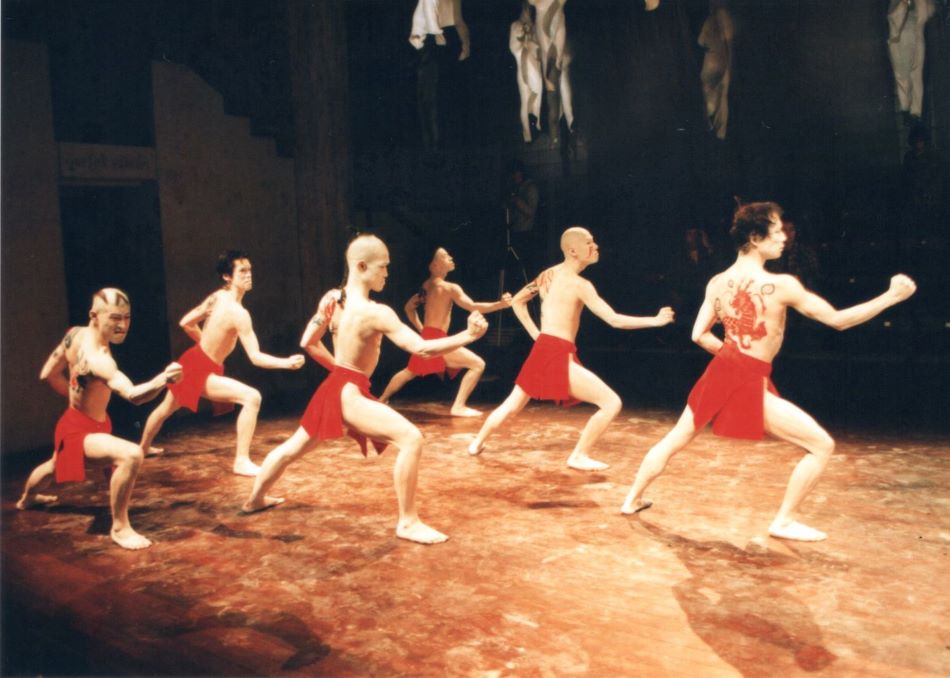
In the ancient history of butoh, demons, supernatural beings and dragons have come and gone. Do they live deep within our bodies today? The body is a mysterious and strange container. Go up the river of memory and find a glowing scale at the bottom of a waterfall. At this signal, the fight between the Water Dragon and the Fire Dragon begins. Such a scene of chaos is the sole domain of the Butoh. Man after man passes by. Tossed around by love, Narukami Shonin climbs a waterfall and becomes a dragon. It is the beginning of a new festival.
- Performer(s)
- Yukio Waguri + Kozensha
- Director/Choreographer
- Yukio Waguri, Jinishi Hiranuma
- Venue
- P3 art and environment
- Year performed
- 1995
-
SHOOT JEEZ MY GOSH
This butoh performance is inspired by Henry Darger’s fantasy world that juxtaposes innocence with violence. Sounds from real battles found on the Internet are contrasted with iconic corporeal movements that represent innocence. The work attempts to pose a question to the feeling of ambivalence towards systematic violence of belief that imposes powerlessness, and simultaneously reminds of brutal terror that characterizes our epoch.
The birth to kill
Build to break down
Existence
To be erased
To be pasted
The invisible enemy
Imperceptible voice
The other side of the filter
The inside of the monitor
In order to be fooled
In order to deceive
Endless game of
The world
Past Performances
2019: Rabbithole, Athens, Greece / Baltimore, Boston, Asheville, Chicago, USA
2018: Festival FiBUTOH, Santiago+Valparaiso, Chile / Tokyo Butoh Circus, Tokyo, Japan
2017: Serendipity Arts Festival, Goa, India/ Butoh College, Portland, USA / Sapporo International Butoh Festival, Sapporo, Japan
2016: Casa del Lago, Mexico / Gati, New Delhi, India
2015: DOCK11, Berlin, Germany / KRT Festival, Krakow, Poland / Huashan 1914, Taipei, Taiwan / Sala Crisantempo, Sao Paulo, Brazil
15 Nov 2014: Tatwerk, Berlin, Germany (Premiere)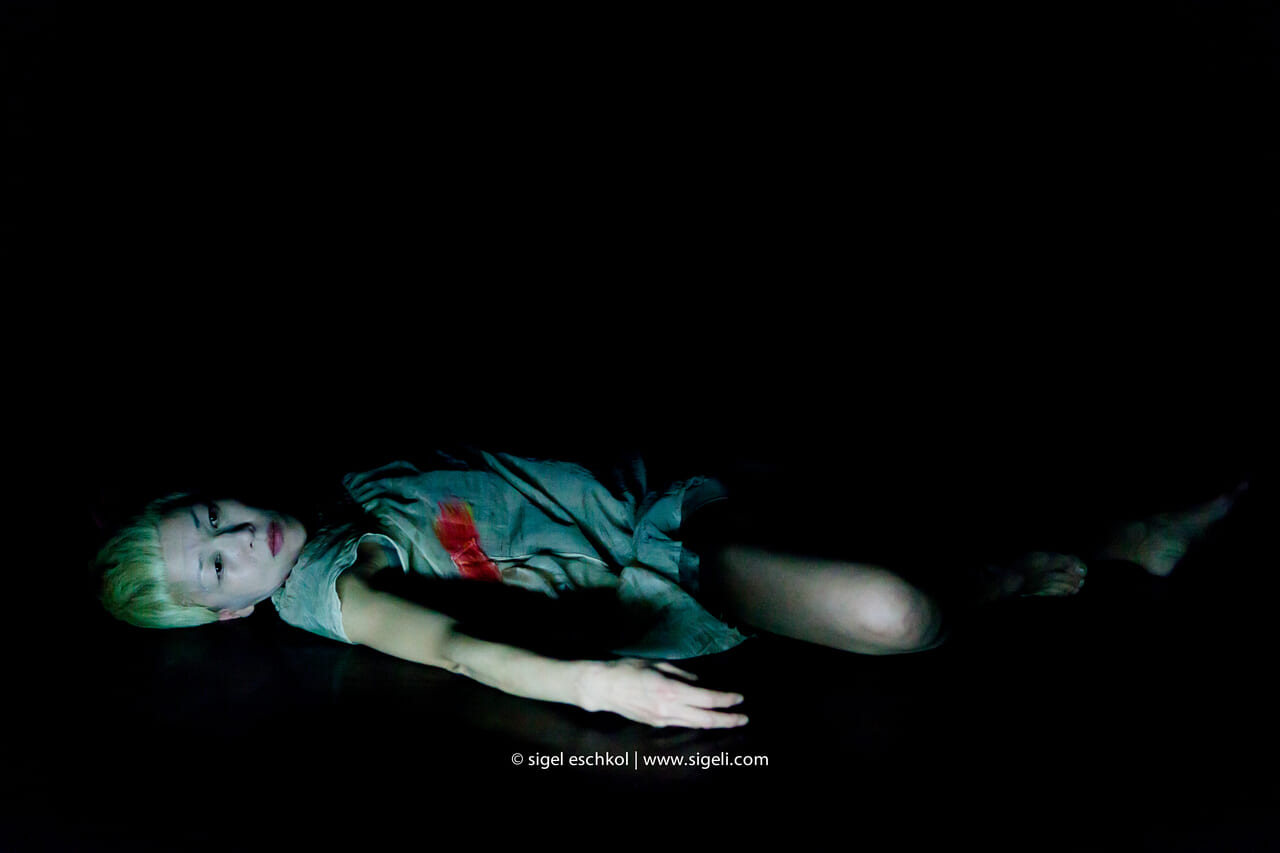
- Performer(s)
- Company cokaseki
- Director/Choreographer
- Yuko Kaseki
- Venue
- DOCK11
- Year performed
- 2015
-
Shinshoku
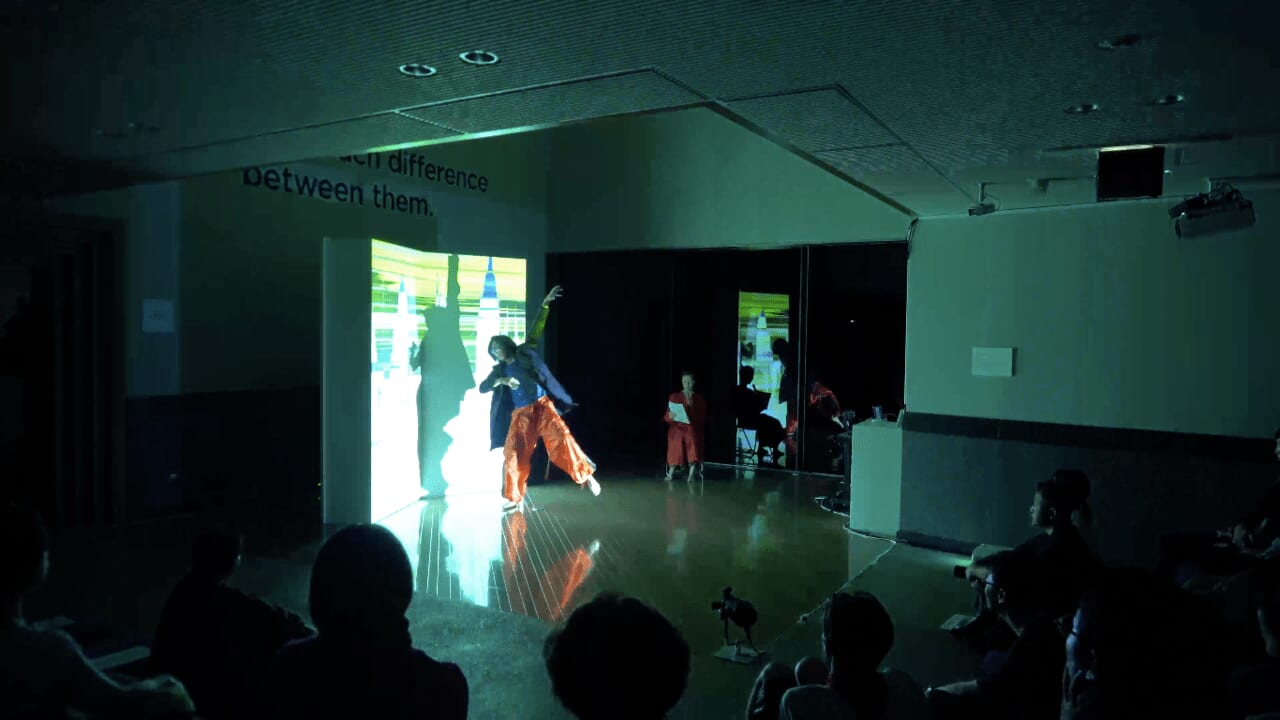
A loosely structured series of solo scenes in which one performer dances to a text read by the other, interspersed with duets where both dancers move to sounds and music. It was first premiered at the Drama Studio in Kanazawa Civic Arts Village in February 2024, and this new version was specially adapted for this venue. The word "Shinshoku" was coined to describe this project, which explores the possibility of whether the body can exist independently from or merge with another’s physical and personal space.
- Performer(s)
- Mitsutake Kasai × Naoka Uemura
- Director/Choreographer
- Mitsutake Kasai, Naoka Uemura
- Venue
- Kinosaki Literary Museum
- Year performed
- 2024
-
Shinjuku Station Rush Hour Tango and others (from ‘Clown’s Lane’)
Shinjuku Station Rush Hour Tango', created in the 1970s, is one of Yoneyama Mamako's best known works. A scathing satire of people passing through the station in a 'pankago' - her own original form of performance combining pantomime with witty song and narrative.
The video is from the 1984 solo mime recital 'Clown's Lane', which included the following pieces: 'Tako o Ageru Kodomo' [Child Flying a Kite], 'Onna no Seicho' [Growing Woman], 'Zō no Hanashi' [Elephant Story], 'The Button War', 'Shinjuku Station Rush Hour Tango', 'Sora o Tobu Otoko' [The Flying Man] and 'Piero no Tama' [The Clown's Balls].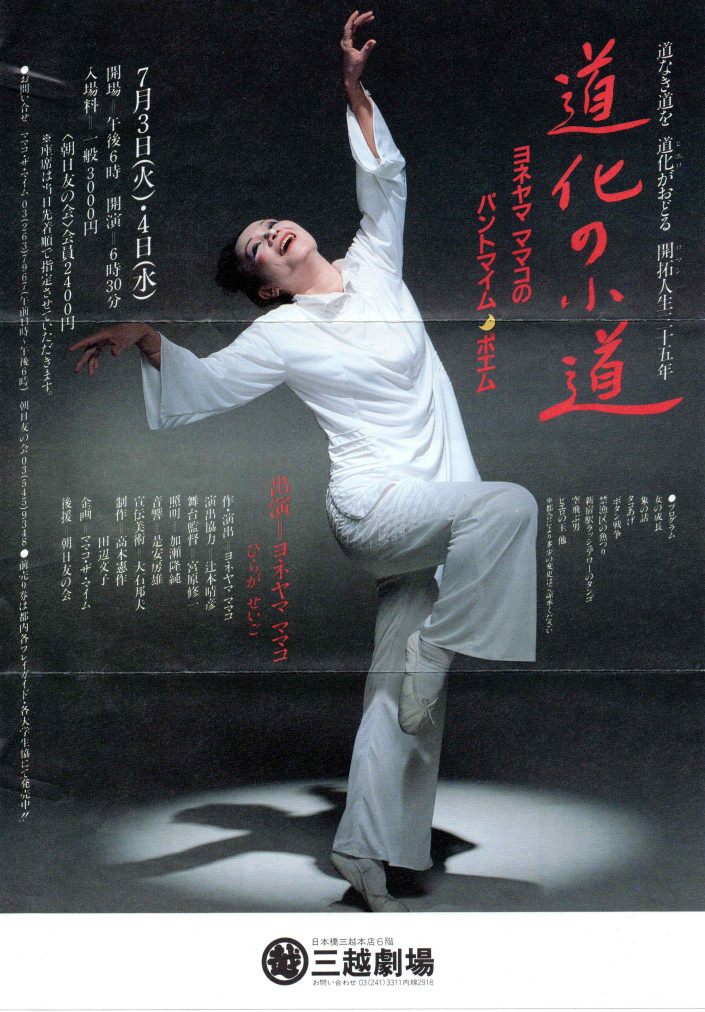
- Performer(s)
- Mamako Yoneyama
- Director/Choreographer
- Mamako Yoneyama
- Venue
- Mitsukoshi Theater
- Year performed
- 1984
-
Shining City of the Moon God
Documentation of "Shining City of the Moon God", performed by Byakko-sha alongside a grand musical ensemble for Kumano Spark (Kumano International Art Festival) for which Byakko-sha's founder, Isamu Osuka, served as artistic director. Produced exclusively for the festival, this work was directed by Osuka. During the festival, whose theme was "integration with nature", a temporary 130-meter bridge was constructed to Bentenjima [Benten Island] in Nachi Bay (Wakayama Prefecture), creating an open-air theatre on the sea with the island's large rocks serving as a backdrop.
The Kumano International Art Festival was held as part of the World Resort Expo.
-Kumano Spark: Kumano International Art Festival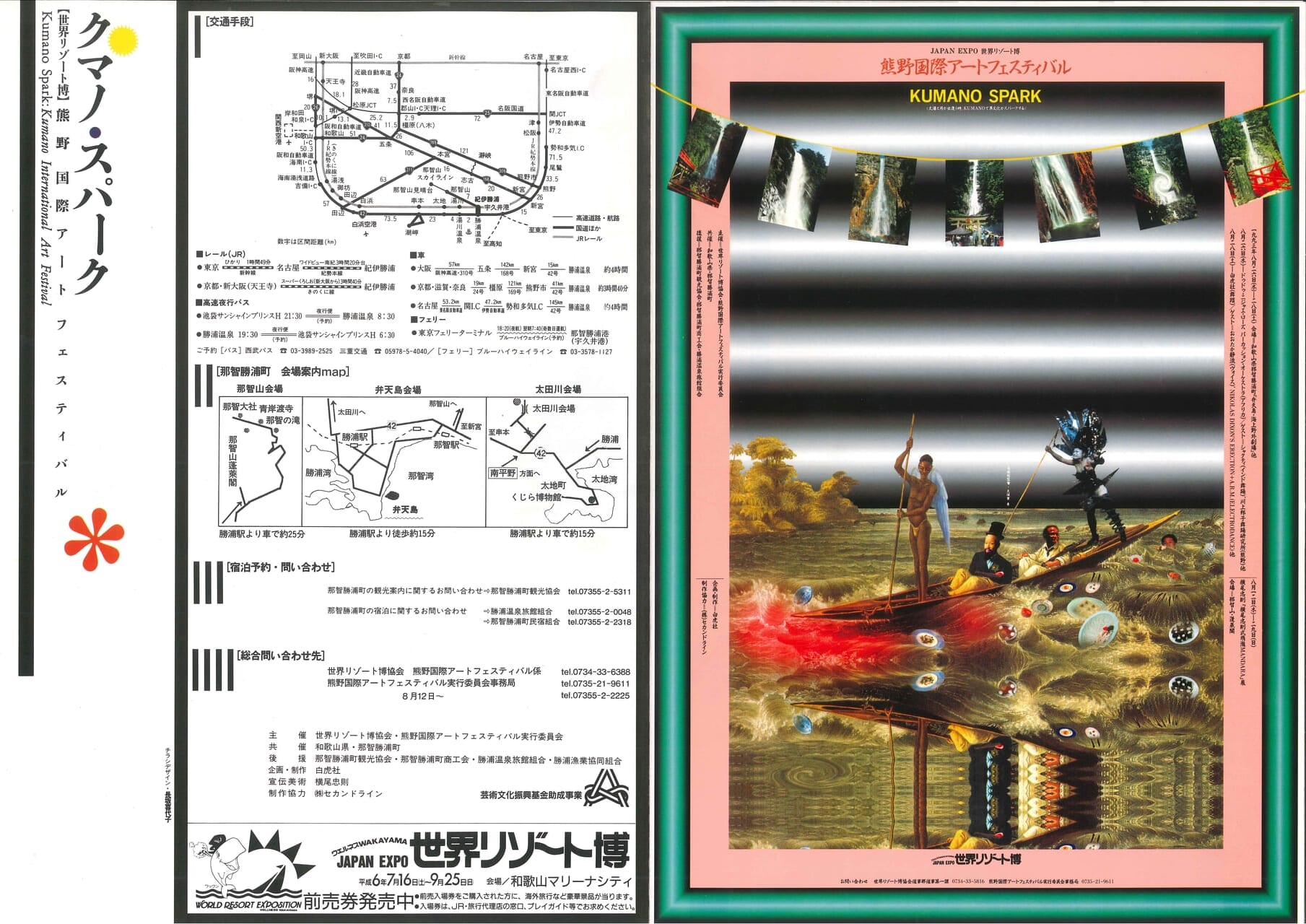
- Performer(s)
- Byakko-sha
- Director/Choreographer
- Isamu Osuka
- Venue
- Bentenjima Marine Open Air Theatre
- Year performed
- 1993
-
Küchenzigeunerin: She’s Run Off to Join the Gypsies
A commemorative performance by Anzu Furukawa in preparation for her participation in the first European butoh festival in Berlin in 1986 (organised by Künstlerhaus Bethanien), in which she was invited to perform. Five years later, in 1991, Furukawa moved to Berlin and began teaching at the Braunschweig University of Art.
-Anzu Furukawa 1986 Berlin Festival Invitation Commemorative Ball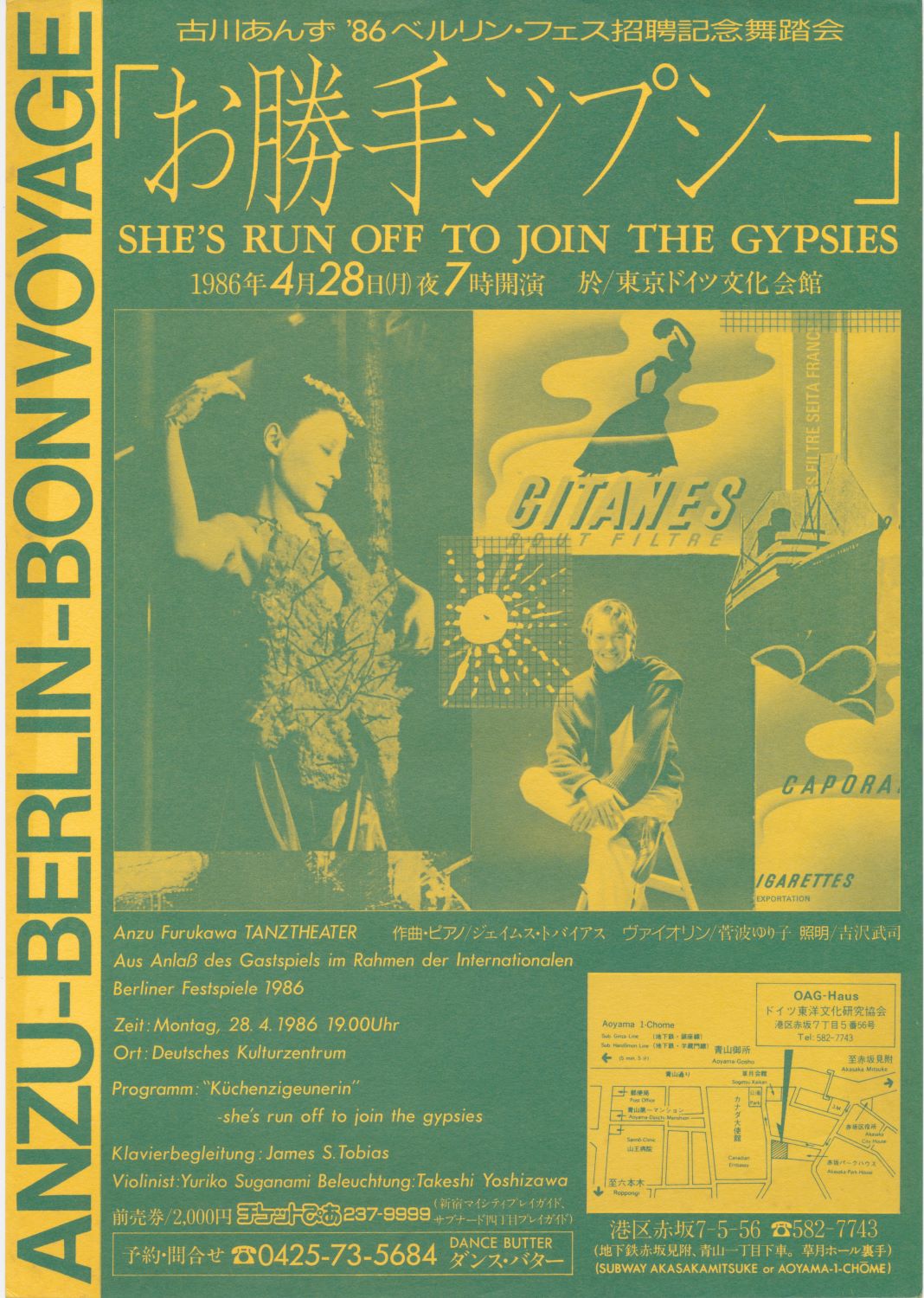
- Performer(s)
- Anzu Furukawa
- Director/Choreographer
- Anzu Furukawa
- Venue
- Goethe-Institut Tokyo
- Year performed
- 1986
-
SHE
The music consists entirely of Maria Callas and Bach arrangements. Highly acclaimed, 'she showed absolute control of the body, with incredible power and extreme fragility' (Peter Bu, Le Figaro, 7 August 1997). 'She explored every inch of the female figure, stereotyped as it has been for eternity. Everyone is brought into that moment. She tells the story of a state of mind, transforming her whole body in an astonishing way' (Du Théâtre, Autumn 1997, no. 18). The work toured 25 times across 6 countries.
-Mitsuyo Uesugi Solo Butoh Performance at the Mimos Festival Perigueux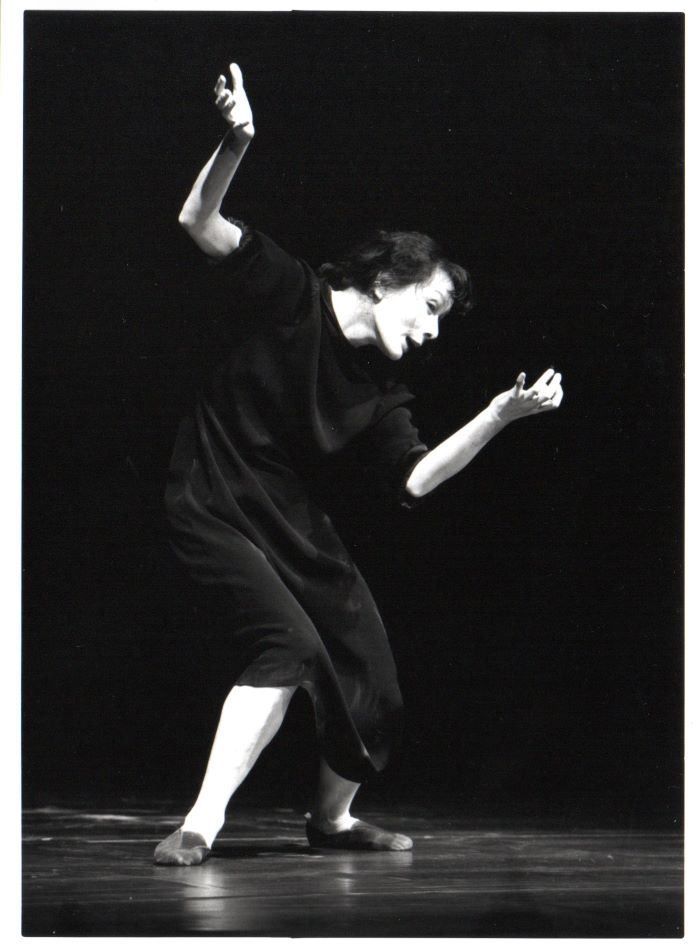
- Performer(s)
- Mitsuyo Uesugi
- Director/Choreographer
- Mitsuyo Uesugi
- Venue
- LE PALACE
- Year performed
- 1997
-
SHARANPOKA
Mitsuyo Uesugi's first solo butoh performance on returning to Japan, after working with Catherine Diverrès in France for three years. A captivating piece, she was described as capturing the space 'not with the breadth of movement, but with the difference in presence' and 'repressed movement'. 'The love (eros) within her is complete.' (Masatoshi Satō, Terpsichore News).
-Mitsuyo Uesugi Solo Butoh Performance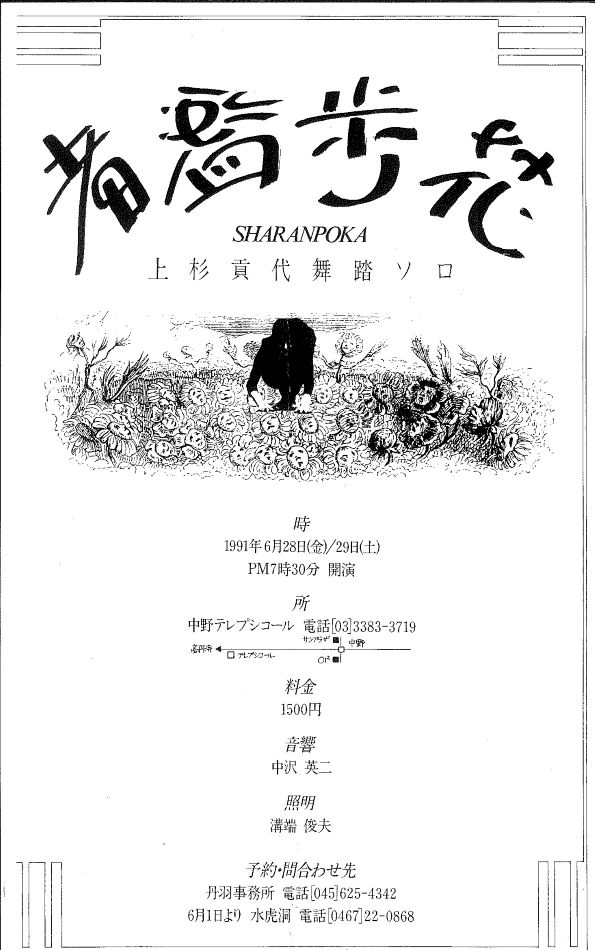
- Performer(s)
- Mitsuyo Uesugi
- Director/Choreographer
- Mitsuyo Uesugi
- Venue
- Terpsichore (Nakano, Tokyo)
- Year performed
- 1991

