
Dance Video Index
In this database, you will find 373 dance videos which were collected from the 2023 to 2025 fiscal years under the auspices of the EPAD (Eternal Performing Arts Archives and Digital Theatre) .
Overview
-
Strange loneliness
A woman and a girl meet and lie on two trees, as if they are doubles. They sleep, exchange words, and expand their imaginations of the outside world. Where is this? A voice they hear reminds them of time. The play between these two lonely yet fulfilled individuals nurtures their fundamental trust, while opening doors to the world.
- Setsuko Yamada Dance Performance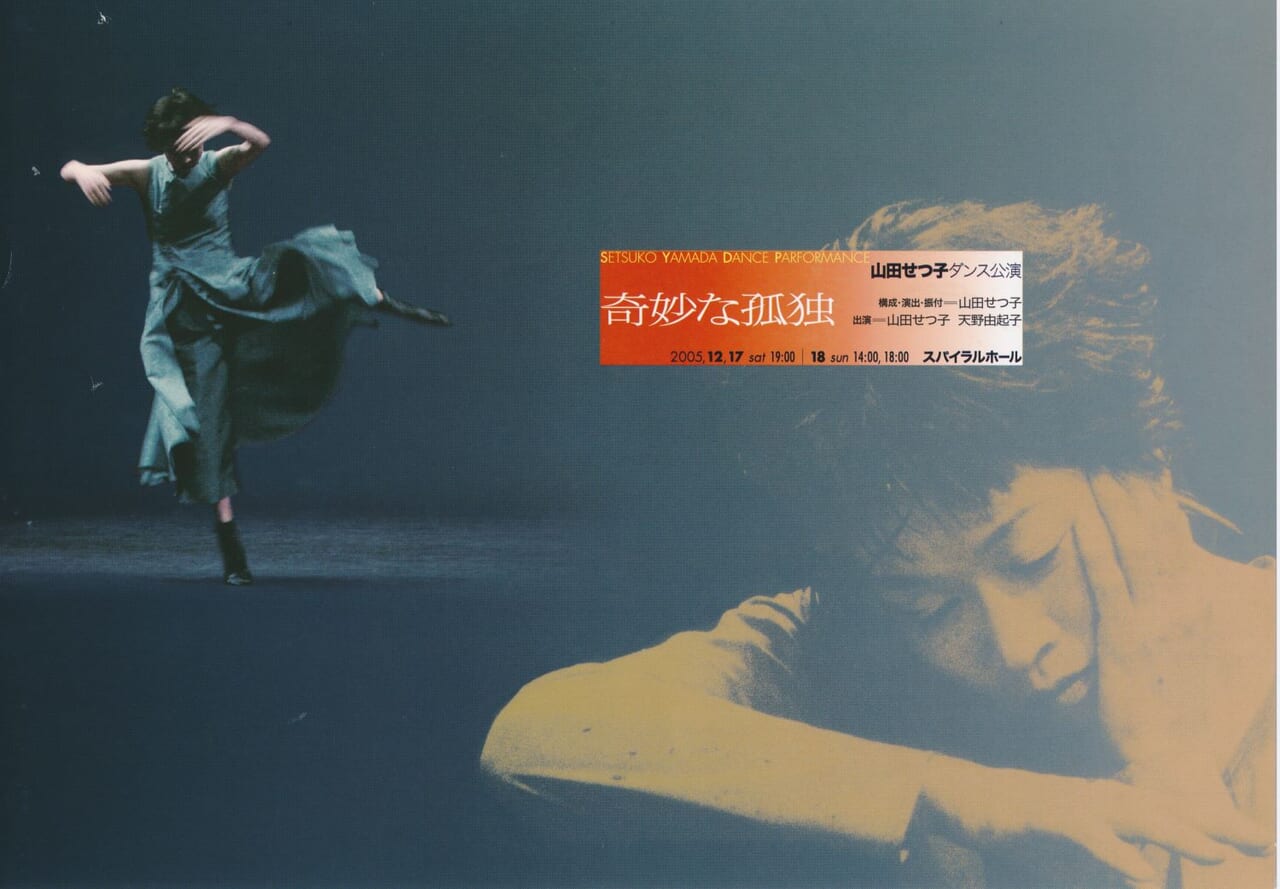
- Performer(s)
- Setsuko Yamada
- Director/Choreographer
- Setsuko Yamada
- Venue
- Spiral Hall
- Year performed
- 2005
-
Suitei-Koji
Numerous stories rise, are expelled, and are swallowed up by the Swamp of Memories. In what appears as an ambiguous boundary between land and water, a feast of female butoh unfolds.
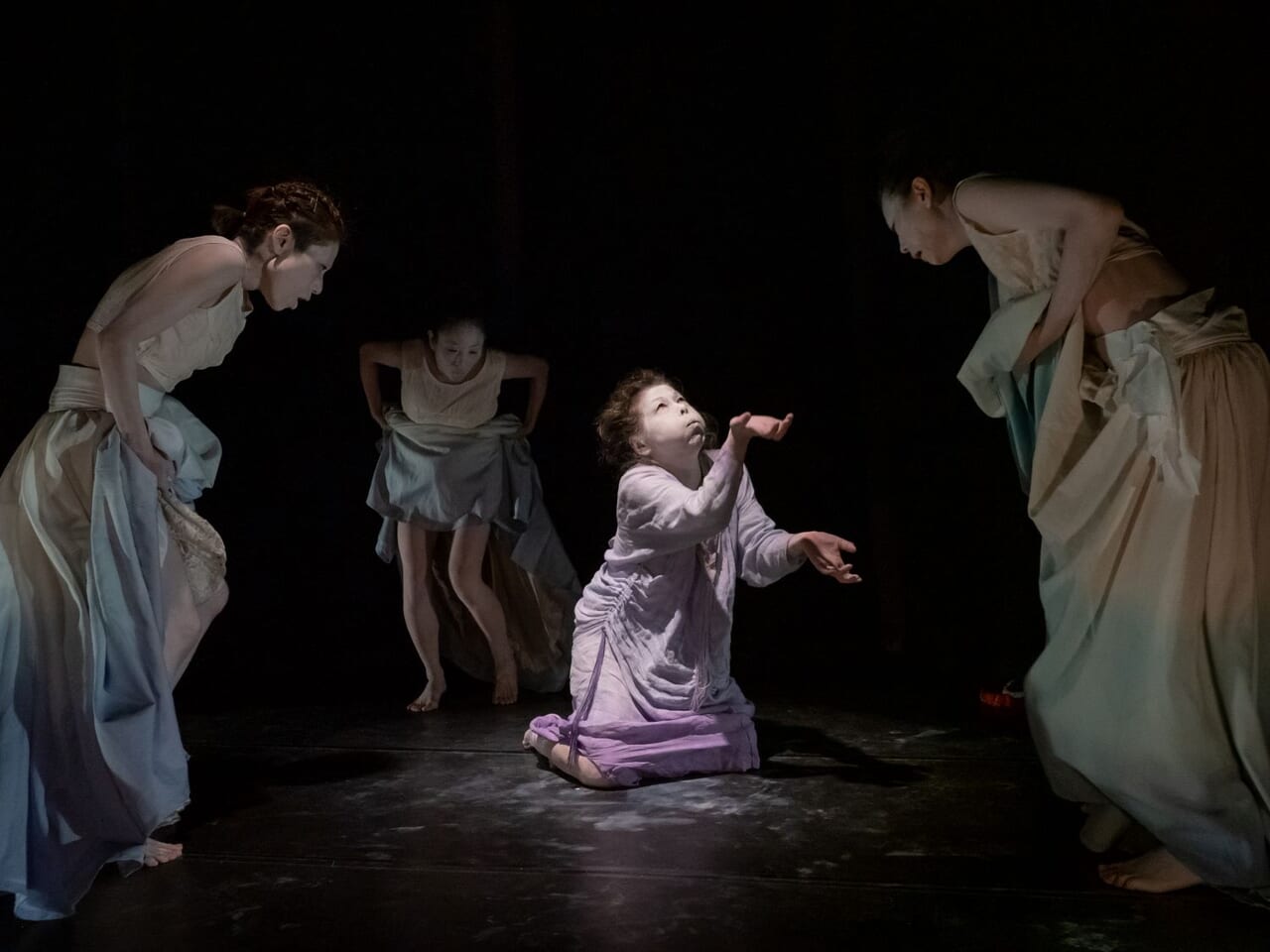
- Performer(s)
- Butoh-sha Tenkei
- Director/Choreographer
- Mutsuko Tanaka
- Venue
- Terpsichore
- Year performed
- 2019
-
SUKANPO
Fourth performance of "Masahide Omori Butoh: Ammonite Claws". Born in a mining town in Hokkaido, Omori recalls eating "sukanpo" (Japanese knotweed) that grew in clusters in the fields during his childhood. In this work, he seeks to discover a body that, while always present, remains useless and unnamed. Jokyo Gekijo [Situation Theatre] actor Goro Tenjiku, and Tokikei - a performer from Tatsumi Hijikata's "Twenty-Seven Nights for Four Seasons" - make unplanned appearances on stage. Near the end, actress Aoi Nakajima calls out "Omori-san, you're doing great". After the performance, Kazuo Ohno, Tatsumi Hijikata, Nario Goda, Kazuo Nagao, Nobuo Ikemiya, Jean Kalman and others can be seen in the audience. The footage captures the atmosphere of butoh performances of that time.
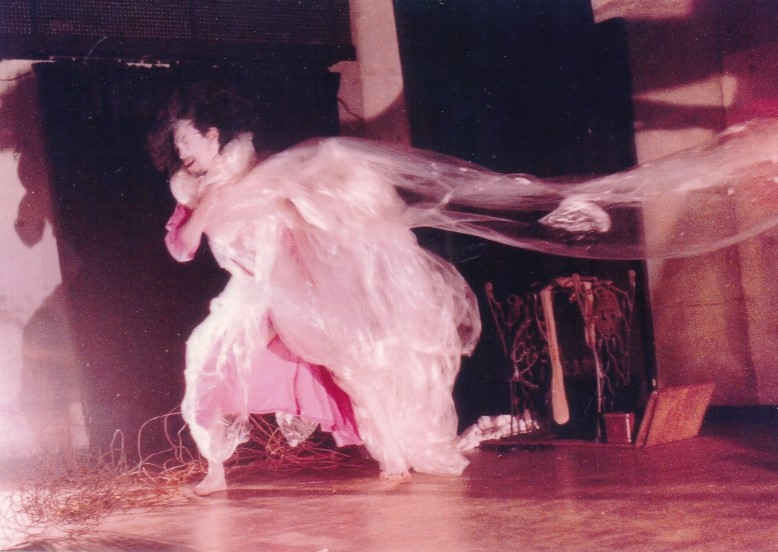
- Performer(s)
- Terpsichore
- Director/Choreographer
- Masahide Omori
- Venue
- Terpsichore
- Year performed
- 1984
-
The Summer I Danced in Busan – Strange Dance
A documentary following Shoichi Fukushi's participation in the Busan International Seaside Dance Festival in summer 1997. In addition to an interview in which Fukushi discusses his own philosophy on dance, the programme highlights other aspects of his work through conversations with butoh dancer Shigeya Mori and folklorist Norio Akasaka, both of whom have had a strong influence on him. It also includes a discussion with Teruko Fukushi, who works alongside him. The documentary showcases Fukushi’s unique approach to dance as he improvises in the markets and on the beaches of Busan, joining strangers and creating emotional exchanges in each moment, revealing the true essence of his style of work.
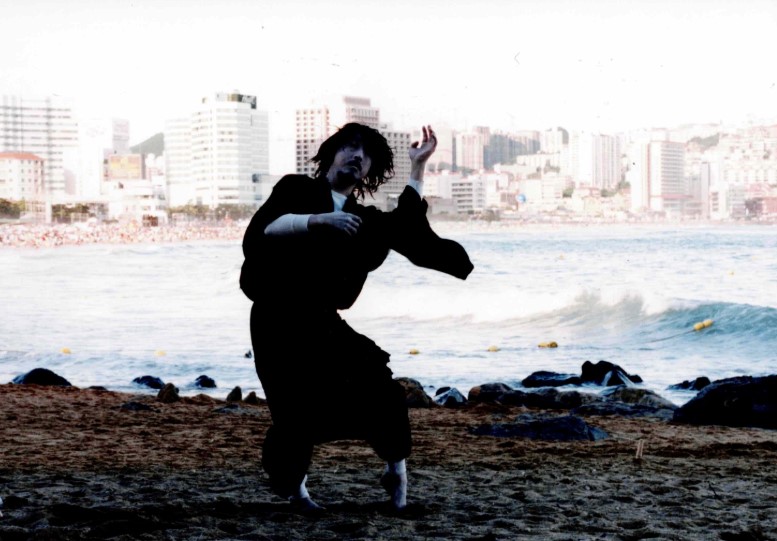
- Performer(s)
- Shoichi Fukushi
- Director/Choreographer
- Shoichi Fukushi
- Venue
- Busan
- Year performed
- 1997
-
The Sun God’s Temptation
Performance documentation of Kumano Spark (Kumano International Art Festival) for which Byakko-sha's founder, Isamu Osuka, served as artistic director. Featuring percussionist Dou Dou N'diaye Rose from Senegal, Indian dancer Shakti, modern dancers from the Kuniko Kawakami Dance Studio, and the all-female Japanese drum group HONO-O-DAIKO, the piece brings Osuka's vision of Kumano as a platform for international arts to life, highlighting its unique geography and rich ancient culture. Produced exclusively for the festival, this work was directed by Osuka.
The Kumano International Art Festival was held as part of the World Resort Expo.
-Bentenjima Marine Open Air Theatre
-Kumano Spark: Kumano International Art Festival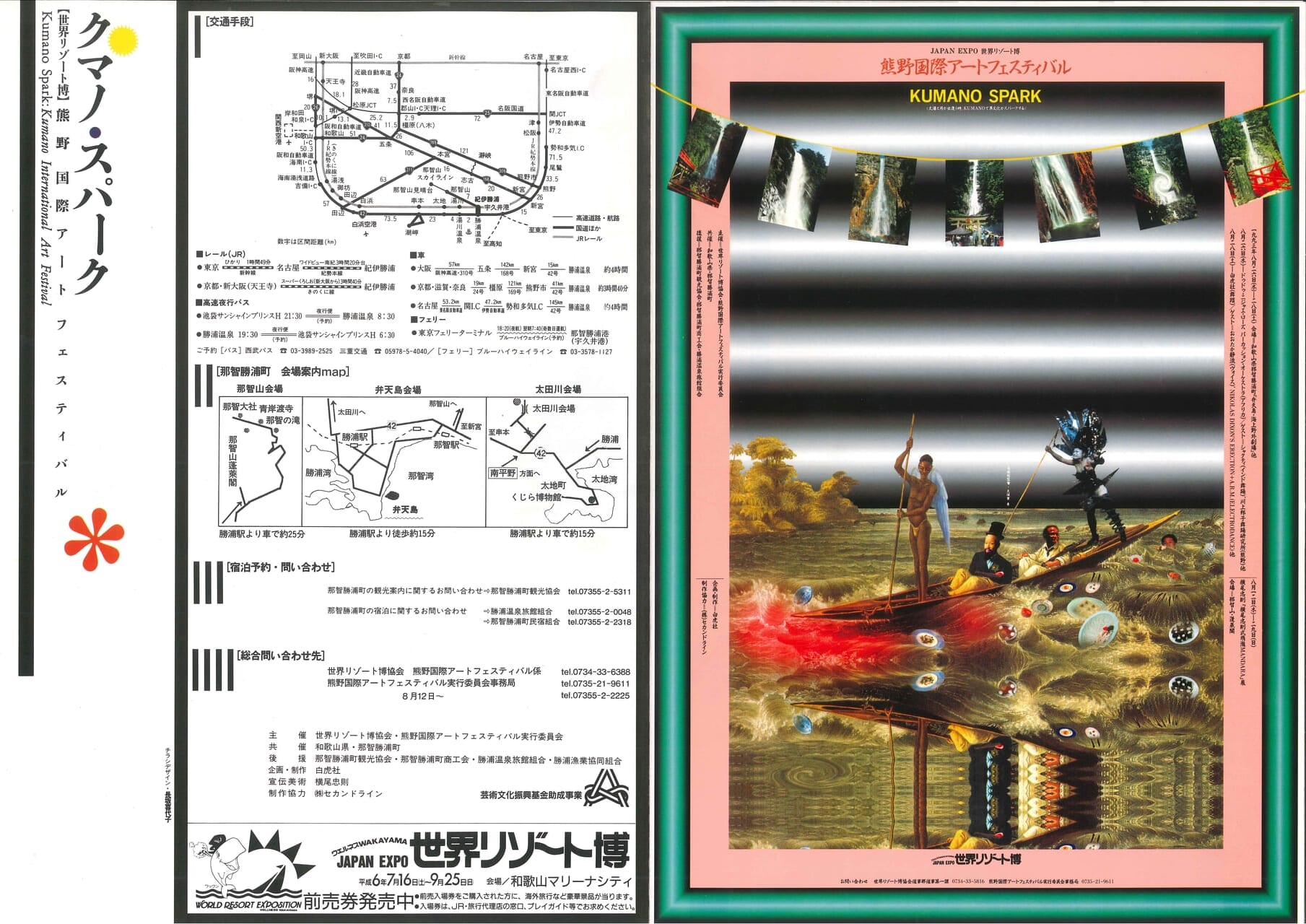
- Performer(s)
- Byakko-sha
- Director/Choreographer
- Isamu Osuka
- Venue
- Bentenjima Marine Open Air Theatre
- Year performed
- 1993
-
The Sun’s Kiss
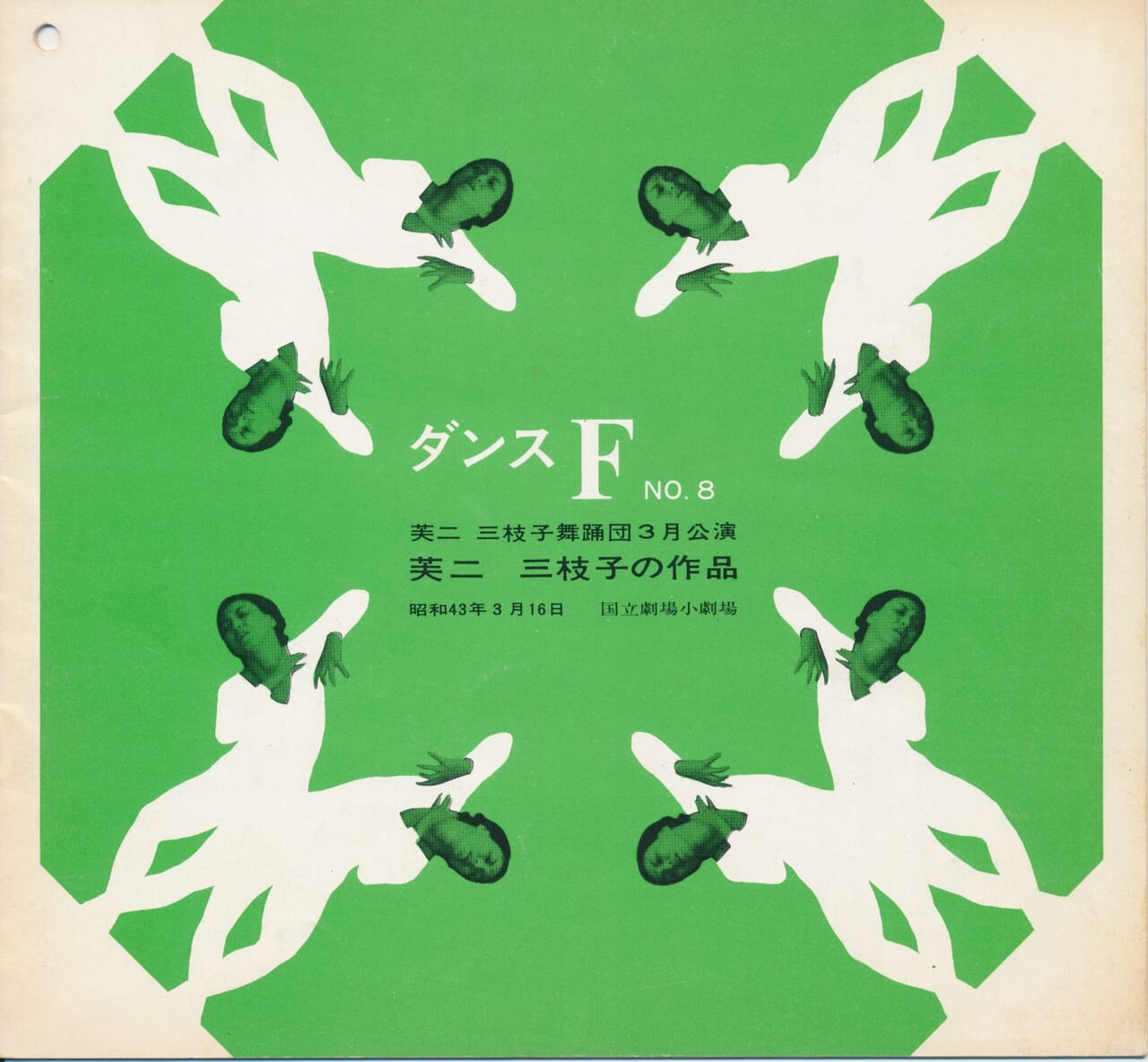
A youth calls out to the sun as it bathes all things in light, making them shine, and sinks while dyeing the clouds of the western sky gold. This work premiered in 1968. Having been taught by her father that “nature is the teacher of art,” Mieko Fuji had always loved the sun; yet in the 1960s, amid the vexations of the human world, she sought themes in the cosmos. It was during this period that she rediscovered the theme of the sun, presenting the large-scale work “Breeze From the Sun” in 1966. In 1968, she also began the joint performance “Children of the Sun Dance Recital,” involving her students and their pupils’ children, centered on the idea that “dance is for everyone.”
- Music: Art Blaky
- Due to the deterioration of the half-inch magnetic tape on which the footage was recorded, the image quality is poor.
- Performer(s)
- Mieko Fuji Dance Company
- Director/Choreographer
- Mieko Fuji
- Venue
- National Theatre of Japan : Small Theatre
- Year performed
- 1968
-
Survivor
Solo dance piece inspired by Melchior Lengyel's play "The Miraculous Mandarin", which explores the boundaries between sexuality, life and death, reality and fiction, and the sacred and the profane. Electronic sounds are transmitted from the stage throughout the performance. It was presented as part of the 4th Theater X International Dance Festival in 2000.
-Sakurai Ikuya Dance Performance
-The 4th Theater X International Dance Festival 2000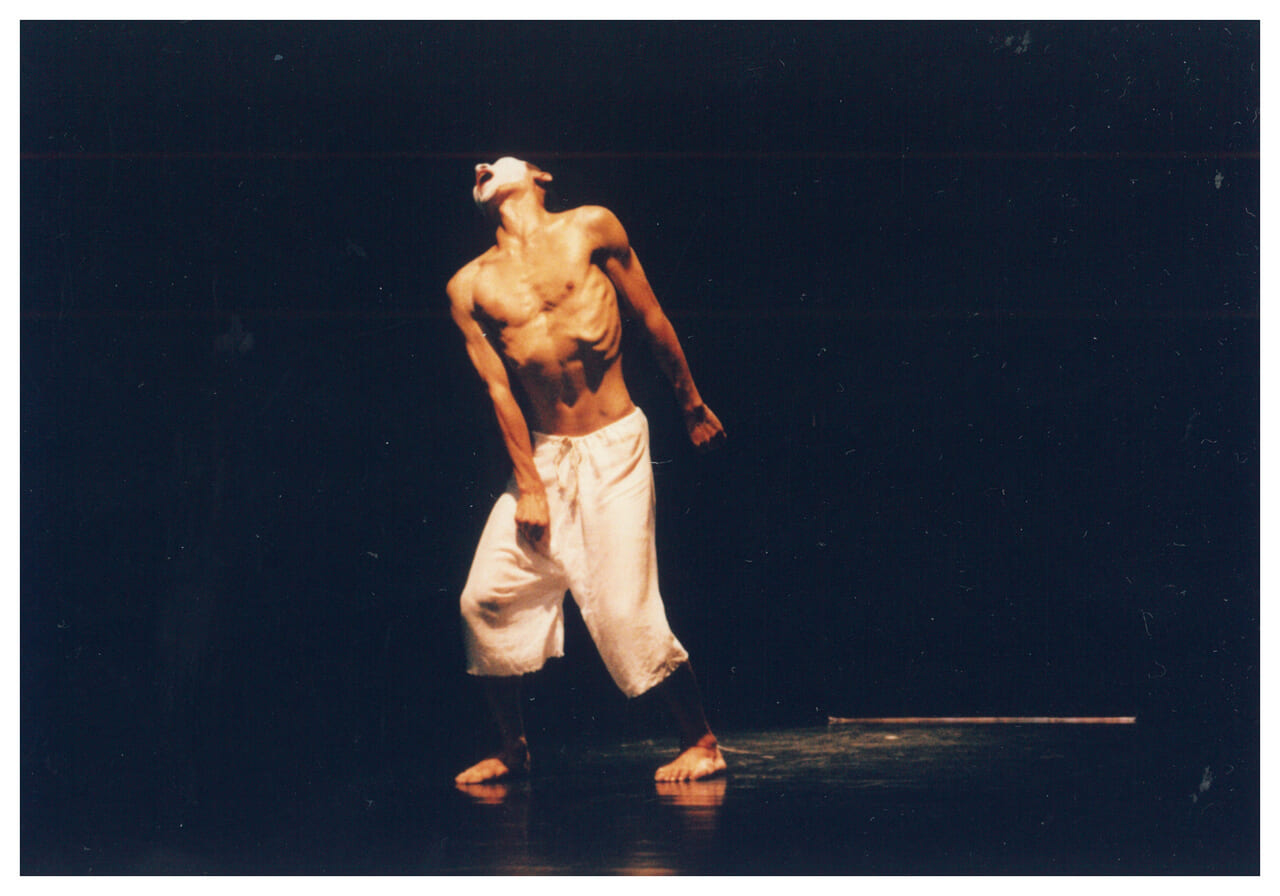
- Performer(s)
- Ikuya Sakurai
- Director/Choreographer
- Ikuya Sakurai
- Venue
- THEATER X
- Year performed
- 2000
-
SUSABI [S’amuser]
Premiered in Paris, 1989. 'S'amuser' (Susabi in Japanese), means 'play'. It is a part of the dance series 'Shozoku wa Mizu' [Costume is Water] which embodies the structure of self-love expressed in 'Awahi' from the same series, based on the Noh play 'Izutsu'. The beauty and dangers of love are expressed through a dance performed on top of a 1m² x 6mm glass sheet balanced on 5-6 cups filled 70% with water. During the performance in Paris, there was an incident where the dancer broke through the glass sheet, which later became a theme in Masaki Iwana's fourth feature film 'Charlotte-Susabi' (2017).
-Masaki Iwana Solo Butoh Dance- Performer(s)
- Studio 200
- Director/Choreographer
- Masaki Iwana
- Venue
- Studio 200
- Year performed
- 1989
-
Suspicion
Third collaboration between hardcore contemporary dance company Kakuya Ohashi and Dancers and emerging alternative rock band Kukangendai. The piece explores themes of documentation, memory, and rebirth, with the dancers wandering in search of memories in the fading light. The title is taken from Alfred Hitchcock's film "Suspicion".
-Kazuo Ohno Festival 2012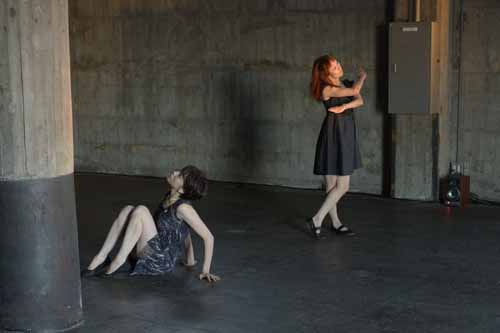
- Performer(s)
- Kazuo Ohno Dance Studio
- Director/Choreographer
- Kakuya Ohashi
- Venue
- BankART Studio NYK
- Year performed
- 2012
-
Suzuranto Butoh Event: Mai Mizore
Performance commemorating the publication of 'Suzuranto Shashin-shu: Mai Mai LOVE - Yami-suru Shiroki Maihime-tachi' [Suzuranto Photo Book: Mai Mai LOVE - White Dancers in the Dark] (Published 30 October 1981). Suzuranto was an all-female butoh group led by Yuki Yuko, and was a subset of the Hoppo Butoh-ha group led by Bishop Yamada. The group was named after lily of the valley [Suzuran in Japanese], a beautiful and poisonous plant. Toyotama Garan was the rehearsal space of Dairakudakan in Toyotama, Nerima Ward.
- Performer(s)
- Hoppo Butoh-ha
- Venue
- Dairakudakan Rehearsal Studio Toyotama
- Year performed
- 1981
-
A Table, or A Dream of Fetus
A group dance piece first performed in 1980 by Kazuo Ohno and some of his students at the same Nancy International Theatre Festival where Ohno had made his international debut. It is thought to have been performed to a select few people after returning from the month-long tour at Ohno's studio in Yokohama, but the date of this performance is unknown.
The cast as listed in the programme for the performance at the Nancy International Theatre Festival is as follows:
Fetus / Horse: Kazuo Ohno
Grim Reaper: Tokuji Ikebe
The Sun: Moritsuna Nakamura and Minoru Hideshima
Madwoman who gives birth to the Sun, mother of the fetus: Mitsuyo Uesugi
- Presumed to have been staged around July 1980.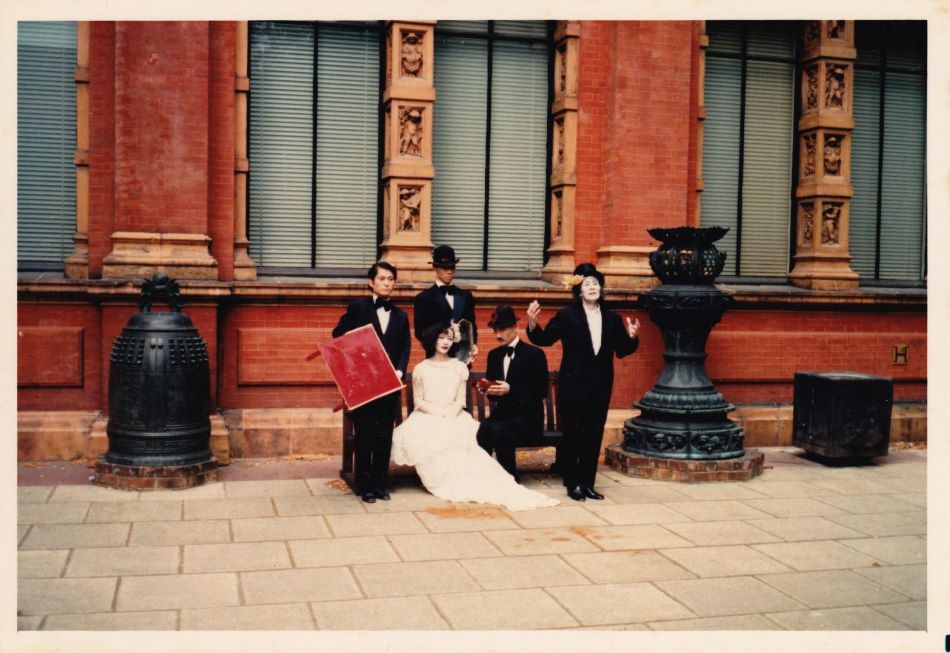
- Performer(s)
- Kazuo Ohno Dance Studio
- Director/Choreographer
- Kazuo Ohno
- Venue
- Kazuo Ohno Dance Studio
- Year performed
- 1980
-
TABULA RASA
Solo dance developed around the theme of "returning to a blank slate", accompanied by a live accordion symbolising breath. First performed in 2005, two versions were then developed in 2006 (one with live music, the other with recorded music) for presentation in Portugal. It was performed again in Tokyo in 2008, then revised for a 2011 performance as a memorial for the Great East Japan Earthquake. The documentation here is from the 2011 version.
2006: Invited by 'a sul' International Contemporary Dance Festival Portugal to perform in Faro and Loulé (Portugal).
-IKUYA SAKURAI DANCE SOLO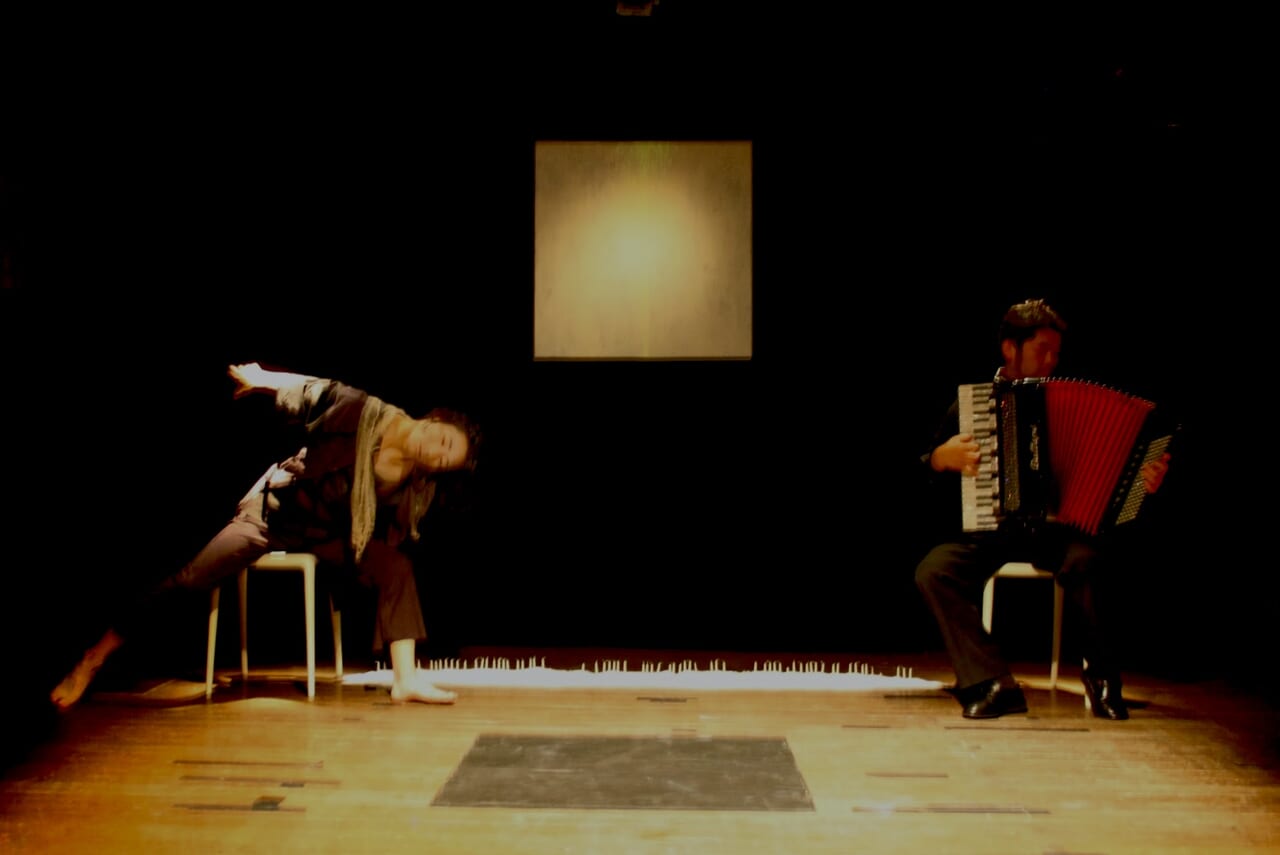
- Performer(s)
- Ikuya Sakurai
- Director/Choreographer
- Ikuya Sakurai
- Venue
- plan-B
- Year performed
- 2011
-
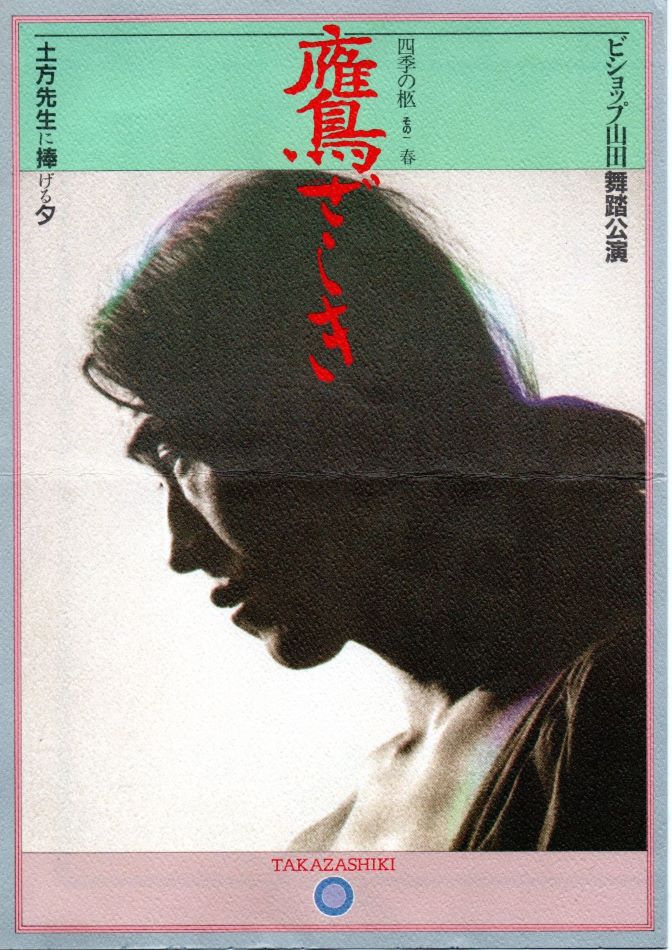
Takazashiki
This piece is based on the image of a falconer in northern Japan, and this image in turn comes from when Hijikata Tatsumi brought a live turkey to 'Shiokubi', the opening performance of Hoppo Butoh-ha in Yamagata in 1975. It was kept in the rehearsal hall, where it died. Hijikata changed the entire choreography and Yuki Yuko, who played the role of hawk as well as falconer's wife, recalled that the performance was so driven it was as though Hijikata's spirit had possessed her.
- Bishop Yamada Butoh Performance: Hearse of Four Seasons Part 1 - Spring
- Performer(s)
- Hoppo Butoh-ha
- Director/Choreographer
- Bishop Yamada,Tatsumi Hijikata
- Venue
- Sogetsu Hall
- Year performed
- 1984
-
Tale of Warazu
Presented as part of the 1st OSAKA DANCE EXPERIENCE, a festival that ran for 6 years from 1995 to 2000 with the aim of re-exploring butoh. The butoh group Kobuzoku Arutai (Altaic), led by Kuritaro, had moved from Hokkaido to Kansai the previous year when Kuritaro moved to Tamba. 'Warazu' means 'straw' in the local Tamba-Sasayama dialect. While working in agriculture and construction, Kuritaro wanted to make a piece themed around peasants and the countryside, and created this work about seeking inner salvation from the inescapable reality of such a life.
- 1st OSAKA DANCE EXPERIENCE: Performance by Kobuzoku Arutai (Altaic)- Performer(s)
- TORII HALL
- Director/Choreographer
- Kuritaro
- Venue
- TORII HALL
- Year performed
- 1995
-
TANIGUKU
Butoh theatre by Butoh Art Company TondeKarashizuka, inspired by the novels of Kenzaburo Ooe, Dojidai gemu [The Game of Contemporaneity] and Sui Shi [Death by Water]. Drawing inspiration from the 3,300m² terraced rice fields of Tsubono Village in Matsunoyama (Tokamachi City, Niigata Prefecture), the lives of the locals, local folk tales, and the life of TondeKarashizuka founder Toyo Matsubara, this work was brought to life with the support of musician Yuji Murai, who provided the performance space, the cooperation of the Tsubono Village residents, and collaboration with artist Satoshi Iwama, who runs the Sato Matsuri festival in the same village. The performance, which took place in the summer of 2012, was the culmination of a month-long residency and preparation involving 60 people, including 13 performers, 4 musicians, 3 set designers, construction staff, and others. "Taniguku" is an old term for a toad.
-Outdoor performance by Butoh Art Company TondeKarashizuka - Rice Field Theatre - Taniguku
-Performed at Sato Matsuri (24-27 August) in Tsubono Field Park (work no. Y087 / Satoshi Iwama) as part of the Echigo-Tsumari Art Triennale 2012. During the performance, the animation "Kagee no Machi "[Shadow Town], created by artist Kenichi Aoyama, was projected onto a cliff.
-Echigo-Tsumari Art Triennale 2012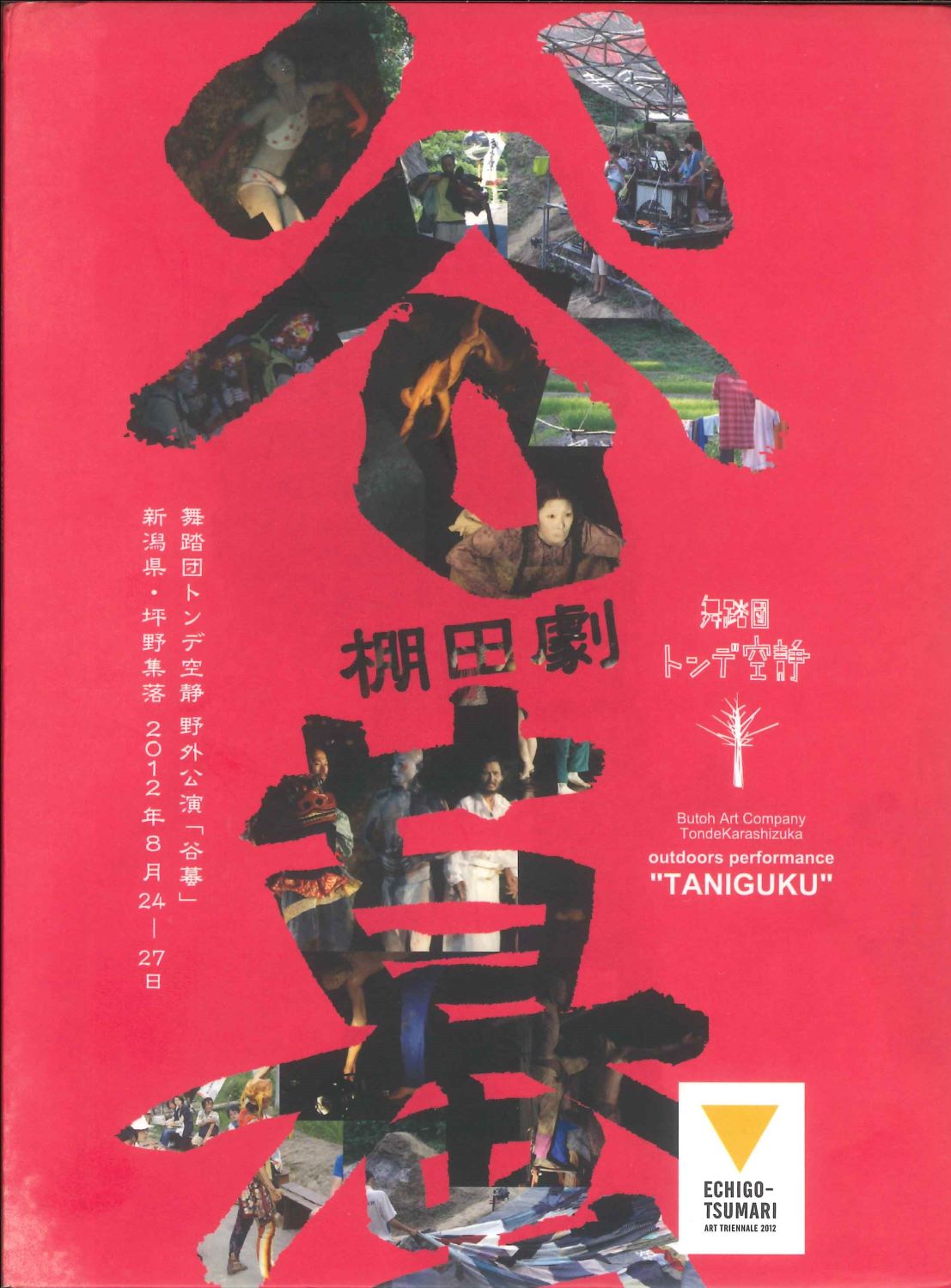
- Performer(s)
- Toyo Matsubara
- Director/Choreographer
- Toyo Matsubara
- Venue
- Tsbono field park
- Year performed
- 2012
-
Tao
Katsuko Orita is a creator of innovative contemporary dance. This new work 'Tao', bring the ceremony of her 1979 piece 'City of Memory' and transforms it in a more open space. It is an exploration of what can occur when the internal mechanisms and inherent drama of human beings intersect, which has been externalised and manifests in work of the dancers and choreographer. Tao shows ancient dreams to heretics whose memories are stuck in the past, opening their minds to the future. (Taken from the performance program)
-Presented at the Orita Katsuko Dance Performance as part of the Dance Performance Tokyo '85 Festival of Tao.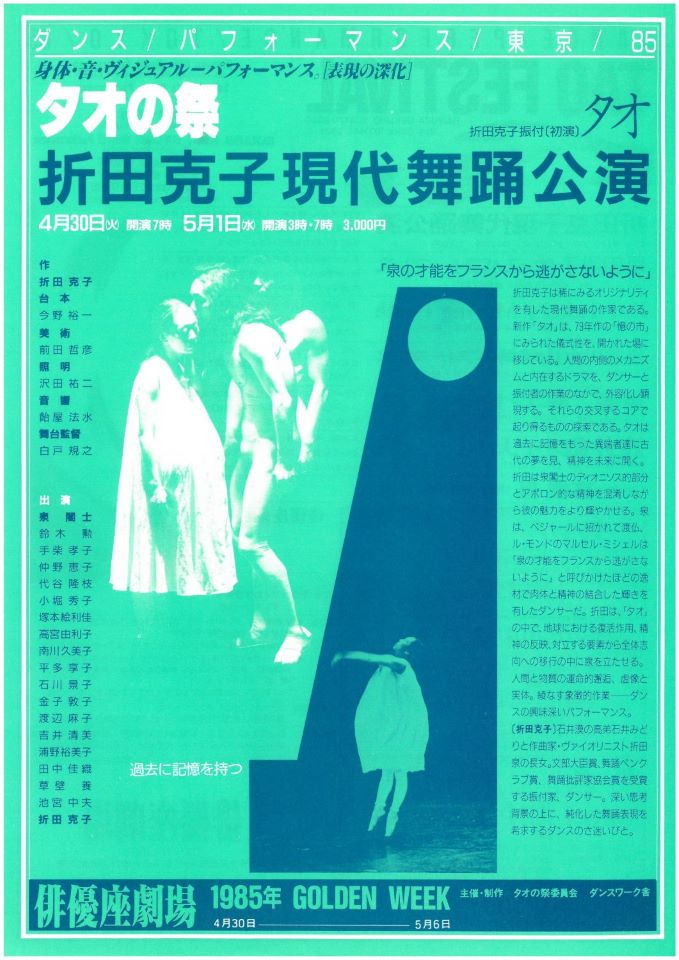
- Performer(s)
- Midori Ishii and Katsuko Orita Dance Studio
- Director/Choreographer
- Katsuko Orita
- Venue
- Haiyuza Theater
- Year performed
- 1985
-
Tefutefu 7
Kisanuki Kuniko began her experimental solo dance series Tefutefu at 23 years old in 1982, exploring the theme of where she is from. 'Tefutefu 7' is the seventh work in the series, a story of rebirth in which her body crawls out and howls, following the various lights and darks explored in the previous work 'Tefutefu 6'. If the series up to 'Tefutefu 6' were a series of wild imaginings, 'Tefutefu 7' is an internal reality that emerged out of the ashes of the previous works.
- Kisanuki Kuniko Solo Dance Performance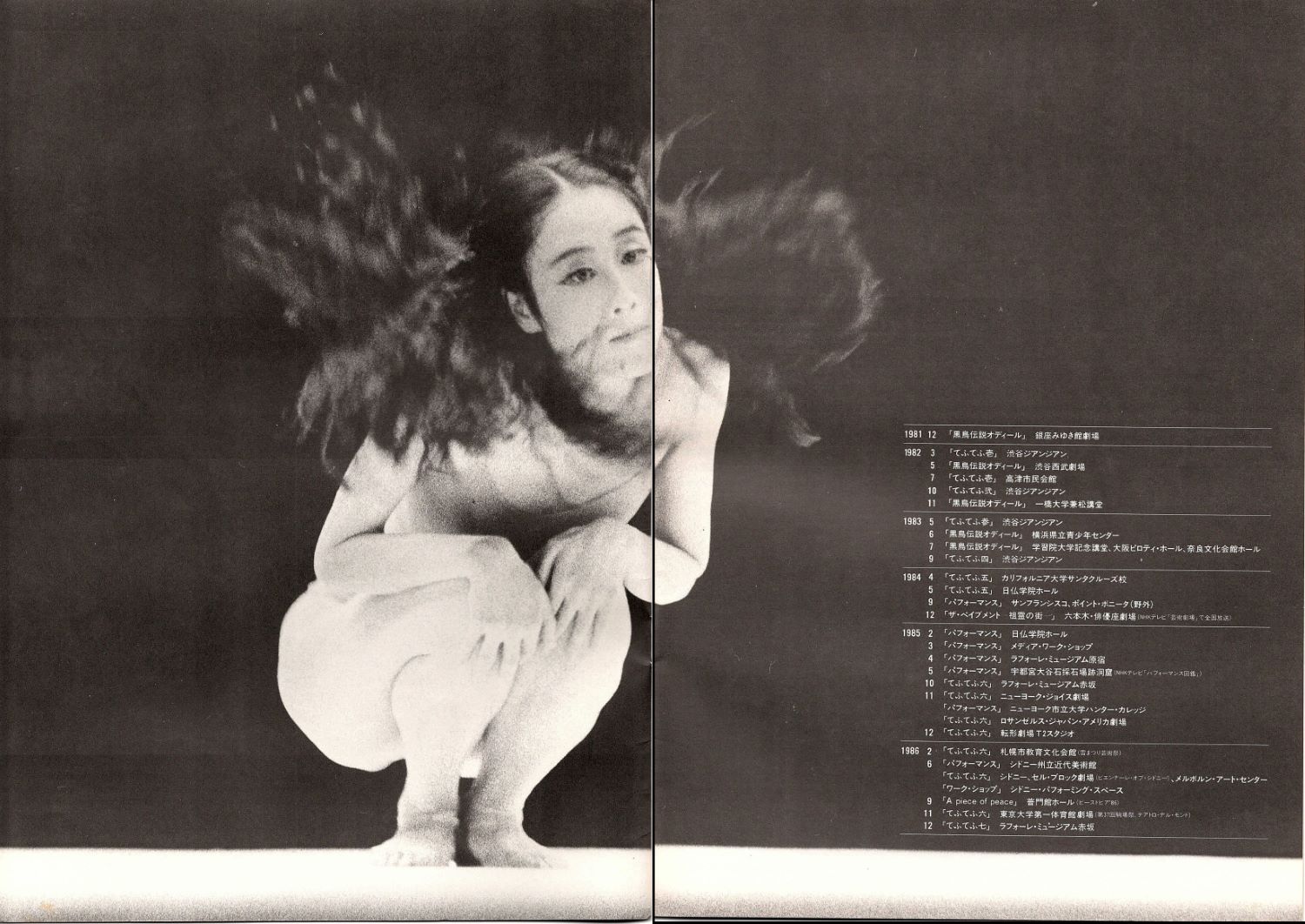
- Performer(s)
- Kuniko Kisanuki
- Director/Choreographer
- Kuniko Kisanuki
- Venue
- Laforet Museum Akasaka
- Year performed
- 1986
-
Teleport TBS 6
As an introduction to butoh, parts of the Butoh Festival '85 were shown on Teleport TBS 6, a local news programme on the TBS TV channel. It included commentary by Tatsumi Hijikata, Miyabi Ichikawa, Akaji Maro, Teru Goi and Min Tanaka, as well as shots of Dairakudakan and Maijuku's rehearsals. It provides a glimpse into the butoh of that period.
- Covering Butoh Festival '85: Collection of Confessions Seven Seasons and Castles- Performer(s)
- Nippon Cultural Centre
- Year performed
- 1985
-
Television like Minakata Kumagusu: When People Die, They Become Stars (open-air version)
A creation myth inspired by the wide-ranging, interdisciplinary curiosity of the naturalist Kumagusu Minakata. First performed in 1984, it was later staged at the inaugural Tokyo International Theatre Festival in 1988, in a massive tent where temperatures soared to nearly 50°C. "There is no group in the world so foolish as Byakko-sha in failing to achieve its purpose" (Bessatsu Taiyo 60's-90's, Heibonsha, 1991).
The video here is recorded from the performance at Tankaku Castle Park in Shingu (Wakayama Prefecture), and was one of three outdoor productions held to commemorate Byakko-sha’s 10th anniversary. The other two performances took place in Fujisawa (Kanagawa Prefecture) and Tanabe (where Minakata once lived in Wakayama Prefecture).
- Byakko-sha 10th Anniversary + 50th Anniversary of the Death of Kumagusu Minakata: Contagious Media Trilogy I, Volume - Heaven
- Kumano Kodo Pier and Kodo Festival ~Prayers to the Sky~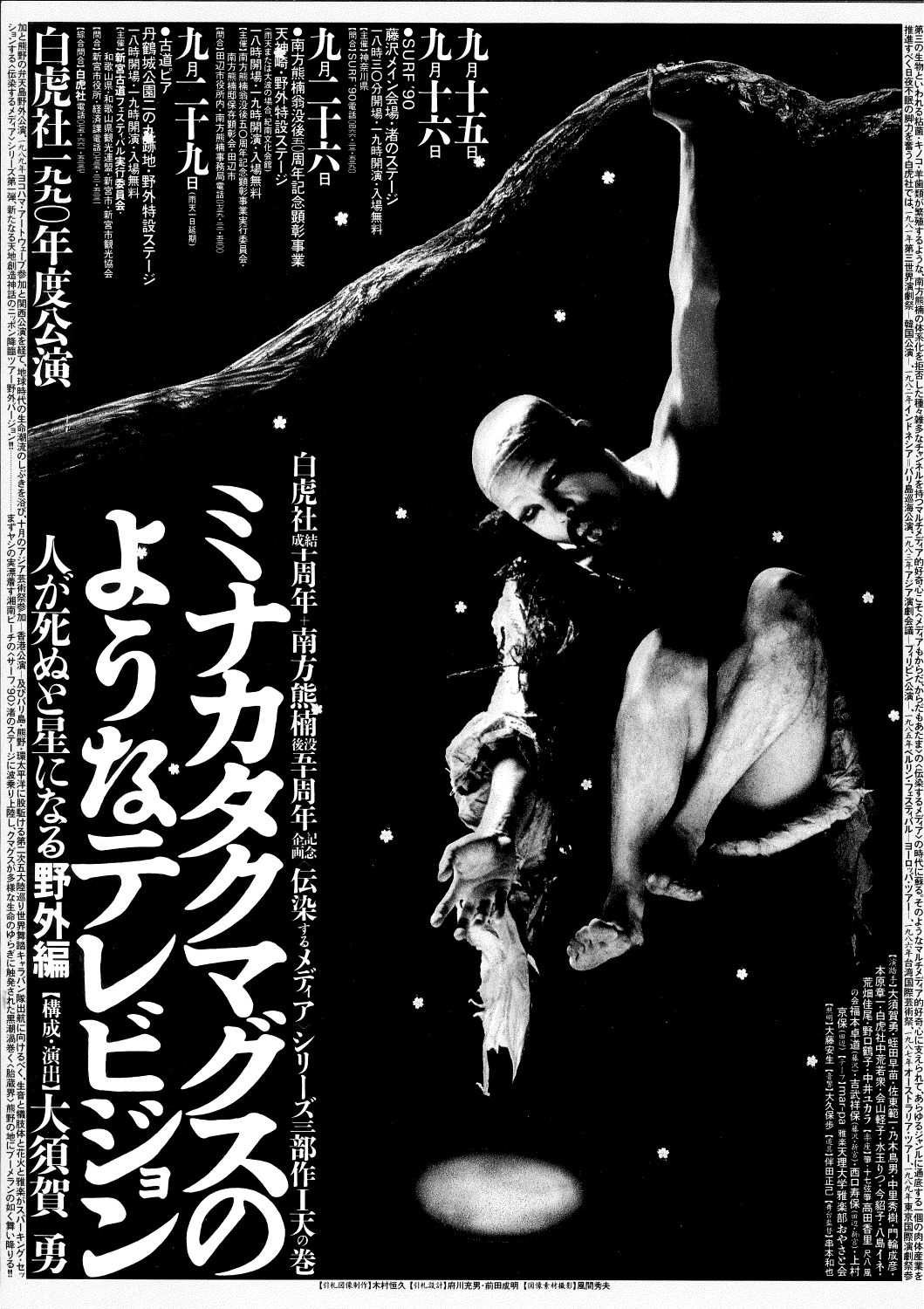
- Performer(s)
- Byakko-sha
- Director/Choreographer
- Isamu Osuka
- Venue
- Temporary outdoor stage at the Tankaku Castle Park
- Year performed
- 1990
-
10 Motions
A solo piece, composed of 10 movements in various combinations.
-Participated in the 80 Summer/Autumn Dance Collection.
- Performer(s)
- Bonjin Atsugi
- Director/Choreographer
- Bonjin Atsugi
- Venue
- Sanbyakunin Theatre
- Year performed
- 1980

