
Dance Video Index
In this database, you will find 373 dance videos which were collected from the 2023 to 2025 fiscal years under the auspices of the EPAD (Eternal Performing Arts Archives and Digital Theatre) .
Overview
-
SHOOT JEEZ MY GOSH
This butoh performance is inspired by Henry Darger’s fantasy world that juxtaposes innocence with violence. Sounds from real battles found on the Internet are contrasted with iconic corporeal movements that represent innocence. The work attempts to pose a question to the feeling of ambivalence towards systematic violence of belief that imposes powerlessness, and simultaneously reminds of brutal terror that characterizes our epoch.
The birth to kill
Build to break down
Existence
To be erased
To be pasted
The invisible enemy
Imperceptible voice
The other side of the filter
The inside of the monitor
In order to be fooled
In order to deceive
Endless game of
The world
Past Performances
2019: Rabbithole, Athens, Greece / Baltimore, Boston, Asheville, Chicago, USA
2018: Festival FiBUTOH, Santiago+Valparaiso, Chile / Tokyo Butoh Circus, Tokyo, Japan
2017: Serendipity Arts Festival, Goa, India/ Butoh College, Portland, USA / Sapporo International Butoh Festival, Sapporo, Japan
2016: Casa del Lago, Mexico / Gati, New Delhi, India
2015: DOCK11, Berlin, Germany / KRT Festival, Krakow, Poland / Huashan 1914, Taipei, Taiwan / Sala Crisantempo, Sao Paulo, Brazil
15 Nov 2014: Tatwerk, Berlin, Germany (Premiere)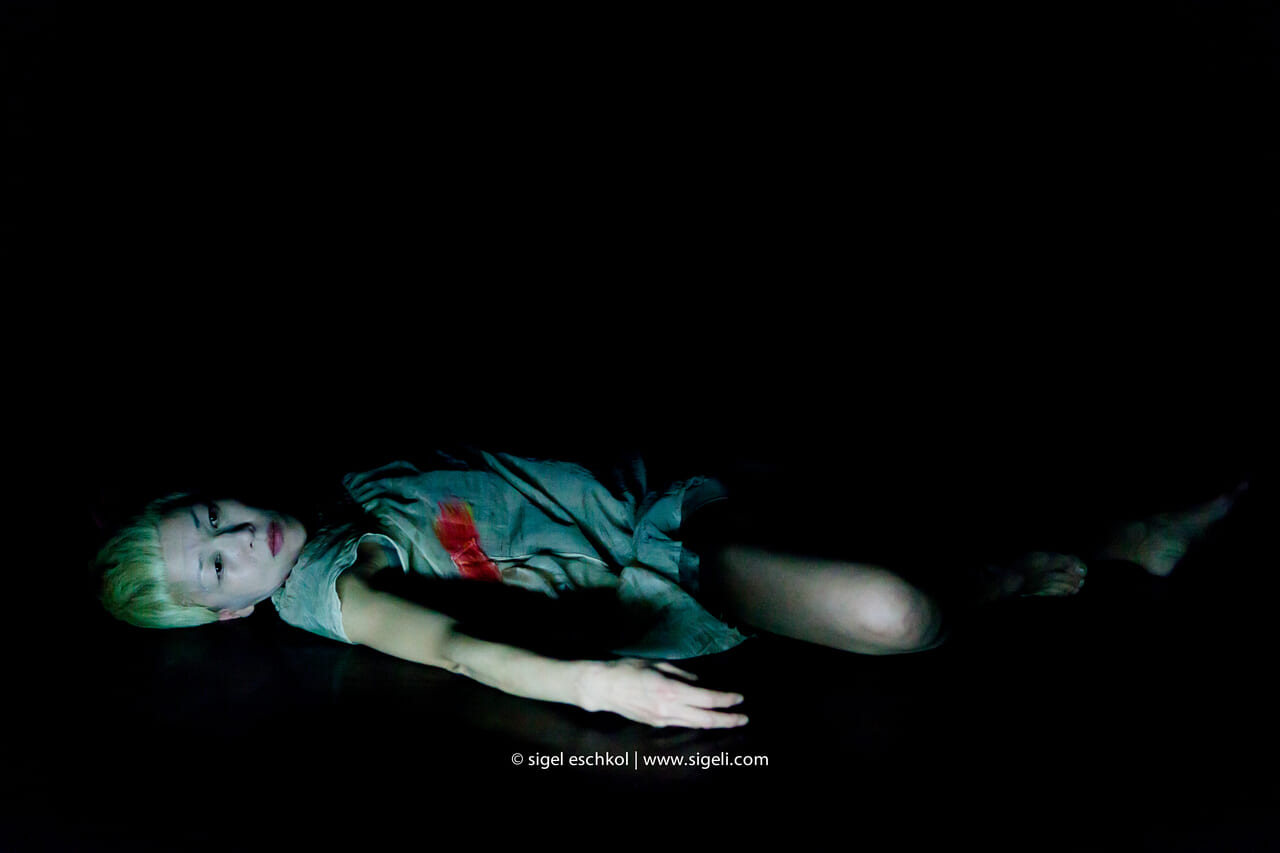
- Performer(s)
- Company cokaseki
- Director/Choreographer
- Yuko Kaseki
- Venue
- DOCK11
- Year performed
- 2015
-
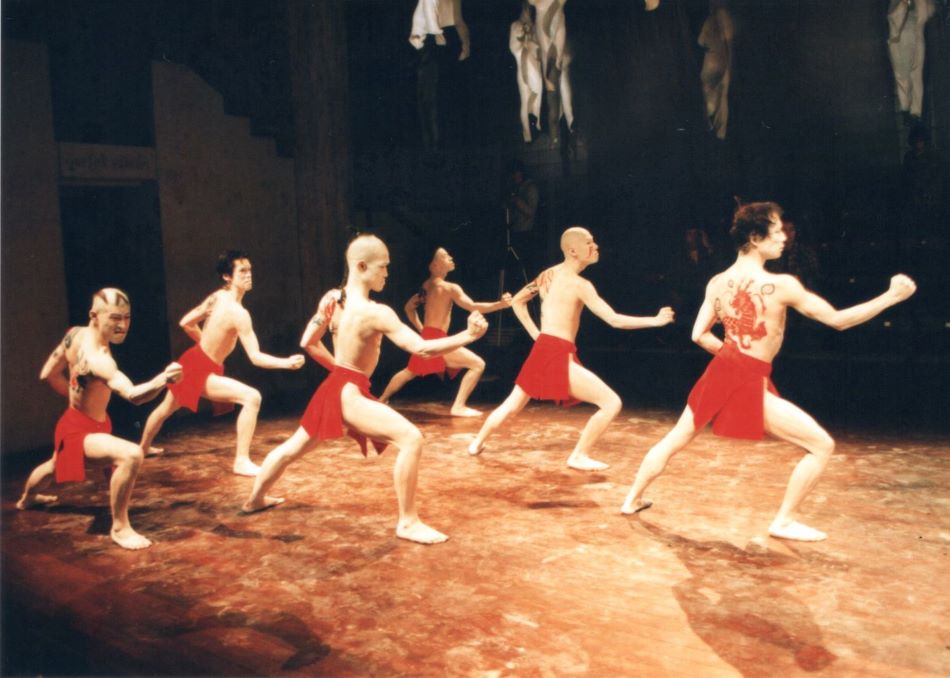
Sinking Waterfall: A Collaboration of Drums, Sculpture, Light and Butoh
In the ancient history of butoh, demons, supernatural beings and dragons have come and gone. Do they live deep within our bodies today? The body is a mysterious and strange container. Go up the river of memory and find a glowing scale at the bottom of a waterfall. At this signal, the fight between the Water Dragon and the Fire Dragon begins. Such a scene of chaos is the sole domain of the Butoh. Man after man passes by. Tossed around by love, Narukami Shonin climbs a waterfall and becomes a dragon. It is the beginning of a new festival.
- Performer(s)
- Yukio Waguri + Kozensha
- Director/Choreographer
- Yukio Waguri, Jinishi Hiranuma
- Venue
- P3 art and environment
- Year performed
- 1995
-
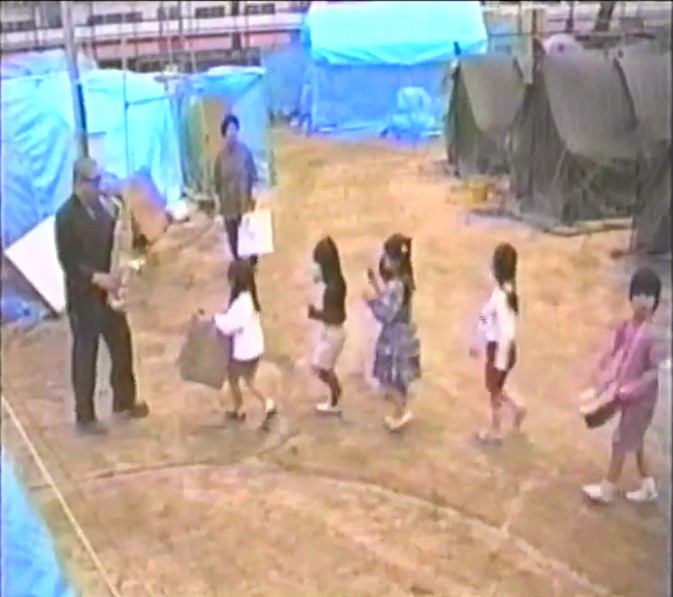
SINSAI BAKABON
At the end of April 1995, three months after the Great Hanshin Earthquake, a group of butoh dancers and musicians formed Moonlight Kabudan and visited tent villages serving as emergency shelters in Kobe’s Higashinada and Nagata districts. They interacted with residents, built makeshift stages, and brought music and dance to lift people’s spirits. The performances were made possible through the support of many people, including former members of Byakko-sha, which had disbanded the previous year; the butoh dancer Rosa Yuki; students and rōnin from Ashiya City; and above all, the people living in the shelters themselves. With laughter, torchlight and movement, the stage briefly conjured an otherworldly space amid the disaster-stricken landscape.
Performances were held at:
Uozaki Hachimangu Shrine on 21 April
Mori Park in Higashinada-ku on 22 April
Hommachi Park in Hyogo-ku on 23 April
Nakanominami Park in Higashinada-ku on 25 April
Iwaya Park in Nada-ku on 28 April
Kobe City Mikura elementary school and Minamikomae Park in Nagata-ku on 30 April
- Performer(s)
- Tsuneo Ogura
- Venue
- Kobe city
- Year performed
- 1996
-
The Skylark and the Lying Buddha (Butoh Festival ’85)
A vivid recreation of primitive creatures such as elephants, crocodiles, and demons - beings that know nothing of modernity or the self - living and playing in a forest after the rainy season. (From the flyer)
Kyoto-based Byakko-sha's first performance in Tokyo. "Hibari to Nejaka" [The Skylark and the Lying Buddha] was first performed in 1983, and went on to become one of Byakko-sha's signature pieces, performed all over the world, showcasing the wild energy of their early work.
- Butoh Festival '85: Collection of Butoh Confessions - Seven Seasons and Castles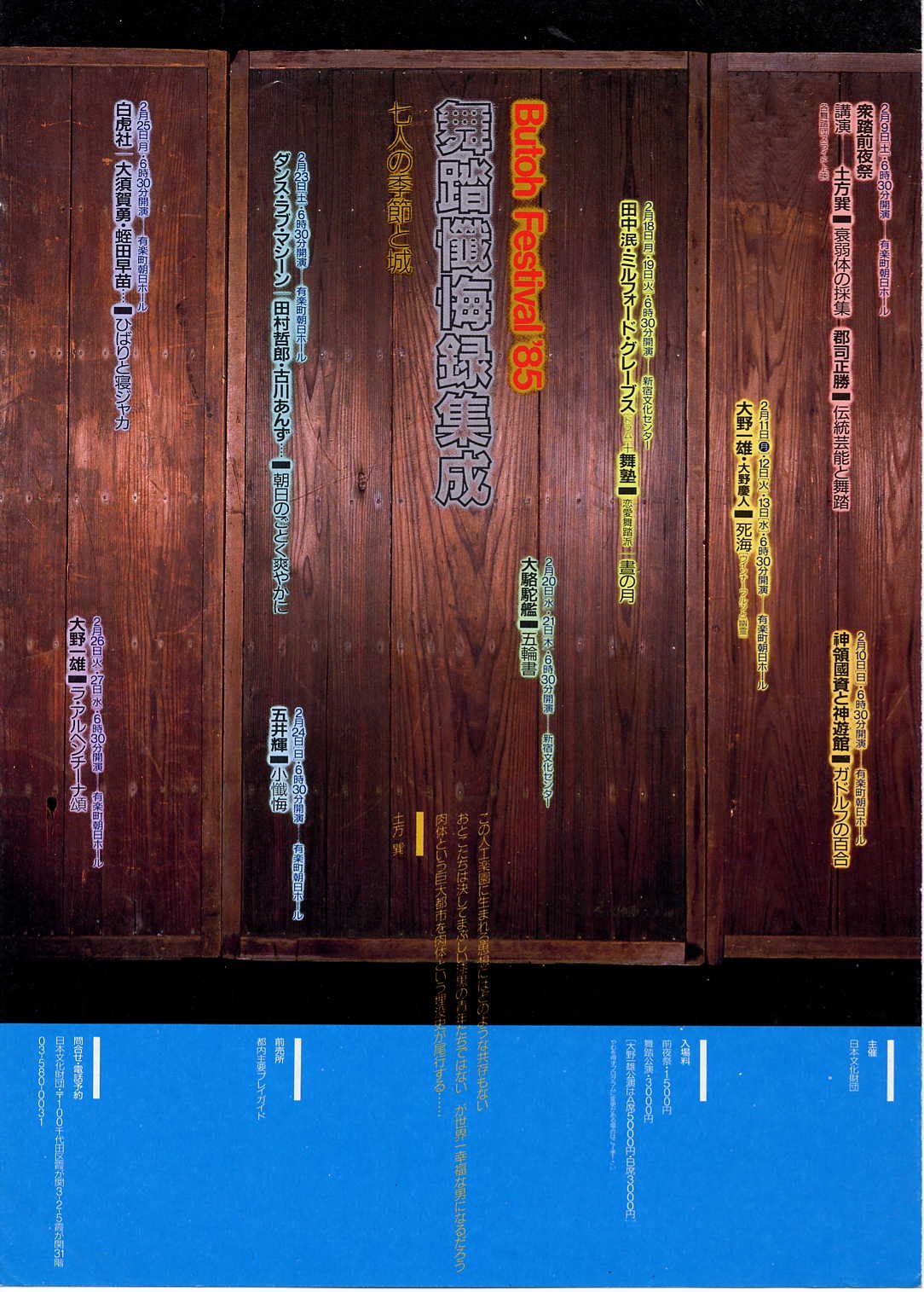
- Performer(s)
- Nippon Cultural Centre
- Director/Choreographer
- Isamu Osuka
- Venue
- Yurakucho Asahi Hall
- Year performed
- 1985
-
The Skylark and the Lying Buddha (in Melbourne)
Australian premiere of Byakko-sha's signature piece, "Hibari to Nejaka" (The Skylark and the Lying Buddha), which had its world premiere in 1983. In 1985, it was awarded the 17th Dance Critics Society of Japan Award for its "contribution to the revitalisation of performing arts by rethinking 'noise' and 'foolishness' from a modern perspective" during its Tokyo performance. It was also enthusiastically received during its European tour.
The video is a compilation of highlights.
It was performed 7 times in September, 1987.
-Spoleto Melbourne Festival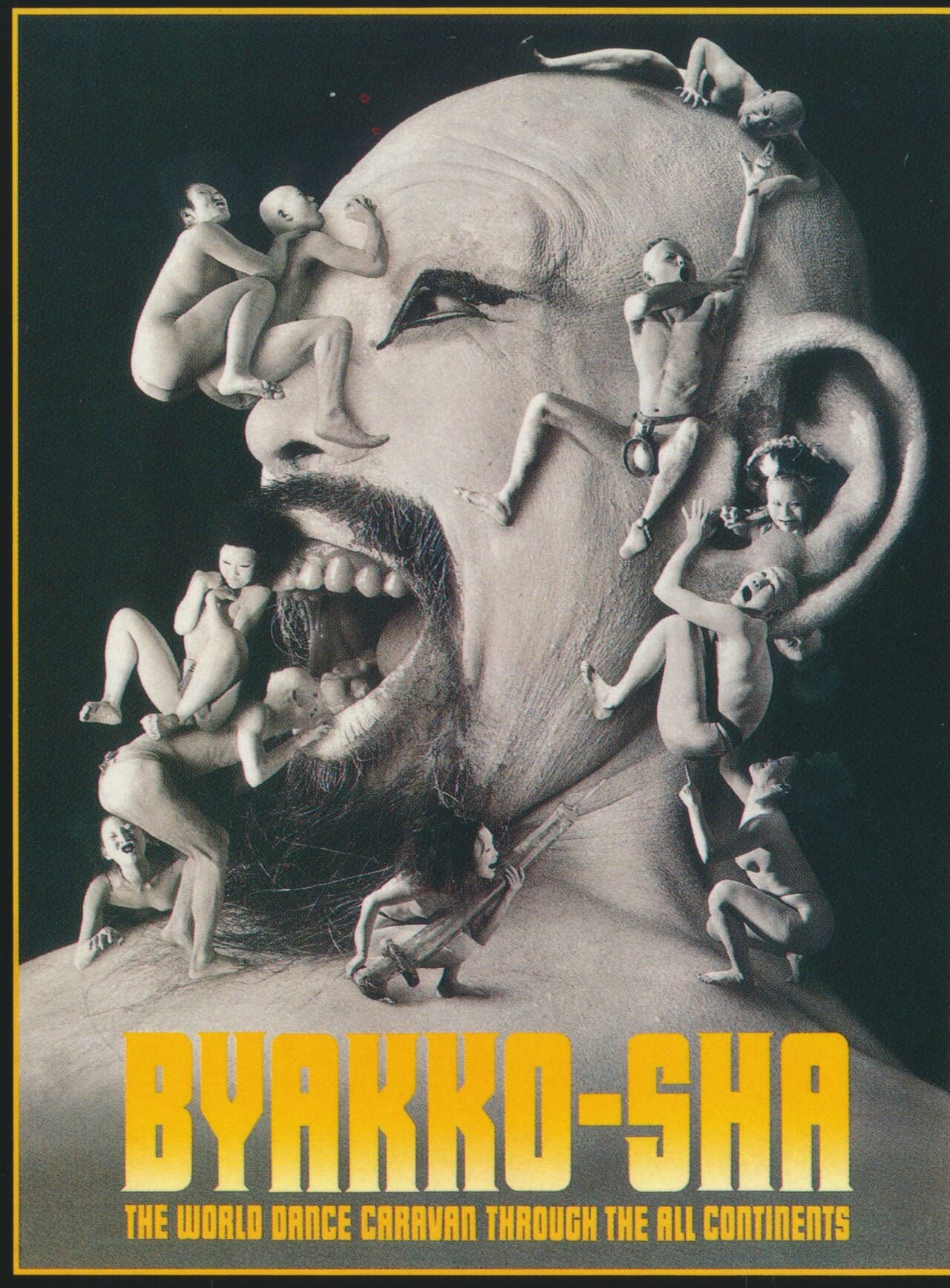
- Performer(s)
- Byakko-sha
- Director/Choreographer
- Isamu Osuka
- Venue
- Victorian Arts Centre Playhouse Theatre
- Year performed
- 1987
-
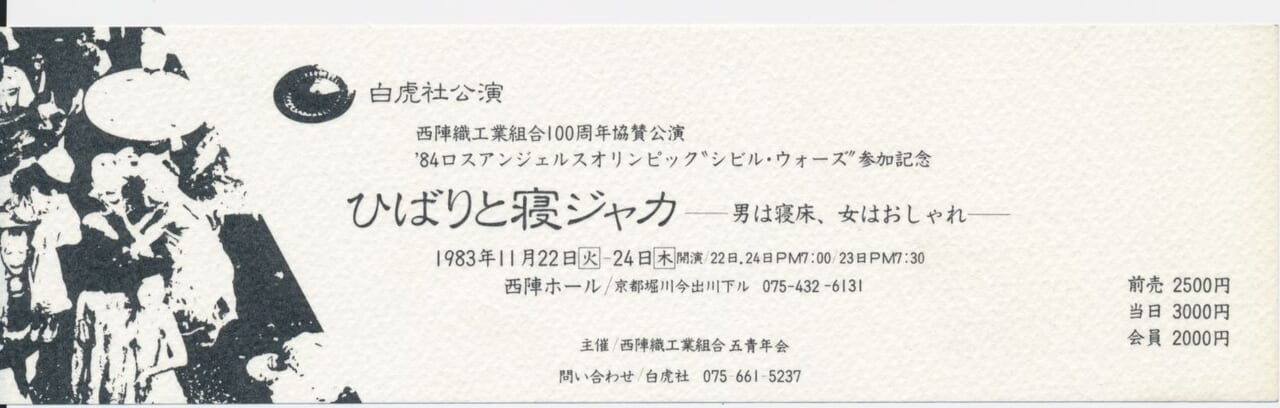
The Skylark and the Lying Buddha (Nishijin Performance)
Based in Kyoto, Byakko-sha engaged in numerous collaborations with people connected to Nishijin textiles, including appearances in kimono fashion shows. This performance was the premiere of Byakko-sha’s representative work, "The Skylark and the Lying Buddha: Men are Beds, Women are Stylish." In the footage, the opening head-shaving scene is not included. The performance was billed as "A Commemorative Performance in Support of the Nishijin Textile Industrial Association’s 100th Anniversary and Participation in the ’84 Los Angeles Olympics 'CIVIL warS'," although participation in "CIVIL warS" ultimately did not come to pass.
- Performer(s)
- Byakko-sha
- Director/Choreographer
- Isamu Osuka
- Venue
- Nishijin Hall
- Year performed
- 1983
-
The Skylark and the Lying Buddha (Yokohama version)
The Skylark chirps and flies straight towards the heavens, while the Lying Buddha rests on his side with his chin propped up on his hand and smiles, and the two cross each other like a Christian cross... The theme revolves around the perspective of the body as an instrument for measuring the world. (From the flyer)
This is the new Yokohama version of "Hibari to Nejaka" (The Skylark and the Lying Buddha), which was met with great enthusiasm after its premiere in 1983 and during its European tour in 1985.
This version was also performed in Yokohama (as part of Yokohama Art Wave 1989) on 6-7 October, and in Osaka on 10 October.
-300th Anniversary of the Birth of Jakuchu Ito / Hibari Misora Memorial Performance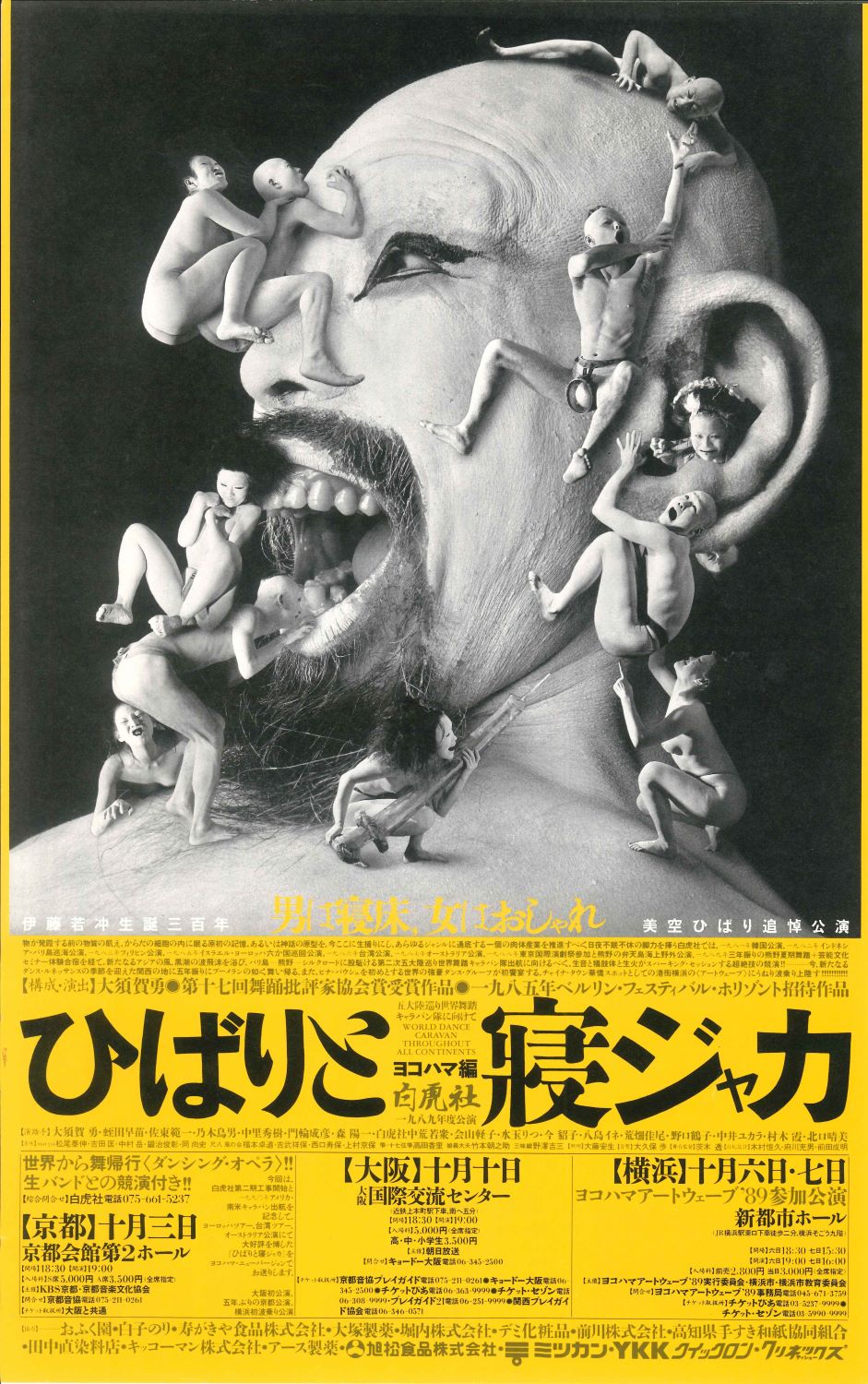
- Performer(s)
- Byakko-sha
- Director/Choreographer
- Isamu Osuka
- Venue
- KyotoKaikan No.2 hall
- Year performed
- 1989
-
Soft Moon
"Has Humankind really lost Memory
of when the soft Moon approached the Earth
Drawing out all kinds of hard protrusions
and Revealing the Earths True Nature"
From the Katsuko Orita Dance Performance. The brains behind Orita's work during the 1980s were:
Script - Yuichi Konno ; Artwork - Tetsuhiko Maeda ; Lighting - Yuji Sawada.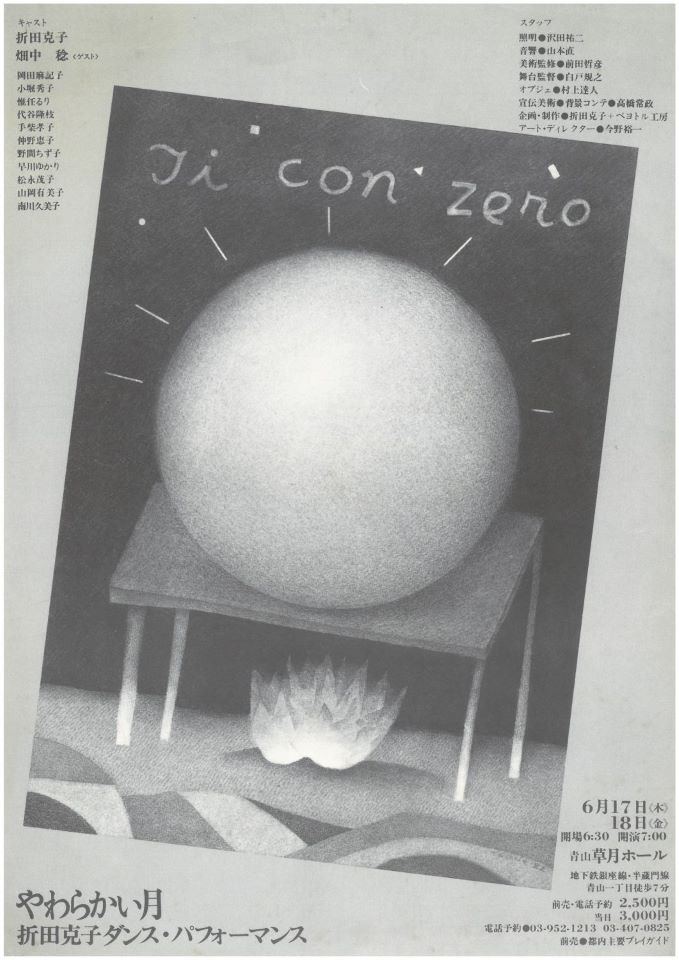
- Performer(s)
- Midori Ishii and Katsuko Orita Dance Studio
- Director/Choreographer
- Katsuko Orita
- Venue
- Sogetsu Hall
- Year performed
- 1982
-
Someil de Terre
Wind Burial - Fern in the Wind', 'Cremation - Egg in the Fire', 'Water Burial - Stone at the Bottom of the Water' and 'Bird Burial - Bird Woman's Head', were the four parts to Yoshimoto Daisuke's 'Funeral Series' performed between 1983 and 1987. With this addition of 'Someil de Terre', it became a 5-part series. Original concept: 'Stanislav de Gala Soshaku Kōfujin' [Madame de Stanislav de Gala Mastication]
- Daisuke Yoshimoto Butoh Dance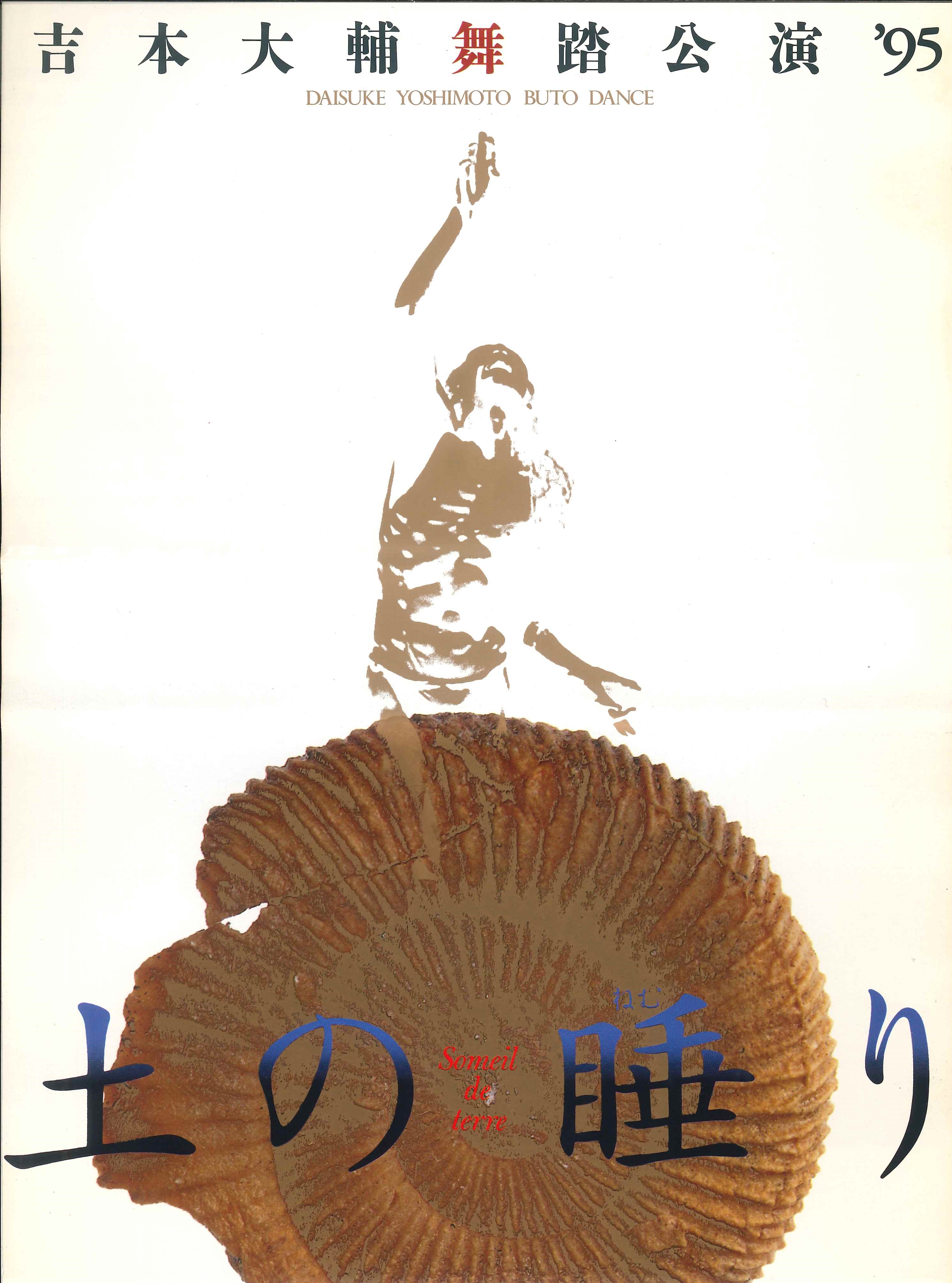
- Performer(s)
- Daisuke Yoshimoto
- Director/Choreographer
- Daisuke Yoshimoto
- Venue
- Sogetsu Hall
- Year performed
- 1995
-
Song of the Owl
Katsuko Orita collected owls, which are said to bring good luck*. In Greek mythology, the owl is a symbol of the goddess Athena. This work explores the nocturnal and mysterious characteristics of the owl as its theme.
*Not living owls
-Presented at the KATSUKO ORITA DANCE RECITAL.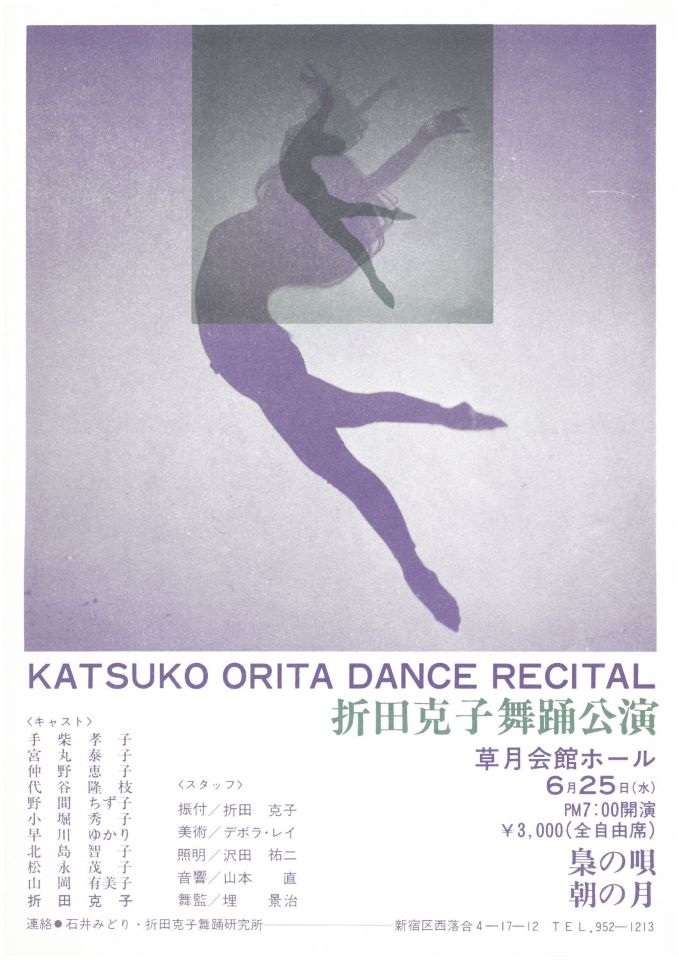
- Performer(s)
- Midori Ishii and Katsuko Orita Dance Studio
- Director/Choreographer
- Katsuko Orita
- Venue
- Sogetsu Hall
- Year performed
- 1980
-
Konpaku [Soul]
One of Midori Ishii's early works was 'Himeyuri no To' [Tower of Himeyuri]. This work, 'Konpaku', shows her shift from direct expression to a more abstract form of expression. This dance of mourning performed to Faure's 'Requiem' expresses sorrow over the tragedy of war, and the desire to heal people through dance and music.
During the war, Ishii went to Southeast Asia with composer Yuji Koseki and others to give performances for the troops. They also performed many performances of encouragement in Japan.
-From an Midori Ishii Dance Performance.![Konpaku [Soul]](https://video.dance-archive.net/en/wp-content/uploads/2024/01/V00025_ishiiorita1s_f.jpg)
- Performer(s)
- Midori Ishii and Katsuko Orita Dance Studio
- Director/Choreographer
- Midori Ishii
- Venue
- Tokyo Post Saving Hall
- Year performed
- 1987
-
Spiral Dream – Then Find the Hidden Stone
Spirals are the form of life. They surround us everywhere: in the bud of a morning glory, the structure of the galaxy, in DNA. Spirals dance through life, living, death and destruction, all creation. We are suspended in the dream of the body, in the midst of ascent and descent. But do not be alarmed, because we know that truth is hidden in the unformed and the invisible. Butoh is a signpost. Seeds should be sown in fresh soil. Let us wait for the day new, never before seen sprouts appear.
- Performer(s)
- Yukio Waguri + Kozensha
- Director/Choreographer
- Yukio Waguri
- Venue
- La Vita Hall
- Year performed
- 1994
-
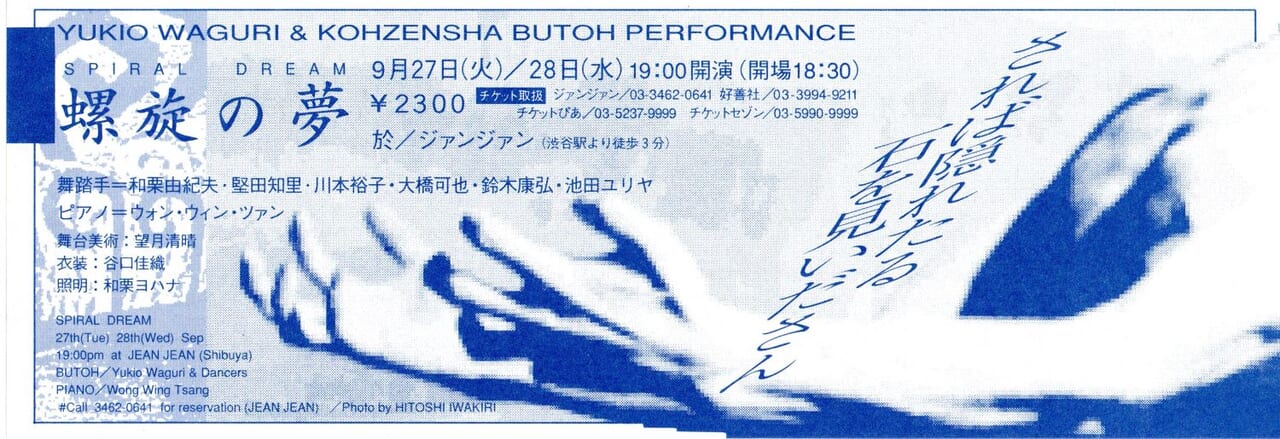
Spiral Dream – Two Nights of Butoh + Piano
Spirals are the form of life. They surround us everywhere: in the bud of a morning glory, the structure of the galaxy, in DNA. Spirals dance through life, living, death and destruction, all creation. We are suspended in the dream of the body, in the midst of ascent and descent. But do not be alarmed, because we know that truth is hidden in the unformed and the invisible. Butoh is a signpost. Seeds should be sown in fresh soil. Let us wait for the day new, never before seen sprouts appear.
- Performer(s)
- Yukio Waguri + Kozensha
- Director/Choreographer
- Yukio Waguri
- Venue
- Jean-Jean (Tokyo)
- Year performed
- 1994
-
Splish Splash
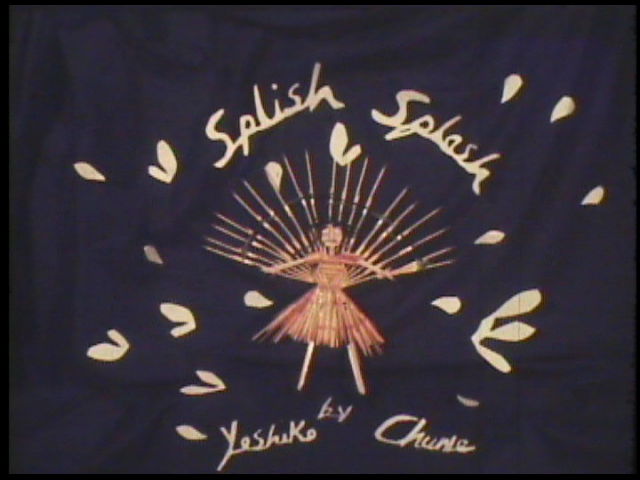
The performers of Splish Splash seem to reproduce the axial stop-and-go movement of the computer game Pacman in apparitional, partly repretitive movment patterns in different settings.The rapid and surreal visual language and the symbolic props create a cryptic commentary on facts of the entertainment industry.
- Performer(s)
- Yoshiko Chuma
- Director/Choreographer
- Yoshiko Chuma
- Year performed
- 1982
-
The Standing Sticks: May Only I Live Long
Director Yasunori Ikunishi turns two texts by Tatsumi Hijikata - "Yameru Maihime" and "The Compassionate Soul Bird Comes To Unfurl Its Rustling Skeletal Wings" - into a theatrical performance. The words of Hijikata, uttered by two performers who barely move, mix with silence and the sound of trains, reverberating round the underground space. Within, the bodies tremble, and their fluctuations are imparted to the viewers, creating a different experience and story for each. These "fluctuations" are carefully picked out through video and sound by Yasunori Kakegawa.
Texts: From 'Yameru Maihime' and 'The Compassionate Soul Bird Comes To Unfurl Its Rustling Skeletal Wings' by Tatsumi Hijikata
-Tokyo Real Underground (Tokyo Tokyo FESTIVAL Special 13): 1 April - 15 August 2021
-Takao Kawaguchi Selection: Un Certain Regard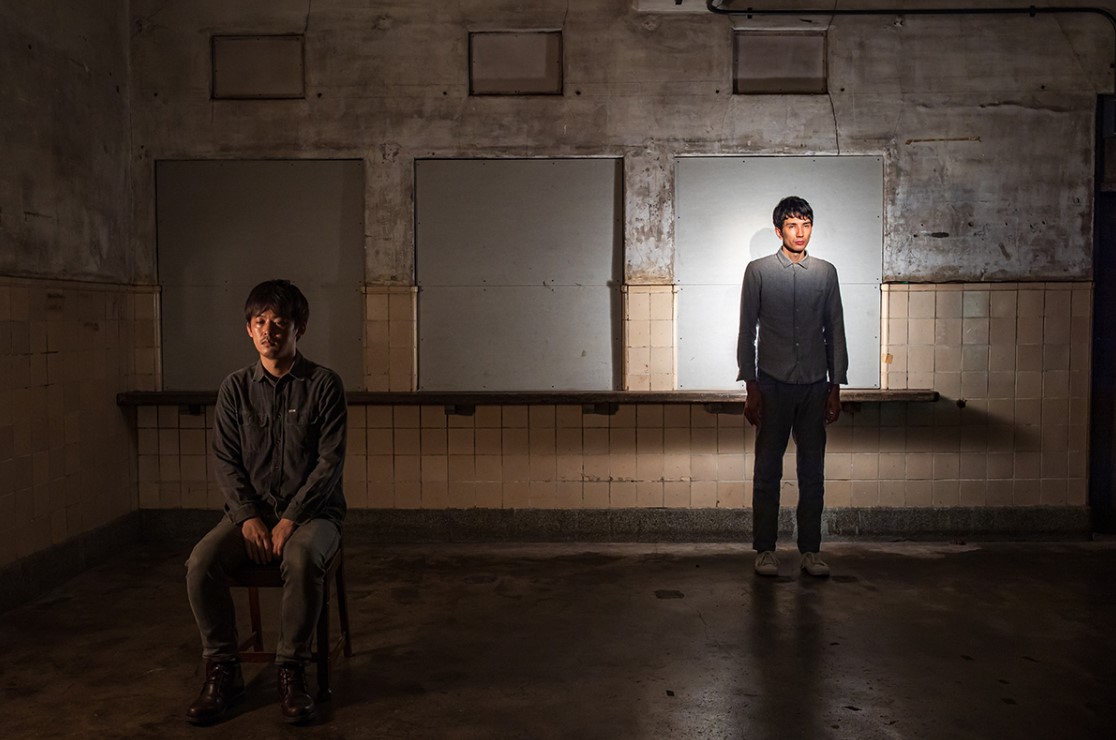
- Performer(s)
- NPO Dance Archive Network
- Director/Choreographer
- Yasunori Ikunishi
- Venue
- Filmed at Former Hakubutsukan Dobutsuen Station [Museum Zoo Station]
- Year performed
- 2021
-
Standing
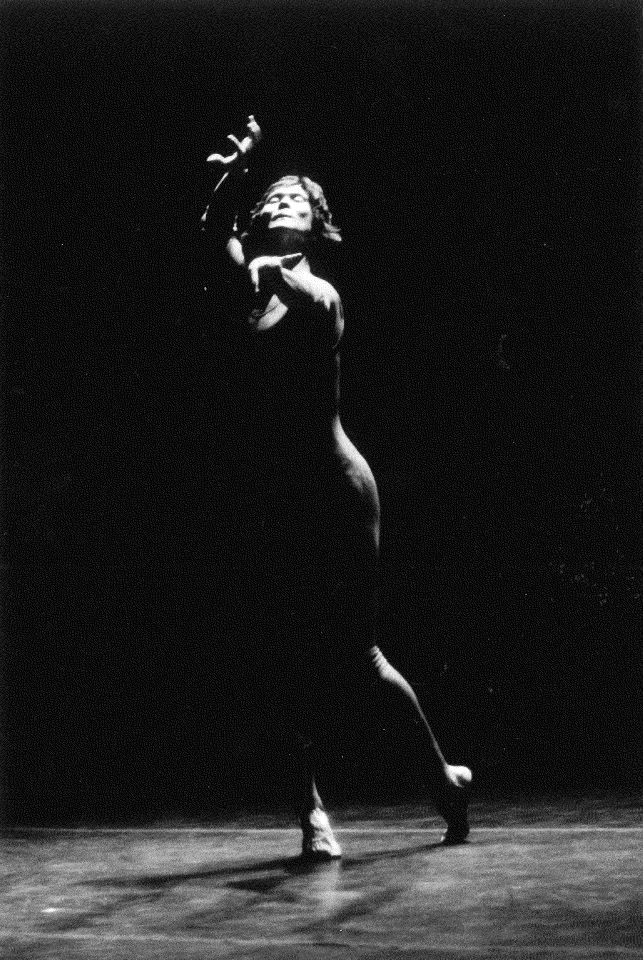
A solo piece exploring the speed and accents of movement through repetition.
- Performer(s)
- Bonjin Atsugi
- Director/Choreographer
- Bonjin Atsugi
-
Step into the Night, Odette
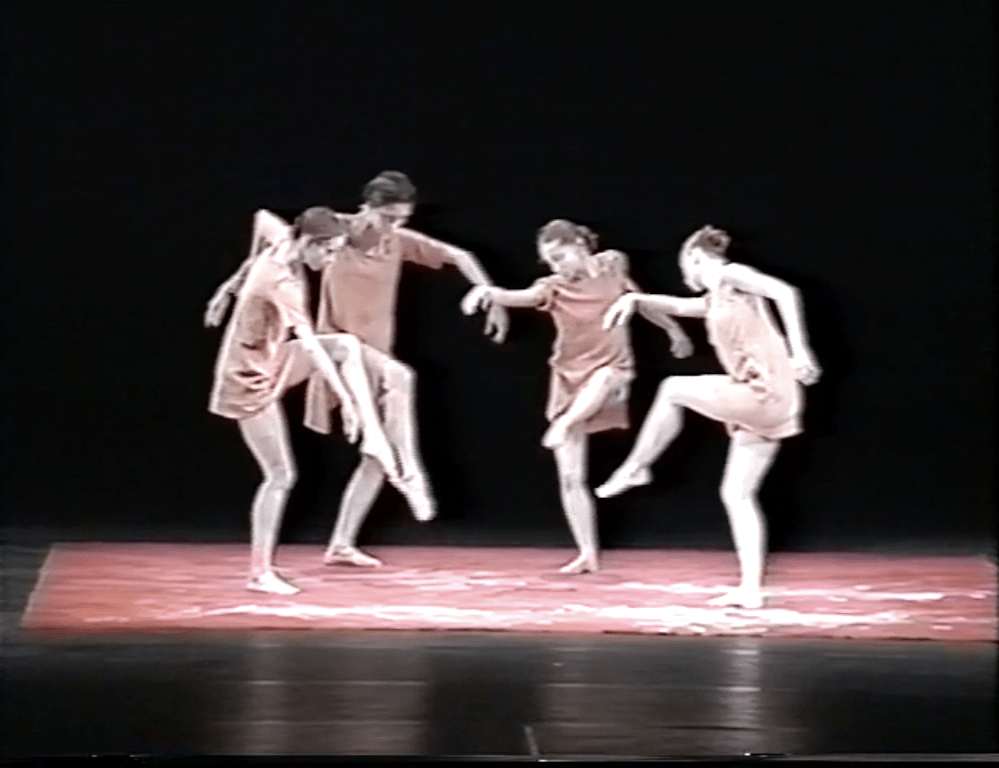
In March 1998, butoh dancer Ippei Yamada (aka Bishop Yamada) stayed in Kyiv and choreographed "Dark Wings" for the National Shevchenko Theater Ballet Group, which was performed at the National Opera of Ukraine. It was the first time these ballet dancers, including Anna Kouschneryova, a national star in Ukraine at the time, had ever encountered butoh. This work is a remake of "Dark Wings", performed in Tokyo with mostly the same cast under the new title "Step into the Night, Odette".
- Performer(s)
- Hoppo Butoh-ha
- Director/Choreographer
- Ippei Yamada
- Venue
- Tokyo Metropolitan Theatre
- Year performed
- 1998
-
The Story of Sun and Moon (rehearsal)
The Story of Sun and Moon' is a tale of light and shadow. It is also a story of a man's 'torn soul' as he searches through a labyrinth of light and shadow. The 'shadows', which at times turn into demi-gods and at times into kannon [goddess of Mercy], invite him to open several doors. Another self walks from the bottom of the water mirror. Rituals of death and rebirth in a labyrinth of expansion and contraction. A dream that regresses. The body of the dream is caught up in a spiral vortex...
- Footage of a full-length rehearsal from a residency in Hinohara village in December 1992.
- The performance took place at the Seed Hall in Tokyo from 22 January 1993 - 26 January 1993.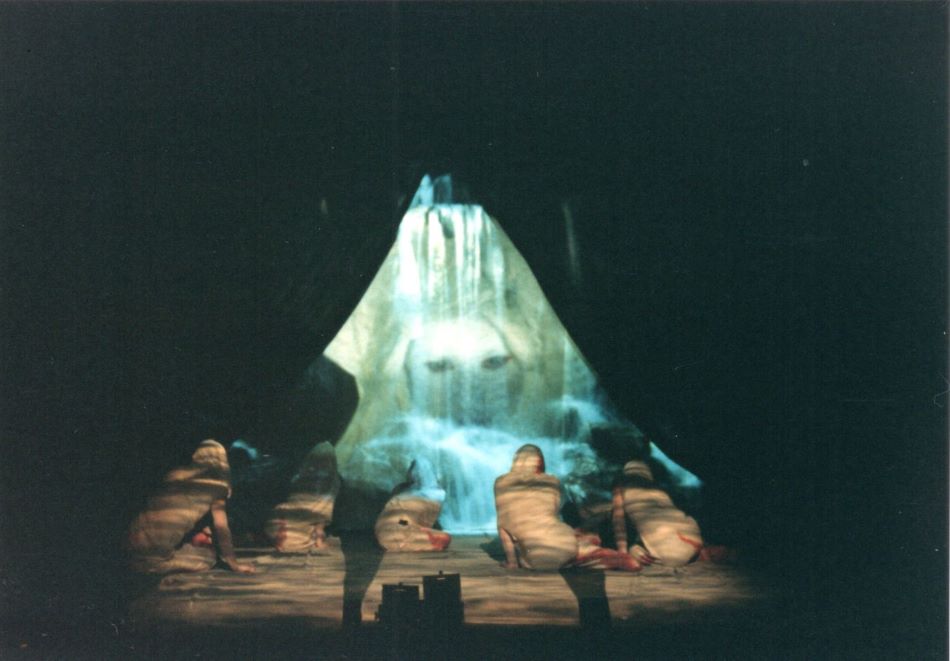
- Performer(s)
- Yukio Waguri + Kozensha
- Director/Choreographer
- Yukio Waguri
- Venue
- Hinohara village
- Year performed
- 1993
-
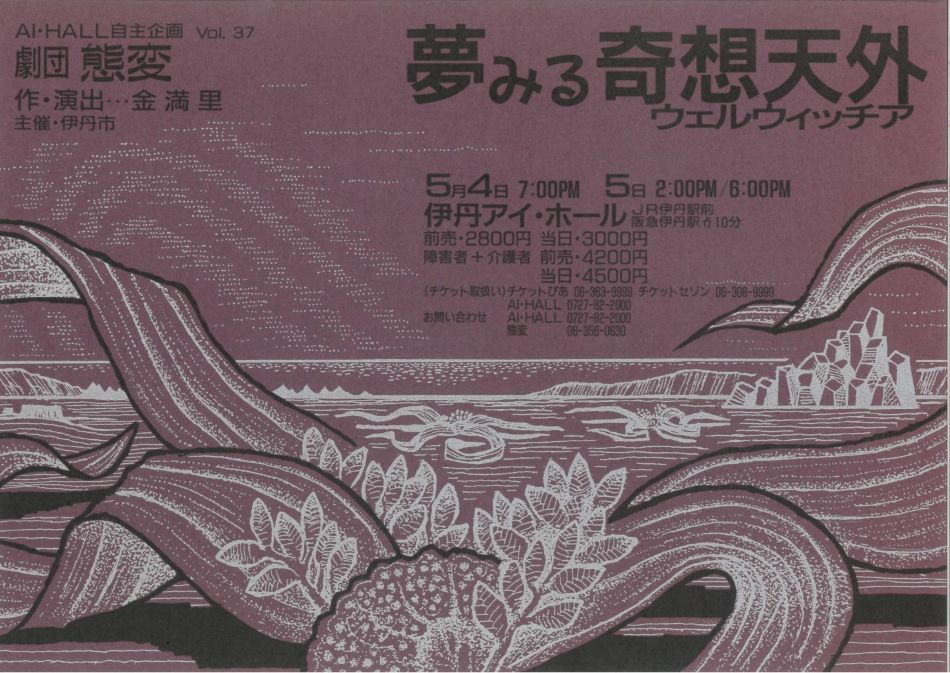
The Strange Dreaming Being (Welwitschia)
This abstract work is inspired by Welwitschia mirabilis, a plant that lives for a thousand years in the deserts of Namibia, feeding only on sea mist and growing with only two leaves. Welwitschia, slumbering in a harsh environment, is born from a flower in a dream and plays inside a cosmic egg, then wanders in the deep jungle, carries fire and water, and longs for the lives that have passed by.
- Performer(s)
- Performance Troupe TAIHEN
- Director/Choreographer
- Manri Kim
- Venue
- AI Hall (Itami City Theater Hall)
- Year performed
- 1992
-
A Strange Hotel
The final piece from the 'THE MUSIC POTLATCH' series, which began in March 1985 and was held at Shibuya Jean-Jean. It is the only piece in the series in which Anzu Furukawa performed with Japanese music. The lively exchanges between Furukawa and Yasosuke Kineya, the "Japanese Paco de Lucia", have the audience laughing out loud.
The entire performance takes place at a "Strange Hotel", which is based on the house of a demon from the nagauta song "Adachigahara".
Act 1: Happy New Year ("Sanbaso" [New Year celebratory performance])
Act 2: The Room Next Door (Yasosuke-Anzu Battle of Talents)
Act 3: The Secret of the Hotel ("Adachigahara" - the complete nagauta song)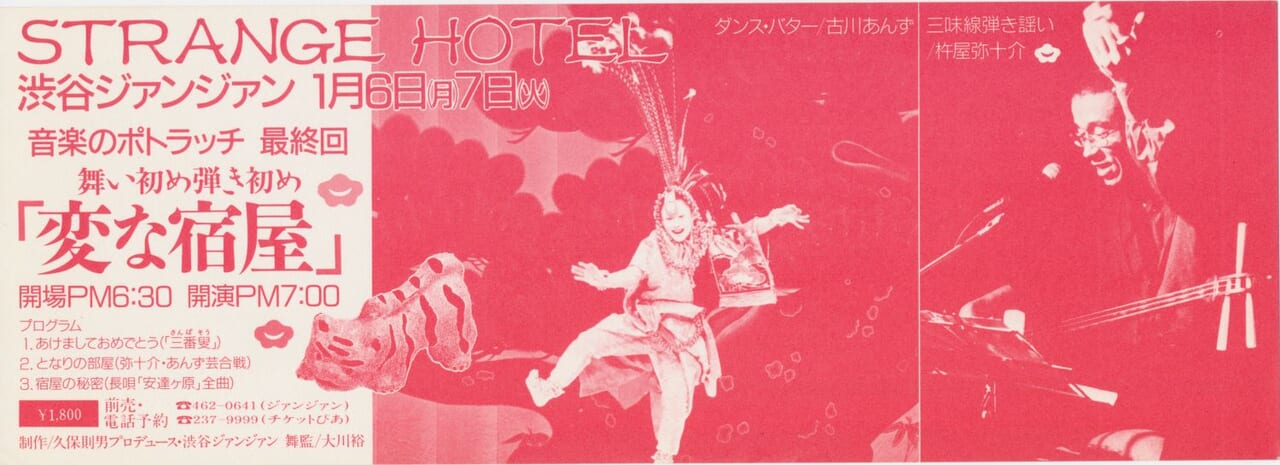
- Performer(s)
- Anzu Furukawa
- Director/Choreographer
- Anzu Furukawa
- Venue
- Jean-Jean
- Year performed
- 1986

